



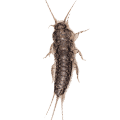

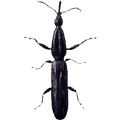
An inspector in Dubai Mall's lower-ground food court flagged "small flying insects in the dish-pit area" on a Wednesday afternoon in November. The station operator had been bleach-flushing the floor drain twice a day for two weeks. The flies kept coming back. By the time we got the call on the Friday, the operator was facing a follow-up inspection on Monday morning.
The issue wasn't the floor. The issue was 8-12 cm down the drain pipe, in a thick mat of organic biofilm that bleach can't penetrate. Psychoda larvae were living in the biofilm and emerging as adults from the drain opening. Surface spray killed adults; the population reseeded from the biofilm in 36-48 hours. The bleach the operator had been flushing did almost nothing — chlorine breaks down on contact with organic matter and never reaches the biofilm in any concentration.
This is the standard food-court drain fly story. Knowing why surface treatment fails, and what actually works, is the difference between passing the next inspection and another flag in the file.
What you actually have
Two species cause 95% of "little black flies" complaints in Dubai food courts:
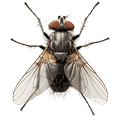
Drain fly (Psychoda alternata) — the moth fly, 2-3 mm, fuzzy wings held tent-shaped over the body, weak fluttery flight. Larvae live in the biofilm inside drain pipes, grease traps, and the slime layer of any constantly-wet pipe. Adults emerge from the drain opening, hover within 1-2 m of the source.
Fruit fly (Drosophila melanogaster) — 2-3 mm, red-eyed, faster flight, attracted to fermenting fruit and fizzy-drink residue. Larvae live in fermenting organic matter — fruit waste, soda gun nozzles, mop heads.
The two get confused in inspector reports. The treatment is genuinely different. Drain flies need pipe-side biological treatment; fruit flies need source-removal of fermenting organic matter. Misidentify and you'll waste a contract.
Quick field test: catch one in a clear glass and look at the wings. Fuzzy and tent-shaped means Psychoda. Clear and folded back means Drosophila.
The biofilm — what it actually is
Biofilm in a food-court drain pipe is a layered organic-bacterial mat that builds up on the inside of the pipe. Over weeks of dishwasher water, beverage residue, sugar, fats, and food particles, the layer grows from a film to a 2-5 mm thick gel that coats the pipe walls. Drain fly larvae burrow into it, feed on it, breathe through small abdominal tubes that reach the surface, and pupate within the mat.
The reason chemical attacks fail:
- Bleach — chlorine reacts immediately with organic matter, depleting before it penetrates the biofilm.
- Boiling water — surface effect only; biofilm is insulating and the deeper layers stay below killing temperatures.
- Pyrethroid surface spray — kills adult flies on contact but never reaches the larvae.
- Hot water flush — same surface limitation.
What does work:
- Enzymatic bio-foam. A foam carrier loaded with proteolytic enzymes that breaks down the organic matrix mechanically and biologically. Foam clings to the pipe walls long enough (15-20 minutes) for the enzymes to digest the biofilm. Repeated weekly applications strip the biofilm completely over 4-6 weeks.
- Bio-active drain treatment. Bacterial cultures (typically Bacillus subtilis and Bacillus licheniformis) introduced into the drain. They colonise the pipe and out-compete the biofilm-forming bacteria over 8-12 weeks.
We deploy both in a typical food-court drain fly programme.
A real Dubai food-court protocol
For a typical 800-1,200 sqft mall food court station, our weekly + monthly schedule:
Daily (operator-side, written into the SOP):
- Surface clean of all visible drain openings with neutral-pH detergent.
- No bleach down drains. (Bleach feeds drain fly populations by killing the bacterial competition that biofilm-forming organisms would otherwise face.)
- All food prep surfaces wiped down at end of service.
Weekly (PestSwift visit):
- Enzymatic bio-foam application to every drain in the station. Foam left to dwell for 20 minutes minimum.
- Sticky monitor placement in the dish-pit corner and behind the cooking line.
- Visual inspection of grease trap, soda gun nozzles, ice well drains.
- Mop head replacement check.
Monthly (PestSwift extended visit):
- Bacterial bio-active dose introduced to all drains and grease trap.
- Full sticky monitor count and species ID.
- Grease trap pump-out scheduling check.
- Written report to station operator and (if requested) mall facility management.
Quarterly (PestSwift deep service):
- Mechanical drain auger if biofilm is established and resistant.
- Soda gun nozzle deep clean.
- Floor sink and drain trap inspection with borescope.
The schedule isn't unique to PestSwift — it's the standard IPM approach for Psychoda in commercial food settings. What varies is execution discipline and chemical choice.
HACCP-friendly chemical list
Every chemical we apply in a food-court setting must be HACCP-compliant: low residual, low odour, ingredient list disclosed in the SDS packet, no banned actives. Our food-court chemical inventory:
- Enzymatic bio-foam — proteolytic enzymes in a non-ionic surfactant carrier. No hazard classification, food-area approved.
- Bacillus bio-active — Bacillus subtilis/licheniformis bacterial culture in dormant spore form. No hazard classification.
- Pyrethrin micro-encapsulated spray for restricted perimeter use only. Outside the food prep zone, never in or above food contact areas.
- Sticky monitors — non-toxic, mechanical only.
Specifically excluded from any food-court application:
- Pyrethroid foggers
- Organophosphate baits
- Acute rodenticides
- Any product without a current HACCP-aligned SDS
Our SDS packet is provided to every station operator on contract signing and refreshed annually.
What this costs in Dubai food courts
Real prices from PestSwift's mall food-court contracts:
- Single station, weekly + monthly programme: AED 1,800-2,400/month
- Single station, weekly + monthly + quarterly deep service: AED 2,400-3,500/month
- Mall-wide food court (8-12 stations) consolidated contract: AED 14,000-22,000/month
- One-time emergency drain fly knockdown (when an inspector has flagged): AED 1,200-2,200 flat fee plus a recommended 90-day follow-up
Mall-wide contracts are usually held by the mall's overall pest contractor with food-court stations sub-charged through the lease. Where a station operator wants direct service (independent of the mall contract), we can layer that with mall management's permission.
Stations on contract see Psychoda populations drop to near-zero within 4-6 weeks and stay there with consistent weekly service. Stations that drop the contract for cost reasons typically see populations rebound within 8-12 weeks.
What an operator can do this week
If you operate a Dubai food-court station and you've seen drain flies:
- Stop bleach. Switch to neutral-pH cleaner for daily drain cleaning.
- Place a clear plastic cup over a drain opening for 24 hours. Count adults that emerge. More than 5 in 24 hours = active Psychoda infestation that won't self-resolve.
- Check soda gun nozzles for sticky residue — clean and rinse thoroughly daily.
- Replace mop heads and let them dry between uses, never store them wet in a bucket.
- Don't treat the surface — call a contractor with biofilm-side capability.
Festival City, BurJuman, Dubai Mall — building-specific notes
Different malls have different drain-network profiles.
Dubai Mall lower-ground food court: shared soil stack across multiple stations, so a single station with bad biofilm seeds adjacent stations through the network. Mall facility usually requires synchronised treatment across all affected stations.
Festival City Mall food court: more isolated drain runs per station, but the central grease trap is shared across roughly 12 stations. Quarterly grease-trap deep service is essential.
BurJuman: mixed-vintage building with some original 1990s drain runs that have heavy biofilm legacy. New stations moving into older locations inherit the biofilm — first 6 months of operation usually require an aggressive bio-foam programme.
City Centre Deira and Mirdif: standard layouts, fewer surprises, easier to programme.
FAQ
What's the difference between drain flies and fruit flies?
Drain flies (Psychoda) have fuzzy tent-shaped wings, weak flight, and breed in pipe biofilm. Fruit flies (Drosophila) have clear folded wings, faster flight, and breed in fermenting fruit waste and beverage residue. Different treatments.
How do I clean a grease trap to stop drain flies?
Mechanical pump-out alone doesn't reach the biofilm on the trap walls. After pump-out, follow with enzymatic bio-foam application and a bacterial bio-active dose. Pump-out frequency depends on volume — most Dubai food court traps need quarterly minimum.
Can drain flies cause a food-handler health code violation?
Visible adult flies in food prep areas are flagged on Dubai Municipality and Abu Dhabi food safety inspections. Repeat sightings escalate. The flies themselves are mechanical contamination vectors — they walk through the biofilm and then on food surfaces.
How often should mall food courts have drain treatment?
Weekly bio-foam plus monthly bacterial bio-active is the maintenance standard. Stations skipping weekly visits typically see Psychoda populations re-establish within 6-8 weeks.
If you operate a Dubai food-court station with drain fly issues, contact PestSwift. We run restaurant pest control programmes across major UAE malls including HACCP-aligned reporting and direct mall facility coordination.
Tags
Written by
Maria Fernandez, Commercial Accounts Lead
PestSwift technicians and entomologists publish field-tested pest control guidance for UAE homes and businesses.