



Mosquitoes
Culicidae
Mosquitoes breed in standing water — irrigation chambers, AC drip pans, plant saucers and roof-tank overflow. Effective control kills larvae at the source, not adults at your skin.
UAE mosquito species
The UAE hosts several mosquito species, but the ones biting you in your villa garden are usually:
- Aedes aegypti — daytime biter, urban, breeds in tiny water containers (bottle caps, plant saucers). Vector for dengue and chikungunya.
- Culex pipiens — dusk/night biter, breeds in stagnant water (drains, irrigation). The classic 'house mosquito'.
- Anopheles — rare in UAE since malaria eradication, but present in agricultural areas.
Why bug zappers and adulticide don't fix the problem
Killing adult mosquitoes is whack-a-mole. A single Culex female lays 100-300 eggs per batch, every few days, in any water container she can find. Until you eliminate the breeding sources, you'll have mosquitoes.
Real mosquito control is larval source reduction: walking the property and finding every standing-water container — irrigation drip lines, AC condensate trays, swimming pool covers, roof drainage pans, palm tree leaf bases, neglected fountains, even pet water bowls. We treat each with biological larvicide (BTI — Bacillus thuringiensis israelensis) which kills larvae and is safe for fish, birds and mammals.
For immediate relief from adult biting we add a residual perimeter barrier on vegetation and resting surfaces — but the breeding-source work is what actually solves the problem.
How to identify
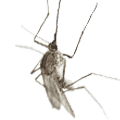
- Adults: 3-7mm, slender, long legs and proboscis
- Aedes (daytime biter): black with white leg-bands
- Culex (night biter): uniform brown
- Larvae: 'wrigglers' suspended at water surface
Signs of infestation
- Bites (raised, itchy welts)
- High-pitched whining sound at night
- Resting adults on cool wall surfaces during day
- Larvae visible in any standing water on the property
Where they hide
- Irrigation drip emitters and overflow chambers
- Plant pot saucers, palm-tree axils
- AC condensate drip pans and trays
- Pool cover folds, decorative fountains
- Roof drainage pans, neglected gutters
- Pet water bowls left outdoors
Health risks
- Dengue fever (Aedes-borne, sporadic UAE cases)
- Chikungunya (Aedes-borne)
- West Nile virus (Culex-borne)
- Heartworm in dogs (Culex-borne)
Prevention tips
- Empty plant saucers and refresh pet water daily
- Drill drainage holes in any container that collects water
- Cover or treat decorative water features with BTI
- Run irrigation off-peak (early morning) and inspect emitters monthly
Our treatment methods
- Larval source reduction (breeding-site elimination)
- BTI larvicide application in standing water
- Residual barrier on vegetation and resting surfaces
- Irrigation system review
Lifecycle in UAE conditions
- 1 Female Aedes and Culex mosquitoes lay 100-300 eggs per batch, every 4-7 days, in any standing water container.
- 2 Eggs hatch into larvae ('wrigglers') within 24-48 hours; larvae feed on organic matter at the water surface.
- 3 Larvae go through 4 instars and pupate in 5-10 days; pupae emerge as adults in 1-2 days.
- 4 Total egg-to-adult cycle is as short as 7-10 days in UAE summer temperatures.
- 5 Aedes aegypti is a daytime biter and prefers tiny containers (bottle caps, plant saucers); Culex is a dusk/dawn biter and prefers stagnant drains and irrigation chambers.
Before we arrive
- Walk the perimeter and note any standing-water sources we should target — pots, drains, roof drainage, AC drip pans
- Don't drain ornamental water features — we treat them with safe BTI larvicide rather than emptying
- Trim dense vegetation 1m from the villa walls if possible — adults rest in shaded foliage
- Empty and refresh pet water bowls daily during active treatment
- Note the times you're being bitten — daytime bites suggest Aedes (small-container breeder), evening bites suggest Culex (drain breeder)
After treatment
- Maintain the source-reduction routine — empty plant saucers, AC drip pans and pet water bowls daily
- Inspect irrigation drip emitters monthly for blocked or pooled water
- Don't pressure-wash or hose down treated foliage for 2 weeks — that washes off the residual
- Cover any new water-collection containers (buckets, bottles, tarps)
- Re-treat is recommended every 4-6 weeks October-May; less frequent in summer heat-suppressed months
When DIY isn't enough
DIY mosquito control is mostly futile because killing adults doesn't address breeding. A coil or spray clears the room temporarily; new adults emerge from your garden every week. Effective control requires walking every cubic metre of the property, finding every standing-water container (10-20 sources is typical for a villa), and treating each with biological larvicide — that's the work that actually solves the problem.
UAE regulatory context
UAE Ministry of Health monitors mosquito-borne disease (dengue, chikungunya, West Nile) annually. Dengue cases have been reported sporadically in Dubai in recent years. Communities adjacent to construction sites, irrigation systems and labour accommodation are highest risk; proactive source-reduction is recommended for villas with gardens or pools.
Frequently asked
Related pests
More on mosquitoes from the PestSwift blog
Field-tested guides written by our technicians and entomologists.
Why Business Bay's Mosquitoes Aren't From the Canal
Everyone blames the Dubai Water Canal. The real breeding sites are inside the towers themselves. Here's where they actually come from and how to stop them.
29 May 2026
Seasonal Pest ControlMosquito Control for MBR City and Meydan Villas with Water Features
Crystal Lagoon edges, private pools and ornamental fountains stack up to year-round Aedes pressure. The six-week pre-summer protocol that keeps it bearable.
26 May 2026
Pest Treatment GuidesMosquitoes by the Lagoon: What Damac Lagoons Residents Can Actually Control
The lagoon probably isn't breeding your mosquitoes. Here's the community-vs-villa split and how Damac Lagoons residents cut the bites at the real source.
21 May 2026
Seasonal Pest ControlWhy The Springs and Meadows Get Mosquitoes (And What Lake-Community Fogging Misses)
Community fogging kills the mosquitoes flying tonight and nothing breeding in your garden tomorrow. What lake-community fogging misses, and the villa fix.
20 May 2026
Need mosquitoes treatment now?
Same-day callouts across every Dubai neighbourhood. Free inspection, fixed price.