
Ticks
Ixodida
Brown dog ticks are the dominant UAE species — they reproduce indoors and infest entire homes when a single dog brings them in. Treatment requires the home, the yard AND the dog.
The UAE tick problem
The brown dog tick (Rhipicephalus sanguineus) is responsible for nearly every tick infestation we see in UAE homes. Unlike most ticks (which need outdoor cycles), brown dog ticks complete their full life cycle indoors — meaning a single dog walking through an infested park can seed your villa with thousands of ticks within weeks.
Why one-shot treatment fails
Tick treatment is harder than people expect because four life stages exist simultaneously: eggs, larvae, nymphs, adults. Most insecticides kill adults but not eggs. So one spray reduces the visible population — and three weeks later, eggs hatch and you're back where you started.
Real treatment is a 3-pronged attack:
- Indoor IGR + residual — insect growth regulator (which prevents life-stage development) plus residual adulticide, applied to baseboards, behind furniture, under rugs, on dog bedding areas
- Yard treatment — focused on shaded resting spots: under outdoor AC units, fence-line vegetation, kennel areas, behind storage
- Veterinary coordination — your dog needs treatment from the vet (oral or spot-on); the home work fails if reinfested from the dog
We usually run two indoor visits 21 days apart to catch newly-hatched stages.
How to identify
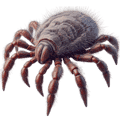
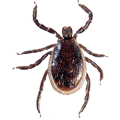
- Adult: 3-5mm unfed, up to 12mm engorged, reddish-brown
- Nymph: 1-2mm, eight legs (larvae have six)
- Eggs: clusters of small dark spheres in cracks
- Engorged adults: blue-grey, balloon-shaped
Signs of infestation
- Ticks on dog after walks (especially behind ears, under collar)
- Tick climbing wall or ceiling (brown dog ticks are wall-climbers)
- Dog excessive scratching, lethargy
- Tick clusters in dog's resting area, behind sofa cushions
Where they hide
- Dog bed and sleeping areas
- Behind sofas and under area rugs
- Wall and ceiling cracks (brown dog tick climbs)
- Outdoor: shaded vegetation, fence lines, kennel areas
Health risks
- Ehrlichiosis (canine — serious illness in dogs)
- Babesiosis (canine)
- Mediterranean spotted fever (transmissible to humans, rare)
- Allergic reactions to bites
Prevention tips
- Use vet-prescribed tick prevention on all pets year-round
- Inspect dogs after every walk (especially Safa Park, Mushrif, Al Barsha Pond)
- Wash pet bedding weekly in hot water
- Vacuum daily during active infestation
Our treatment methods
- Indoor IGR + residual application
- Yard targeted treatment
- Pet bedding decontamination
- Veterinary coordination
- Crack-and-crevice work for hatched eggs
Lifecycle in UAE conditions
- 1 Brown dog tick females lay 3,000-5,000 eggs per cluster, glued in cracks and crevices indoors.
- 2 Eggs hatch into 6-legged larvae in 19-60 days; larvae feed on a host (usually a dog) and molt to nymphs.
- 3 Nymphs feed and molt to 8-legged adults in 2-3 weeks; full lifecycle is 60-90 days indoors.
- 4 Unlike most ticks (which need outdoor cycles), brown dog ticks complete their entire lifecycle indoors — explaining how a single dog seeds an entire villa.
- 5 Adults can survive 18 months without feeding — long-vacancy properties remain re-infectable.
Before we arrive
- Treat the dog at the vet BEFORE we treat the home — otherwise reinfestation from the dog wipes out our work
- Strip and bag dog bedding for hot-wash (60°C+) or replacement
- Vacuum carpets, rugs, sofas, baseboards thoroughly (HEPA bag, sealed and discarded)
- Move furniture 30cm from walls in suspected rooms
- Identify shaded outdoor resting spots — under AC units, fence-line vegetation, kennel areas — these need yard treatment too
After treatment
- Continue monthly vet-prescribed tick prevention on all pets year-round
- Vacuum daily for 2 weeks after each visit (HEPA, sealed)
- Inspect dog after every walk — behind ears, under collar, between toes are favourite hiding spots
- Wash pet bedding weekly in hot water during the warranty period
- Don't pressure-wash or hose down treated yard areas for 2 weeks — that washes off residual
When DIY isn't enough
Brown dog tick infestations are exceptionally hard to clear DIY. The 4 simultaneous life stages (eggs, larvae, nymphs, adults) need different products and timing; a single-spray treatment kills adults but leaves eggs to hatch in 3 weeks. Real elimination requires IGR + residual + 2-3 timed visits + yard treatment + vet coordination. Without all four pieces, the population rebuilds.
UAE regulatory context
Tick-borne canine diseases (ehrlichiosis, babesiosis) are common in UAE veterinary practice. Mediterranean spotted fever (transmissible to humans, rare) has been reported. Veterinary tick-prevention protocols are required by most UAE pet boarding facilities and dog parks.
Frequently asked
Related pests
More on ticks from the PestSwift blog
Field-tested guides written by our technicians and entomologists.
Pest Control for UAE Camel Farms: Ticks, Flies, and the Acaricide-Resistance Problem
Hyalomma ticks on 98% of UAE camels and cypermethrin resistance spreading farm to farm. Here's what a real camel-farm IPM program looks like.
27 May 2026
Pricing & Cost GuidesWhat Flea Treatment Really Costs in UAE Homes With Pets
Treating the dog alone fails. Treating the apartment alone fails. The cost breakdown of the dual protocol that actually works in Dubai and Abu Dhabi pet homes.
26 May 2026
Regulation & ComplianceWho Actually Pays for Pest Control in Your Dubai Building
Paying for treatment that never sticks? Here's the JOP-law split between owners association common areas and your unit, and why it decides whether roaches return.
21 May 2026
Need ticks treatment now?
Same-day callouts across every Dubai neighbourhood. Free inspection, fixed price.