



A 380-head racing farm that ran out of options
The farm manager at a 380-head racing-camel operation near Sweihan called us in October. His standing program — quarterly cypermethrin spray of the camel sheds, monthly amitraz pour-on for the animals — had been running for four years with reliable results. In the previous six months, tick burdens had stopped responding. Workers were finding Hyalomma dromedarii females engorged on the same animals two and three days after a pour-on.
A local vet ran a susceptibility panel. Cypermethrin level III resistance in the Hyalomma anatolicum population on the farm. Amitraz still working but with reduced potency on the H. dromedarii. The farm wasn't doing anything wrong. The chemistry had aged out of effectiveness, exactly as the published research on UAE livestock farms predicted it would.
This is the camel-farm pest problem in the UAE today. Tick prevalence in the published surveys runs at 98% across studied animals. Acaricide resistance is geographically uneven (level III cypermethrin resistance documented in the Al Hamam district, level II in Malaqet, level I in most other surveyed areas, fully susceptible populations still in pockets around Sweihan). And the work touches public-health risk in a way that other commercial pest verticals don't: Hyalomma species are the primary UAE vector of Crimean-Congo Haemorrhagic Fever (CCHF), Theileria, Rickettsia, Q fever, and Francisella.
A proper IPM program for a UAE camel farm has to account for all of this, not just the tick count this month.
The pest stack on a UAE camel farm
Four pest categories that need active management, in order of operational priority.
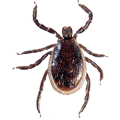
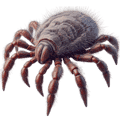
Ticks. Hyalomma dromedarii dominates, H. anatolicum present in many farms, H. impeltatum in low numbers. Female ticks lay 2,000–14,000 eggs per cycle in wall cracks and under stones near where animals are housed. Without environmental treatment of the shed perimeter, treating only the animal achieves about 35% control. Without rotation across active substances, resistance develops within 3–5 years.
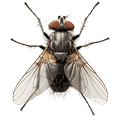
Flies. Stomoxys calcitrans (stable fly) and Musca domestica (house fly), with seasonal Hippobosca camelina (camel ked) pressure. Driven by manure handling and feed-trough hygiene. Stable flies bite painfully and affect milk yield in lactating camels; house flies are a hygiene flag for the operation as a whole.
Rodents. Rattus norvegicus in the feed-storage areas, Mus musculus in the workers' accommodation. Feed loss runs 5–12% in farms without active rodent control. Rodents also serve as reservoirs for several of the zoonoses Hyalomma transmits, which compounds the public-health picture.
Bird pests. Pigeons and feral mynas around feed bunkers and water troughs. Faecal contamination of feed and water is the main concern.
A program that addresses one category and ignores the others doesn't work — the ecology is too interconnected. Tick environmental burden in the shed perimeter is sustained by rodent reservoirs; rodent populations are sustained by feed waste; feed waste also sustains fly populations.
Acaricide rotation strategy that actually works
The published acaricide-resistance research on Al Ain region camel farms gives us the operational frame. Cypermethrin is no longer reliable across most surveyed UAE camel farms. The strategy is rotation, not single-chemistry dependence.
On the animal (pour-on or spray)
- Year 1 Q1–Q2: Amitraz pour-on, every 21 days during peak tick season (March–November)
- Year 1 Q3–Q4: Switch to ivermectin pour-on (also covers internal parasites)
- Year 2 Q1–Q2: Flumethrin pour-on (synthetic pyrethroid, distinct mode of action from cypermethrin)
- Year 2 Q3–Q4: Return to amitraz
- Susceptibility panel every 12 months to verify the rotation is holding
MOCCAE-registered veterinary acaricides only. The farm vet writes the prescription; we do not.
In the environment (shed perimeter, cracks, stones)
- Quarterly fipronil 0.05% liquid spray on shed walls, under feed troughs, in cracks where Hyalomma females lay eggs
- Diatomaceous earth dust in dry crack-and-crevice harborage where liquid spray runs off
- IGR (s-methoprene) emulsion added to the spray cycle once per year to arrest immature stages
For a 380-head farm with 14 sheds, that's about 4–6 hours of environmental treatment per quarter.
Fly management
Different intervention path. The driver here is sanitation, not chemistry.
Manure handling. Daily collection from active sheds, weekly turnover of the manure pile, monthly removal off-farm. Manure piles older than 14 days at UAE summer temperatures are large-scale Musca breeding sites.
Feed-trough hygiene. Daily scrape, weekly disinfection. Trough corners with crusted feed are Stomoxys breeding sites.
UV light traps in the office and worker accommodation. Not in the sheds themselves — UV in shed environments attracts more flies than it captures because the lighting overrides their behavioural cues.
Selective ULV cold-fogging. During peak fly pressure (June–September), evening ULV with deltamethrin or permethrin around the shed exterior at 20-day intervals. Never spray inside an occupied shed when camels are present.
Rodent and bird control
For rodent control in feed storage, tamper-resistant bait stations with bromadiolone outside the feed barn, snap traps and tracking powder inside. Mechanical exclusion at all wall penetrations to the feed storage.
For pigeon and myna control, we install bird-wire mesh on feed-bunker overhangs, pigeon spike on water-trough edges, and where the population is heavy, we run trap-and-relocate with the farm manager's sign-off rather than shooting. ADAFSA (Abu Dhabi) has guidance on humane bird control for livestock operations — most farms haven't read it, and contractors who haven't either default to glue boards (regulated work, often non-compliant) or air rifles (firearms-regulated, off-table).
CCHF prevention — protocol for our technicians and yours
This is the part of the program that matters most and gets the least attention in the industry.
Crimean-Congo Haemorrhagic Fever has a case-fatality rate of 10–40% in symptomatic humans. Hyalomma dromedarii is the primary vector. UAE has documented CCHF cases — most years, single digits, occasionally clusters. Workers handling camels with high tick burdens are the most exposed occupational group in the country.
Our technicians on camel-farm jobs wear long-sleeve nitrile-cuff coveralls, vinyl boot covers, and N95 respirators during environmental spray (not for inhalation toxicity of the acaricide, but because the disturbed crack-and-crevice harborage releases tick-fragment aerosol). Hand inspection of camels for ticks gets nitrile gloves and a tick-removal tool — never bare hands, never a lit match (heat ruptures the tick and increases viral exposure).
We brief farm staff on the same protocol during onboarding. ADAFSA recommends symptomatic follow-up for any worker with febrile illness within 14 days of confirmed tick exposure.
Cost ranges
Real numbers, AED, VAT-included, monthly:
- 50–100 head farm, basic environmental + monthly survey: 2,800–4,800
- 100–250 head farm, full IPM with quarterly susceptibility panel coordination: 4,800–9,500
- 250–500 head farm, full IPM + dedicated supervisor visit cadence: 9,500–18,000
- 500–1,000 head farm, embedded technician on a quarterly residence rotation: 18,000–34,000
- One-off susceptibility-test consult with the farm vet: 800–1,400 per chemistry tested
This sits alongside MOCCAE registration costs (paid by the farm, annual) and any livestock medication costs (paid through the farm vet, not us).
Geographic notes
- Al Wathba (Abu Dhabi): Dense racing-camel concentration; H. anatolicum with documented cypermethrin resistance pressure
- Sweihan (Al Ain region): Mix of dairy and racing operations; tick population still largely susceptible per the published survey, so rotation discipline matters less but should still be practised
- Al Madam and Al Khazna: Mid-size dairy farms, fly pressure tends to dominate over tick pressure
- Liwa fringe: Heritage racing farms, often older infrastructure with cracked-wall harborage, environmental treatment volume runs higher
- Al Ain city periphery (Hili, Al Foah): Small-holding family camels rather than commercial farms; treatment plan scales down to roughly half the per-animal cost
For the comparable but distinct horse-stable vertical, see our equestrian stable fly control UAE guide.
FAQ
What ticks affect UAE camels?
Hyalomma dromedarii is the dominant species across surveyed farms, with H. anatolicum and H. impeltatum present in smaller numbers. Published prevalence is around 98% of sampled animals — almost universal exposure. Females lay 2,000–14,000 eggs per cycle in cracks of walls and under stones near where animals are housed, which is why environmental treatment of the shed perimeter matters as much as the on-animal treatment.
Are camel ticks dangerous to humans?
Yes, when handled without precautions. Hyalomma species are the primary UAE vector for Crimean-Congo Haemorrhagic Fever (CCHF) and also transmit Theileria, Rickettsia, Francisella tularensis, and Q fever (Coxiella burnetii). Most exposure is occupational — workers handling animals with high tick burdens. PPE protocol and post-exposure febrile illness follow-up are non-negotiable parts of any farm program.
How often should a UAE camel farm be sprayed for ticks?
Environmental treatment of the shed perimeter quarterly, with active substance rotation between cycles (fipronil in one cycle, alphacypermethrin in the next, with IGR added once annually). On-animal treatment via the farm vet at 21-day intervals during peak tick season (March–November) and monthly during the cooler months. Quarterly susceptibility-panel testing to confirm chemistry is still effective on the local tick population.
Is cypermethrin still working on UAE camel-farm ticks?
Not everywhere. Published research from the Al Ain region documents level III cypermethrin resistance in Hyalomma anatolicum in the Al Hamam district, level II in Malaqet, and lower levels in other surveyed locations — with Sweihan-area populations still showing full susceptibility. Resistance is geographically uneven and changes year to year. Any farm relying on cypermethrin as a sole acaricide should be running annual susceptibility tests with their vet.
Talk to our commercial team
For a confidential assessment of your farm's current program and a quote for a 12-month IPM contract, contact our commercial accounts team. We work with the farm vet, not around them — the IPM contract complements, not replaces, the veterinary care plan.
Tags
Written by
Maria Fernandez, Commercial Accounts Lead
PestSwift technicians and entomologists publish field-tested pest control guidance for UAE homes and businesses.