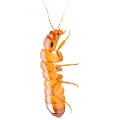
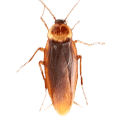
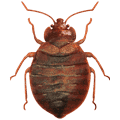

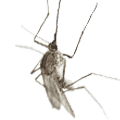




An Owner's Association secretary at a Reem Island tower forwarded us an email last month — a Tadweer renewal notice for the building's e-contract registration. The OA had no record of having signed up to anything. The notice referenced the 11 technical guidelines, the annual vector control window, and a 60-day window to upload current PCO documentation. The secretary's question was the obvious one: we already have an ADPHC-registered pest contractor, why is Tadweer involved at all?
That confusion is the single most common compliance gap we see at Abu Dhabi residential communities. ADPHC and Tadweer are two different authorities with overlapping but distinct scopes. Both apply. Both have their own paperwork. Building OAs that lean on their PCO to figure it out for them often end up out of compliance on one side or the other.
This post is for OA secretaries, FM managers, and building owners in Abu Dhabi who want a practical map of what each authority actually requires.
The authority split
ADPHC — Abu Dhabi Public Health Center
ADPHC owns the public health side of pest control. Specifically:
- Food safety pest control rules for restaurants, hospitals, schools, clinics, hotels — all the F&B and healthcare premises in the emirate.
- The residential tenant complaint pathway through the TAMM portal — a tenant in an apartment can file a pest complaint, ADPHC inspects, and enforcement falls on the building owner.
- Licensing of pest control companies operating in food + healthcare premises.
- Pesticide use rules within commercial food preparation environments.
If you're a tenant with a cockroach problem in your apartment, ADPHC is the authority you escalate to. If you operate a restaurant or clinic, ADPHC is the authority that audits your pest control program.
Tadweer Group
Tadweer (formerly Centre of Waste Management Abu Dhabi, restructured to Tadweer Group in 2023) owns the broader environmental + integrated pest management framework:
- The integrated pest management standard across the emirate.
- Vector control infrastructure — mosquito + fly + rodent programs at the community + public-space level.
- The pest control e-contract registry, which is where PCO contracts for commercial + residential buildings are filed.
- The 11 technical pest control guidelines approved by the Qualifications Control Council (QCC). These cover mosquitoes, rodents, flies, cockroaches, bed bugs, ants, termites, fleas + ticks, dangerous pests, responsible pesticide use, and biodiversity protection.
- Waste-management-adjacent pest infrastructure — rubbish room compactor pest control, public-space rodent baiting, vector-fogging operations during peak season.
If you operate a residential community, Tadweer is the authority that governs your building-wide and community-wide pest program — not your tenant's individual apartment.
The split in practice
| Pest scenario | Authority | Who pays + acts |
|---|---|---|
| Tenant cockroaches in their apartment | ADPHC | Landlord pays, PCO treats, ADPHC enforces |
| Building-wide bed bug infestation across multiple stacks | Tadweer-led, with ADPHC for individual unit access | OA pays for shared infrastructure, individual landlords pay for unit treatments |
| Rubbish room rodent infestation | Tadweer | OA pays + waste contractor coordinates with PCO |
| Community-wide mosquito fogging program | Tadweer | OA pays, Tadweer-registered PCO services during published vector control window |
| Restaurant pest audit | ADPHC | F&B operator pays + complies |
| Termite barrier at handover | Construction-side, then Tadweer scope post-handover | Builder warranty, then OA/owner program |
The 11 Tadweer technical guidelines — what they require operationally
Tadweer's QCC-approved guideline set defines integrated pest management standards across pest categories. For a residential OA, the operational implications are:
- Mosquitoes — source-elimination protocol (BTI larvicide in pool overflows, AC drains, retention basins), perimeter barrier during published vector control window (typically April–October), community fogging coordinated with the Tadweer schedule.
- Rodents — perimeter bait-station network at building exterior + landscape buffer, monthly service, rodent-rated sealing at all building penetrations.
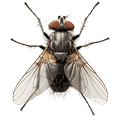
- Flies — drain biofilm treatment, sealed waste storage, UV interceptor traps at rubbish rooms (not above food).
- Cockroaches — gel-bait at shared service areas (basement service corridor, rubbish room, lift mechanical), quarterly IGR fog.
- Bed bugs — building-wide protocol if multi-unit infestation detected, coordinated neighbour notification, heat treatment preferred for cluster-style transmission.
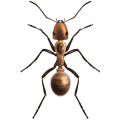
- Ants — bait + barrier approach, particular attention to Pharaoh ant in healthcare-adjacent buildings.
- Termites — pre-construction barrier verification, post-occupancy monitoring (Sentricon or reactive barrier), 5–10 year warranty documentation.
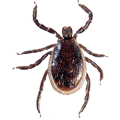
- Fleas + ticks — typically pet-adjacent, treated at point of source (apartment with pet) plus common-area inspection.
- Dangerous pests — snakes, scorpions, swarming bees + wasps — emergency response protocol with appropriate species-specific handling.
- Responsible pesticide use — chemical selection from Tadweer-approved list, PPE compliance, application logging.
- Biodiversity protection — non-target organism protection, avoidance of broad-spectrum aerosol fogging adjacent to mangrove + protected habitat zones.
The operational implication: your PCO contract scope of work should reference these guidelines explicitly. If the SoW just says "monthly pest control," your auditor will write that up.
The e-contract — what gets uploaded
The Tadweer e-contract registry is where PCO service contracts for commercial + residential buildings are filed. For a residential OA, the upload bundle includes:
- Signed PCO service contract (current year)
- Scope of work explicitly referencing the 11 technical guidelines
- PCO trade license + Tadweer registration certificate
- Technician category coverage list — which technician categories the PCO holds (rodent, vector, structural, etc.)
- Monthly service reports — uploaded as they're generated
- Annual review report
- Vector control program calendar aligned with the Tadweer published window
Most OAs treat the e-contract upload as something the PCO does. In our experience that doesn't actually happen — the PCO uploads its own credentials but not the OA-side documents. The OA secretary needs to own this. Specifically the monthly service report upload — if those go stale, the e-contract registration lapses, and Tadweer will issue a renewal notice (often the first time the OA learns of the issue).
Verifying your PCO
Use the TAMM portal — search by PCO trade license number. Confirm:
- Tadweer registration is current (not lapsed)
- ADPHC PCO license is current
- Technician categories cover the pest types relevant to your building
- Pesticide handling certifications are current
If any of those are out of date, the PCO can't legally service your building. Some PCOs operate with lapsed registrations and rely on OAs not checking. Check.
Vector control window — what your OA should plan for
Tadweer publishes an annual vector control window — the period during which community + public-space mosquito + fly + rodent programs are intensified. The window typically runs April–October, coinciding with peak vector activity in Abu Dhabi.
For a residential OA, the practical implications during the window:
- Community-wide truck fogging or backpack-fogging program (your PCO coordinates, your OA pays).
- BTI larvicide application to all standing-water sources in the community (irrigation balance tanks, retention basins, decorative water features).
- Increased rodent baiting intensity at all building perimeters.
- Quarterly comprehensive inspection.
Cost implication for OAs: community vector program annual cost is typically AED 8,000–22,000 depending on community size. This is separate from the per-building pest control AMC contract, which runs AED 18,000–42,000 annually for a 50–200 apartment building. Many OAs miss the vector program line in their annual budget.
Cost summary for OAs
| Program element | Annual cost (AED) | Authority |
|---|---|---|
| Per-building pest AMC, 50–80 apartments | 18,000–24,000 | Tadweer scope |
| Per-building pest AMC, 81–200 apartments | 24,000–42,000 | Tadweer scope |
| Community vector control program | 8,000–22,000 | Tadweer scope (during window) |
| Tenant-side complaint response (per incident) | 380–950 | ADPHC pathway, landlord pays |
| Annual compliance audit (independent) | 2,400–4,800 | Optional but recommended |
For the Abu Dhabi tenant-side responsibility chain, see our ADPHC pest control rules for Abu Dhabi tenants. For F&B operators inside Abu Dhabi malls, our ADPHC mall food court pest compliance guide covers the audit specifics. For comparison with Dubai's regulatory regime, see Dubai Municipality pest control complaint process. For the broader UAE biocide registration story, see MOCCAE biocide registration for pest control.
Booking a compliance audit
For OA secretaries or FM managers reviewing their building's pest compliance position, PestSwift offers an independent compliance audit. We review:
- The PCO contract scope against the 11 Tadweer guidelines
- The Tadweer e-contract upload status
- The monthly service report cadence + content
- Vector control program alignment with Tadweer's published window
- ADPHC tenant-complaint pathway preparedness
- The annual pest program review status
We deliver a written gap analysis with specific recommendations. AED 2,400–4,800 depending on community size. Book a compliance audit.
We also operate as a Tadweer + ADPHC dual-registered PCO. If your audit identifies that your current PCO isn't fully credentialed, we can step into the service contract with full documentation bundle.
FAQ
Is Tadweer the same as ADPHC?
No — they're separate Abu Dhabi authorities. ADPHC owns public health pest rules (food, healthcare, tenant complaints). Tadweer owns environmental + integrated pest management (community vector control, e-contract registry, the 11 technical guidelines). Most residential pest control programs fall primarily under Tadweer with ADPHC handling individual tenant issues.
What if our PCO doesn't have Tadweer registration?
A PCO without Tadweer registration cannot legally service residential community pest contracts in Abu Dhabi. You'll need to either ask the PCO to obtain registration (it's a documentation + assessment process taking 30–60 days) or transition to a PCO that already holds the registration. The latter is faster.
Does the vector control window apply to my building or just public spaces?
Both. The window mandates intensified vector control at all building exteriors + landscape areas + community common spaces during April–October. Your PCO should be scheduling community fogging and BTI larvicide application during this window without you asking.
What happens if we miss a Tadweer e-contract renewal?
The registry lapses. Tadweer issues a renewal notice with a 60-day window. If the OA doesn't respond, the building's pest control compliance is technically suspended. ADAFSA-adjacent food premises (any retail F&B in the building's podium) will lose their underlying compliance basis and face individual enforcement. The fix is straightforward — submit the renewal bundle. Don't ignore the notice.
Tags
Written by
Dr. Karim El-Sayed, Lead Entomologist
PestSwift technicians and entomologists publish field-tested pest control guidance for UAE homes and businesses.