

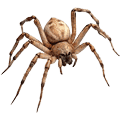
Spiders
Araneae
Most UAE spiders are harmless and helpful — they eat the cockroaches and flies. Treatment focuses on web removal and barrier control, with targeted action only for medically significant species.
UAE spiders — context first
The vast majority of spiders you see in UAE villas and gardens are harmless — wolf spiders, garden orb-weavers, jumping spiders, common house spiders. They eat the pests that actually bother you. Killing them is usually a step backward.
Three species deserve more attention:
- Black widow (Latrodectus) — uncommon but present, especially in stored boxes, garden sheds, irrigation chambers. Bite is medically significant.
- Brown recluse (Loxosceles) — rare in UAE, occasionally reported. Avoid if seen.
- Camel spider / sun spider (Solifugae) — large, fast, intimidating but not venomous. Painful bite from sheer size; not dangerous medically.
What we actually treat
Most spider calls are about webs and visual presence, not danger. Our standard treatment is:
- Web removal — physical de-webbing with extension brushes (eaves, corners, garden walls)
- Perimeter residual — sprayed at the foundation, around windows, garage doors
- Harborage reduction — cleaning out garden sheds, storage, leaf piles
- Targeted treatment for medically significant species if confirmed
For villa gardens we recommend quarterly de-webbing rather than chemical treatment — the spiders themselves are doing useful work.
How to identify
- Most species: harmless, varied colours, web-builders
- Black widow: shiny black, red hourglass on underside, tangled cobweb
- Camel spider: large (up to 15cm leg span), tan, fast-moving (not venomous)
- Wolf spider: grey-brown, ground-dweller, no permanent web
Signs of infestation
- Visible webs in eaves, corners, plants
- Egg sacs (silken white spheres) in protected areas
- Spider sightings in stored boxes, garage corners, irrigation chambers
Where they hide
- Eaves and ceiling corners
- Garage and storage rooms
- Garden sheds, palm tree bases
- Irrigation chambers and meter pits
- Behind picture frames in low-traffic rooms
Health risks
- Most species: low risk, beneficial
- Black widow bite: muscle pain, cramping, requires medical attention
- Camel spider: painful but not venomous bite
- Allergic reactions to bites in sensitive individuals
Prevention tips
- De-web exterior eaves quarterly
- Inspect stored boxes and shake out shoes left in garage
- Reduce outdoor lighting that attracts insect prey
- Keep landscaping trimmed back from villa walls
Our treatment methods
- Mechanical de-webbing
- Perimeter residual barrier
- Targeted treatment for medically significant species
- Harborage reduction
Lifecycle in UAE conditions
- 1 Most UAE spider species lay 50-200 eggs per egg sac; sacs deposited in protected harborages.
- 2 Spiderlings hatch within 2-4 weeks and disperse via 'ballooning' on air currents — explaining sudden indoor appearance after windy days.
- 3 Common house spiders mature in 6-12 months; black widows mature in 6-9 months.
- 4 Adult lifespan is 1-3 years for most species; female black widows can live up to 5 years.
- 5 Mating peaks September-November in the UAE — explaining the seasonal increase in indoor sightings.
Before we arrive
- Identify any visible egg sacs (small silken white spheres) and note their location
- Photograph any spider you're concerned about and send it via WhatsApp — we'll identify before the visit
- Clear stored boxes and shake out shoes left in garage areas
- Note any persistent web locations — those are usually under-disturbed harborage zones
- Keep pets indoors during eaves de-webbing
After treatment
- Don't immediately re-introduce stored cardboard boxes to garage corners — they're prime spider harborage
- Reduce exterior lighting that attracts insect prey, especially around villa entrances
- Schedule quarterly de-webbing rather than chemical treatment — most UAE spiders are beneficial and just need physical web removal
- Watch for new egg sacs in low-traffic rooms (under furniture, behind picture frames) and call us if you see any
- Re-treat with perimeter residual every 6 months if persistent indoor activity
When DIY isn't enough
For most UAE spiders — wolf, jumping, garden orb-weaver, common house spider — DIY de-webbing is fine and we don't recommend chemical treatment. Call us specifically for confirmed black widows, persistent indoor populations or egg-sac removal in storage areas. We'll always tell you when treatment isn't needed; spider control isn't always justified.
UAE regulatory context
No special UAE regulatory requirements for spider control. Black widow removal is straightforward and doesn't require restricted-use chemicals. We operate to standard pesticide handling rules.
Frequently asked
Related pests
More on spiders from the PestSwift blog
Field-tested guides written by our technicians and entomologists.
Need spiders treatment now?
Same-day callouts across every Dubai neighbourhood. Free inspection, fixed price.