
Walk a UAE yard at the wrong time of year and you'll see it on the horses before you see a single fly trap: clusters around the eyes, flicking tails, stamping in the stalls, rugs on in 40-degree heat just to keep the biters off. By then the yard manager has usually bought every fly spray on the shelf and hung a few sticky ribbons in the barn. They help a little. They never fix it. Because in a stable, fly control isn't a spraying job. It's a manure job.
The UAE has a serious equestrian scene — racing and training around Meydan, the polo and riding establishments, the private yards scattered through the villa-estate and farm belts of Al Quoz, Al Khawaneej, the Dubai outskirts and out toward Al Ain. Every one of those yards fights flies, and the ones that win do it the same way.
Know your two flies
Two species cause nearly all the misery, and they're not the same animal.
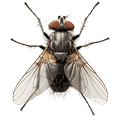
- House fly (Musca domestica). Non-biting but a relentless nuisance and a real disease risk — it lands on feed, water, wounds and faces, moving bacteria as it goes. Breeds in moist manure, soiled bedding, spilled wet feed and silage. A house fly goes from egg to adult in about a week in UAE summer heat, so a population explodes fast.
- Stable fly (Stomoxys calcitrans). The biter. Looks like a house fly but punches a painful bite, usually on the legs and belly, to take a blood meal. This is the one that drives horses to stamp, bunch and lose condition. Breeds in wet, rotting organic matter — soggy bedding edges, the damp fringe of the muck heap, decaying hay.
Both breed in the same thing: warm, wet organic matter. Which is exactly what a stable produces all day. That's why you can't spray your way out — you'd be killing adults while the breeding sites pump out thousands more.
Why UAE yards have it harder
The heat is the multiplier. A fly life cycle that takes two to three weeks in a temperate climate can run in under a week through a Gulf summer, so populations rebuild almost as fast as you knock them down. Add the things specific to yards here:
- Manure volume. A single horse produces a lot of muck a day; a yard of twenty is a constant, large breeding substrate if it isn't managed.
- Wash-down water. Constant hosing of horses and yards creates the permanent damp that stable flies need at the edges of drains, bedding and the muck heap.
- Feed and water stations. Spilled wet feed and dribbled water troughs are house-fly nurseries.
- Open barns. Naturally ventilated barns — sensible in the heat — also mean you can't simply seal flies out; you have to manage them.
The programme that works on a yard
Sanitation first, always. Then biological and mechanical control. Chemical last, and targeted. That order is the whole secret.
- Manure and bedding management — the foundation. Muck out daily, and get the muck heap right: sited well away from the stables and the prevailing wind into the barn, kept as dry and tightly managed as possible, removed frequently rather than left to rot. Most of a yard's fly problem is decided here, before any product is used.
- Moisture control. Fix the wet spots — leaking troughs, poor-draining wash bays, the soggy bedding fringe along stall walls. Drying those out removes the stable fly's nursery.
- Larviciding the breeding sites. Where wet organic matter has to exist, we treat it — a larvicide or insect growth regulator applied to the muck heap fringe and damp problem areas stops maggots becoming adults. Killing them in the heap is far more effective than chasing them in the air.
- Biological control. Parasitic wasps (tiny, harmless to horses and people) that parasitise fly pupae are a proven, residue-free tool for yards, released on a schedule through the season to suppress the next generation at source.
- Targeted adult control. Fly-bait stations and traps sited away from the horses, sticky systems, and where needed a residual treatment on barn surfaces where flies rest — kept off the animals, the feed and the water. Misting or fogging only as a knock-down for a peak, never as the main strategy.
- Animal-safe products and documentation. Everything used around livestock has to be appropriate for the setting and applied by trained technicians — we work to Dubai Municipality-approved products and keep the treatment records that a professional or competition yard needs for its own standards. Feed rooms and tack stores get the same attention as the barn — that overlaps with our warehouse pest control work, since stored feed draws rodents and flies of its own; for the fly biology side, our outdoor restaurant fly control guide covers the same species in a different setting, and summer fly control around villa BBQ and pool areas is the residential cousin of this problem.
What it costs
| Yard | Programme | Typical cost (AED) |
|---|---|---|
| Small private yard (2–6 horses) | Monthly: larvicide + traps + advice | 600–1,200 per visit |
| Mid yard / riding school | Monthly + parasitic wasp releases | 1,200–2,500 per visit |
| Large training / competition yard | Fortnightly in peak + full IPM + docs | quoted on survey |
The yards that try to save money by skipping the programme and buying retail fly spray by the case almost always spend more over a summer — and their horses pay for it in stress and condition. A managed programme costs less than the wasted spray and the lost work.
FAQ
Why doesn't fly spray fix the problem in my barn?
Because spray only kills the adult flies it touches, while thousands more are developing in the manure, wet bedding and muck-heap fringe. In UAE heat a new generation emerges in under a week, so you're always behind. Lasting control comes from removing the breeding sites — manure and moisture management — with spray as a minor, targeted add-on, not the strategy.
Are parasitic wasps safe around horses and people?
Yes. The parasitic wasps used for fly control are tiny, don't sting or bother horses, people or pets, and target only fly pupae in the manure and bedding. They're a standard, residue-free tool on professional yards worldwide and are well suited to UAE stables because they work at the breeding source rather than in the air the horses breathe.
Where should the muck heap go to reduce flies?
As far from the stables as the site allows, and downwind of the barn so emerging flies aren't blown straight back to the horses. Keep it tightly managed and as dry as possible, and remove it frequently rather than letting it sit and rot. Muck-heap siting and management is the single biggest lever on a yard's fly numbers.
Can you treat without disrupting training or the horses?
Yes. We schedule around your yard routine — early morning or between sessions — and keep all products off the animals, feed and water. Larviciding the heap, releasing parasitic wasps and servicing traps are all low-disruption, and we plan any residual barn treatment for when stalls can be briefly clear.
Losing the summer to flies on the yard? Talk to our commercial team and we'll build a programme around your muck management and your horses. See our warehouse pest control for feed and tack stores, and read more on our flies page.
Tags
Written by
Maria Fernandez, Commercial Accounts Lead
PestSwift technicians and entomologists publish field-tested pest control guidance for UAE homes and businesses.