




A Burj Khalifa-view rooftop, two months apart
Mid-March a Downtown rooftop restaurant we started servicing had a Dubai Municipality routine inspection and passed clean — zero pest sightings, complete log book. Mid-May, eight weeks later, the same restaurant had its first major fly cluster on the outdoor seating section. By the third week of May the chef called Dubai Municipality himself for advice; the food blogger photos were getting screenshotted onto Instagram.
The winter pest programme had been correct for winter. It was structurally undersized for May.
This is the pattern we work to pre-empt every year. The UAE restaurant fly surge isn't gradual; it's a step-change between roughly week 18 and week 22 of the year. Programmes that aren't resized in advance get caught.
What changes biologically in May
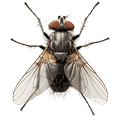
Musca domestica — the common house fly — has a temperature-driven development cycle. The numbers from any peer-reviewed entomology source on it look like this:
- At 20°C: egg to adult takes about 17-21 days
- At 25°C: egg to adult takes 8-10 days
- At 30°C: egg to adult takes 6-7 days
- At 35°C: egg to adult takes 4-5 days
UAE outdoor temperatures cross 28°C around the second week of April and reach steady 32-38°C by mid-May. A fly programme calibrated for 6-7 day cycles needs roughly 2.5x the trapping density of a programme calibrated for 17-21 day cycles, just to catch up with the breeding rate.
The bottle fly Calliphora and the lesser house fly Fannia track similarly. The blow flies that find the bin store a few hours after meat or sugar waste arrives are even faster — egg deposition within 30 minutes of attractant exposure.
If your fly trap count was 1-2 per week through March, expect 8-15 per trap per week by mid-May without intervention.
Why winter programmes fail in May
The most common winter restaurant fly programme we replace looks like this:
- Three blue-UV insect light traps inside the kitchen
- Monthly preventive servicing visit
- One outdoor electric fly killer at the bin store entrance
- Monthly drain cleaning with a non-residual sanitiser
Four problems show up in May:
- Blue UV inside the kitchen attracts flies in. Blue light at 365 nm is the most-attractive wavelength for house flies. In winter that's fine because exterior fly pressure is low. In May, the kitchen door becomes a fly funnel. We switch to LED ILTs with directional shielding so the attractant glow doesn't escape into the dining area or the kitchen pass.
- Monthly servicing misses the IGR refresh window. Insect growth regulator residual on bin store walls degrades in 14-18 days under UAE summer sun. Monthly = at least 12 days uncovered.
- One bin-store EFK is undersized. A typical UAE restaurant bin store generates 30-60 fly attractants in May (waste delivery, rinse-water residue, condensate). One EFK at the door catches the foragers; it doesn't reduce breeding.
- Drain cleaning doesn't address larviciding. Drosophila (fruit fly) and Psychoda (drain fly) breed in the bio-film inside drain traps. Sanitiser cleans the visible wet surface. The film stays put. We use enzyme-bacterial drain treatment specifically for bio-film digestion.
The May-onwards programme that holds
We scale outdoor restaurant accounts up to a full pre-summer protocol by the first week of May:
- Switch to bi-weekly servicing. Every 14 days through October, then back to monthly.
- Replace blue-UV ILTs with shielded LED ILTs. UV-A LED tubes (368 nm) with vertical glue boards. Directional shields keep the lure inside the kitchen.
- Triple the outdoor fly station count. A typical 200-cover restaurant moves from 1 outdoor EFK to 3 — bin store, service yard entrance, outdoor seating perimeter (set 5-7 m away from the diners, not at the table edge).
- Bin store IGR residual every 14 days. Pyriproxyfen or s-methoprene applied to wall and floor of bin store and grease-trap room.
- Cypermethrin or deltamethrin perimeter spray. Outdoor seating perimeter wall and the underside of any pergola or awning, every 4 weeks during peak.
- Drain bio-enzyme dosing weekly. All floor drains and grease-trap inlets receive a bacterial enzyme dose to digest organic film.
- Outdoor seating mounted electric fans on tables. Operationally simple — flies don't navigate against a 2 m/s air column. Most restaurants we work with already have ceiling fans for cooling; we recommend angling them slightly more for fly disturbance during peak hours.
With this stack, fly counts on outdoor seating audit-trap monitoring stay below the 5-per-trap-per-week threshold most HACCP and Dubai Municipality auditors use as a flag.
Documentation that audits well
Dubai Municipality and ADPHC inspectors look at three things first:
- Pest sighting log — staff entries for any fly, cockroach, rodent observation, with technician follow-up signature
- Service report book — your contractor's per-visit findings, products applied, batch numbers, technician COP licence
- Fly trap count trend chart — month-by-month counts plotted against threshold lines
We deliver the trend chart as part of bi-weekly servicing. If your outdoor seating fly count jumps from 4 to 12 in a week, the chart shows it before the next inspector does. The HACCP pest control log book post covers what each entry should contain.
The outdoor seating perimeter: where most restaurants get it wrong
The biggest single source of fly pressure on outdoor restaurant seating is the kitchen waste pathway. From the kitchen door to the bin store, every metre of route attracts flies. If the route runs along the side of the outdoor seating, flies funnel through the dining area en route.
The operational fixes are layout, not chemistry:
- Move waste pickups outside service hours (06:00 or 11:30 lunch transitions, not 19:00 with diners present)
- Use sealed wheeled bins for the kitchen-to-store transit, not open buckets
- Treat the transit corridor with a daily quaternary-ammonium wash
- Run a single LED ILT inside the bin store with the door closed; flies that follow the trail get trapped inside
We walk these routes on every site survey. About 60% of the outdoor restaurants we audit have a fixable route problem before any chemistry change.
Real AED pricing for outdoor restaurants
For a 150-250 cover outdoor restaurant with bin store, outdoor seating, and HACCP-required documentation:
- Bi-weekly summer programme (May-October): AED 1,200-1,800/month
- Annual programme (full year): AED 12,000-18,000
- Pre-summer setup (first month, scaling up): AED 1,800-2,400 one-off
- Emergency response 24-hour callout: AED 600-900 per visit
Larger venues (rooftop bars with 400+ covers, fine-dining outdoor terraces with valet zones) typically run AED 18,000-32,000/year on annual programmes.
Common audit findings we pre-empt
The Dubai Municipality and ADPHC findings most often issued to UAE restaurants in May-July:
- Fly sightings on outdoor seating during inspection — usually means inadequate outdoor EFK density
- Bin store wall surface contamination — IGR residual is overdue
- Indoor blue UV attracting flies through the pass — wrong ILT placement
- Drain biomass visible — no bacterial enzyme programme
- Pesticide log gaps — contractor visited but didn't fill the log
- Expired technician COP licence on file — happens when contractors swap technicians without updating documentation
None of these are difficult to fix. They just have to be fixed before the inspection, not after.
FAQ
Why do flies explode in UAE restaurants in May?
The step-change is temperature-driven fly development. Egg-to-adult cycle compresses from 17-21 days at winter temperatures to 6-7 days at May temperatures. Without changing the trapping density and bin store treatment frequency, you can't keep up with the breeding rate.
Are UV insect light traps allowed inside HACCP kitchens?
Yes — they're standard in HACCP-compliant kitchens. The detail is that the trap must use glue boards (not electrocution grids that scatter fragments), must be located more than 3 metres from any open food prep surface, and must be serviced on a documented schedule. The HACCP pest control log book post covers servicing intervals.
How often should restaurant bin areas be sprayed in summer?
The minimum effective frequency is 14 days for IGR residual on bin store walls. Monthly leaves a 12-16 day gap where the residual has degraded. We run bi-weekly through May-October across our F&B accounts; quarterly cleaning of grease traps with bacterial enzyme dosing weekly.
Do outdoor patio fans help with flies?
Yes — a steady 2 m/s air column across a table top eliminates fly landing. Operationally cheap; requires ceiling fans or table-mounted fans angled correctly. Doesn't replace the perimeter and bin programme but reduces the diner experience problem.
Book a pre-summer site survey
We survey UAE restaurants for free, including a fly route walk-through, fly-trap density audit, and a HACCP log book review. The survey takes 60-90 minutes during off-peak hours.
Book a free restaurant survey or read more about commercial pest control and our HACCP restaurant programme.
Tags
Written by
Maria Fernandez, Commercial Accounts Lead
PestSwift technicians and entomologists publish field-tested pest control guidance for UAE homes and businesses.