

You've paid for pest control twice this year. So has the flat below you, separately, with a different company. And the cockroaches keep coming back to both of you. The reason is almost always the same: nobody treated the thing connecting your two kitchens, the shared riser, the refuse chute, the common drainage, because each of you assumed it was the other's job, or the building's.
This confusion costs Dubai residents and building owners a lot of wasted money. So let's lay out who is actually responsible for pest control in a jointly owned building, what your service charge is supposed to cover, and where the line falls between the owners association and the individual unit.
The legal frame, in plain language
Dubai's jointly owned property regime, currently governed by Law No. 6 of 2019 and the earlier JOP framework, draws a clear line between two zones: the common areas and the individual units.
The owners association, in practice represented by its management company, is responsible for managing, operating and maintaining the common areas. Under Article 25 of Law 6 of 2019, each owner pays their share of the annual service charges, calculated by the size of their unit relative to the whole, to fund exactly that, the operation, maintenance and repair of the common parts.
Pest control of the common areas sits squarely inside that duty. Maintaining the building means keeping it free of infestation in the shared spaces, which is why building management is obligated to take proactive measures: cleanliness, waste management, drain cleaning, sealing entry points and routine inspection across the common parts.
The individual owner or occupier is responsible for inside their own unit, from the entrance door inward.
Where the line actually falls
In day-to-day pest terms, here's the split that matters.
The owners association / management company should be treating:
- Refuse chutes and bin/refuse rooms, the single biggest cockroach and rodent reservoir in most towers.
- Basements, car parks and plant rooms.
- Service risers, ducts and the chases that carry pipes and cables between floors.
- Common drainage and the building's main sewer connections.
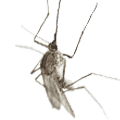
- Shared landscaping, podium decks and common water features (mosquito breeding).
- Lobbies, corridors, stairwells, gyms, pools and other shared amenities.
- Empty/unoccupied units where the OA rules require inspection, since a neglected vacant flat seeds the neighbours.
The individual unit owner or tenant is responsible for:
- Inside their own apartment, the kitchen, bathrooms, and the harbourage within their walls.
There's a second split inside the unit, between landlord and tenant, that we cover separately in our guide to tenant and landlord pest control responsibility. That's a different line from the one this article is about.
Why the split is the whole game with roaches and rodents
This isn't legal trivia, it's the reason treatments fail.
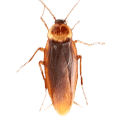
German cockroaches and rodents don't respect unit boundaries. They breed in the warm, undisturbed common services, the chute, the riser, the basement, and forage out into the flats. If the owners association isn't treating those shared spaces on a proper schedule, then every unit-level treatment is temporary by design. You clear your kitchen; the building re-seeds it within weeks from the reservoir nobody's touching.
That's exactly the spray-and-return cycle so many residents are stuck in. The flats keep paying for individual treatments while the source, the common areas, goes untreated because each owner thinks the building has it covered and the building points back at the units.
The most cost-effective pest control in a tower is a single coordinated programme covering common areas and units together. Ten flats each paying a different company to spray ten kitchens is the most expensive way to not solve the problem.
What a building-wide programme should include
When we're engaged by an owners association or management company for a tower-wide programme, it's built around the reservoirs, not just complaints:
- Scheduled treatment of chutes, bin rooms, basements, risers and common drainage, monthly or as risk dictates.
- Drain and chute line treatment, where most German roach populations actually live.
- Rodent baiting in secured stations through the basement, car park and service routes, logged for audit.
- Mosquito source control across podium landscaping and water features through summer.
- Inspection and a record-keeping log the OA can show owners and inspectors.
- Coordination windows so individual units can be treated in step with the common areas, which is what finally breaks a riser-wide infestation.
For mixed-use towers with retail or F&B at podium level, there's an extra layer: those food businesses carry their own Dubai Municipality FoodWatch and pest-record obligations, and a restaurant's grease and waste can drive an infestation up into the residential floors above. A whole-building view has to account for that interface.
If your building runs an annual maintenance contract, it's worth checking what the pest scope actually covers, our explainer on what a UAE pest control AMC should include is a useful checklist to hold your management company to.
What to do if you're the one being bitten
If you're a resident stuck in the cycle:
- Confirm it's a common-area source. Repeated reinfestation despite proper in-unit treatment, plus activity around the chute, drains or shared walls, points at the building.
- Raise it formally with the management company. Pest control of common areas is a service-charge-funded obligation, not a favour. Put it in writing and ask what the current common-area pest programme is and when it last ran.
- Push for coordination. If neighbours on your riser are affected too, a coordinated treatment is far more effective, and cheaper per flat, than everyone going it alone.
- Keep your own unit tight in the meantime, food and water denial, sealing pipe penetrations, so you're not the flat seeding the others.
FAQ
Does my service charge already pay for pest control? For the common areas, it should. Service charges under Article 25 fund the operation and maintenance of common parts, and keeping those areas pest-free is part of that. It does not cover treatment inside your individual unit, that's the owner's or tenant's cost. If common-area pest control isn't happening, you're entitled to ask the management company why.
The pest control company keeps treating my flat but the roaches return, whose problem is that? If your unit is being treated properly and they still come back, the source is almost certainly a common area, the chute, riser or drainage, which is the owners association's responsibility. No amount of in-unit spraying will fix a building-level reservoir. The fix is getting the common areas onto a real programme, ideally coordinated with the units.
Can the owners association force an owner to treat an infested or vacant flat? OA rules and the JOP framework generally require owners to keep units, including unoccupied ones, from becoming a nuisance or hazard to others, which includes pest infestations and routine drain maintenance. A flat that's seeding the building can be required to act. The specifics depend on your community's registered rules, so check them and raise it through the management company.
Who handles pest control in a mixed-use tower with shops below? The residential common areas remain the OA's responsibility, while each retail or F&B tenant carries its own municipality pest-record and FoodWatch obligations for its premises. Because a podium restaurant can drive infestation upward, the best outcome is a coordinated building programme that covers common areas and aligns with the commercial tenants' own pest control.
Managing a building, or living in one where the roaches keep winning? Talk to us about a coordinated programme that treats the common areas and the units together, the only approach that actually clears a shared riser.
Tags
Written by
Maria Fernandez, Commercial Accounts Lead
PestSwift technicians and entomologists publish field-tested pest control guidance for UAE homes and businesses.