
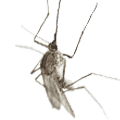






Here's the thing that surprises most Damac Lagoons residents: the lagoon itself is rarely what's biting you. The big crystal-clear water body is circulated, filtered and dosed, mosquitoes need still water to lay, and moving treated water is hostile to larvae. The mosquitoes feeding on your ankles at dusk almost always hatched within a few metres of where you're standing, in water you walk past without a second look.
We've worked enough lagoon-style communities across Dubailand and the Damac Hills belt to know exactly where to point the torch. So before you assume the developer needs to fix the lake, let's separate what's theirs to treat from what's yours.
Why a "clean" lagoon community still has mosquitoes
A mosquito doesn't need a lake. It needs a bottle-cap of standing water for about a week. The female lays on the water surface or just above the waterline; eggs hatch into larvae that breathe at the surface, then pupate and emerge as biting adults. Cut off standing water for that one week and you cut the whole cycle.
In a townhouse or villa cluster, the breeding sites are almost never the feature water. They're:
- Plant pot saucers and the gravel trays under terrace planters.
- AC condensate drips pooling on the podium or in a tray, the single most common source we find in summer.
- Blocked or slow terrace and balcony drains holding a film of water.
- Irrigation valve boxes, the green-lidded boxes set into the lawn, which collect water and stay shaded.
- Kids' paddling pools, water tables, and the saucer under the dog's outdoor bowl.
- Decorative private water features and unmaintained plunge pools.
The lagoon edge does matter in one situation: shallow, planted margins where water goes still behind rocks or vegetation, and any spot where post-rain runoff sits for days. After the heavy rains, Dubai's authorities went as far as releasing mosquito-eating fish into water bodies and stepping up fogging to deal with exactly that, the stagnant pockets, not the moving main body.
Who treats what: community vs your villa
This trips people up, so let's be blunt about the split.
The community / owners association treats the common water and open areas. That means the lagoon body, shared landscaping, common drains, and the scheduled thermal fogging runs through the community at dawn or dusk. If the common-area fogging has gone quiet or the lagoon margins look stagnant, that's a service-charge issue to raise with your community management, because it's funded from what you already pay.
You own everything inside your plot. Within roughly the three-metre setback around your unit, the saucers, the AC drips, your drains, your water features, the developer won't be treating those, and they're usually the ones biting you. This is the part a private treatment handles.
What a proper private treatment looks like
Killing adult mosquitoes with a quick fog feels satisfying and lasts about two days. We lead with source reduction and larviciding instead, because that's what actually drops the bite count for weeks.
A typical villa or townhouse mosquito visit runs like this. First, a source survey, we walk the whole plot looking for every container, drain and damp pocket, including the spots residents never check like the irrigation boxes and the gap behind the AC units. Second, source removal or larviciding: standing water gets tipped out where possible, and anything that can't be drained (valve boxes, retained drains, ornamental water) gets a biological larvicide, Bacillus thuringiensis israelensis, Bti, which kills larvae but is safe around people, pets and the planting. Third, a targeted residual barrier on the shaded resting surfaces where adults shelter through the heat of the day, under dense shrubs, fence lines, the underside of terrace furniture. We use only Dubai Municipality-approved products and we keep adulticide off open water and edible plants.
Fogging is the finish, not the foundation. If a company arrives, fogs, and leaves without ever looking for where the larvae are, you've bought two quiet evenings, not control.
The Aedes detail that matters here
Two mosquito types matter locally. Culex is the classic dusk-and-dawn, indoor-at-night biter. Aedes is the daytime biter, aggressive in the early morning and late afternoon, and it breeds in exactly the small, clean containers a tidy villa garden provides, that plant saucer, that toy. If you're being bitten by day on your own terrace, you have an Aedes source within metres, and it's almost certainly on your side of the setback. That's good news, actually, because it means the fix is in your control.
Timing: get ahead of the summer curve
Mosquito pressure climbs through late spring and peaks across the UAE summer when humidity, irrigation and AC condensate all rise together. The smart move is a source survey now, before the population builds, plus a standing larvicide programme through the hot months rather than reactive fogging once everyone's already covered in bites. Communities that handle the common water on schedule and residents who keep their own plots dry get the quiet evenings. The ones who wait for the swarm and then fog get a fortnight of relief and a repeat bill.
For the wider why-this-keeps-happening picture, our breakdown of AC drains as a summer mosquito factory covers the single source we end up treating most.
FAQ
The community fogs already, so why am I still bitten? Community fogging treats common areas and knocks down adults in the open, but it can't reach the breeding sites inside your plot, your saucers, AC drips and drains. Those keep producing new mosquitoes between fogging runs. Source reduction on your own plot is what closes that gap.
Is the lagoon water breeding mosquitoes? The main circulated body usually isn't, moving, treated water is poor habitat for larvae. The risk is in still margins, post-rain puddles, and unmaintained edges, which fall to community management. The biters around your home almost always come from small containers nearby, not the lagoon.
Is larvicide safe around my kids, pets and plants? The biological larvicide we use, Bti, is target-specific to mosquito and midge larvae and is widely used in drinking-water cisterns internationally. Used as directed it's safe around children, pets and edible planting, which is exactly why we prefer it to blanket adulticide spraying near the home.
How much does a villa mosquito treatment cost in a community like this? A one-off source survey with larviciding and a resting-surface barrier for a standard townhouse or small villa typically runs around AED 350 to 650, depending on plot size and how many water sources need treating. A summer programme of scheduled visits works out cheaper per visit and keeps the population from rebuilding.
Being eaten alive on your own terrace? Book a source survey and we'll find the water that's actually breeding them, usually a lot closer to your door than the lagoon.
Tags
Written by
Rashid Al Mansoori, Operations Manager
PestSwift technicians and entomologists publish field-tested pest control guidance for UAE homes and businesses.