
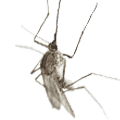




Walk along Al Sufouh Beach at 7pm in late May and the swallows are already out, sweeping the air. Those swallows are feeding on the same swarm of Aedes caspius and Culex quinquefasciatus that's about to land on the residents of the Madinat Jumeirah villas just inland. We're getting two months of inquiries from this strip every year, and the problem is that nobody who quotes here is thinking about both species at once.
Madinat Jumeirah and Al Sufouh sit at the meeting point of two completely different mosquito ecologies. Treating only one of them is why fogging here fails inside 48 hours.
The two species, and why they need different treatment
The Madinat Jumeirah resort complex carries 4km of artificial freshwater waterways. They're well-maintained — circulated, treated — but every villa garden within 200m of them experiences the spillover. The dominant species in this corridor is Culex quinquefasciatus, the southern house mosquito. Breeds in slow-moving freshwater, lays rafts of 100-300 eggs on the water surface, bites mostly at dusk and dawn.
Al Sufouh shoreline is different. The tidal pools and brackish soakaway zones along the coast host Aedes caspius and to a lesser degree Aedes vigilax — both saltwater-tolerant species. Their eggs sit on dry mud and survive 3+ years until a tidal flood or rainfall reactivates them. Adult Aedes here are aggressive daytime biters, particularly around shaded garden corners 9-11am and 3-5pm.
If your villa is roughly between the King Salman Mosque and the Madinat Souk — or between Burj Al Arab and the Al Sufouh roundabout — you're getting both species. Most pest control quotes only treat for one (whichever was in the technician's training that year).
Why fogging here doesn't last
The default UAE villa response to mosquitoes is a thermal fogger pass around the garden at sunset. It's dramatic. Everything visible dies. It also lasts approximately 18-36 hours.
Thermal fogging kills flying adults. It doesn't touch eggs, doesn't touch larvae, and doesn't leave any meaningful residual on surfaces. In Madinat Jumeirah villas the surrounding population pressure is so high that new adults are emerging from the waterway corridor and the tidal zone within hours. The fog leaves, the mosquitoes return.
We see customers pay AED 350-600 per fogging visit, three times a month, all summer. AED 4,500 across May-September with no lasting effect. That's the wrong protocol.
What actually works on this corridor
A four-part programme, run monthly across the peak season (April-October):
1. Source-reduction inventory
We walk the villa garden and identify every water-holding object — plant pot saucers, blocked gutter sections, irrigation valve boxes, the small pond/feature most Madinat villas have, AC condensate trays. Then we walk the property boundary and document any neighbour-side standing water we can't directly treat. For the Madinat waterways themselves and the resort-side fountains, we issue a written request to the resort grounds team — most have an existing pest management contractor (typically Rentokil or a similar tier-1) and will coordinate buffer-zone larviciding if asked formally.
2. Larvicide application — BTI biological
For any standing water you can't drain — fish ponds, fixed ornamentals, irrigation valve boxes — we apply Bacillus thuringiensis israelensis (BTI) as either granules or dunks. BTI is a biological larvicide; the bacterium produces a protein that's toxic to mosquito larvae and effectively nothing else. Safe for fish, frogs, and dogs that drink from the pond. Treatment cycle is every 21-28 days through the summer.
3. Adulticide residual on screens and shaded resting spots
Adult Culex and Aedes rest during the day on cool, shaded surfaces — under the eaves, on garden walls in shaded corners, on the underside of patio furniture, on perimeter shrubs. We apply a micro-encapsulated permethrin or lambda-cyhalothrin residual to these surfaces. Encapsulated formulations last 8-12 weeks compared to 2-3 weeks for unencapsulated formulations, which matters when your neighbour just had their property fogged and the displaced adults are looking for somewhere to rest.
4. Light-trap or CO2-trap supplementation for the shaded patio zones
For villas that use outdoor space heavily — and most Al Sufouh villas with sea-facing terraces do — we install one or two CO2-bait Mosquito Magnet-style traps in shaded patio corners. These don't replace the residual treatment but they reduce nuisance density in the specific zones where you actually sit.
ADPHC and DM coordination
Here's a piece of practical context. The Dubai Municipality Public Health Pest Control Section runs a citywide larviciding programme for catch basins, storm drains, and parks. Coverage in Al Sufouh and Madinat Jumeirah is patchy — Madinat resort property is private, and the public road verges between the villa community and the beach are inspected on a 4-week cycle that doesn't always match peak Aedes emergence.
If your villa garden remains a hot spot despite a proper monthly programme, the next step is to escalate to DM (toll-free 800 900) with a written request for inspection of the public-road verge stormwater drain adjacent to your property. We can file this on behalf of customers as part of our service.
Real prices for the corridor
| Service | Per visit | Monthly contract (May-Oct) | Annual full-coverage |
|---|---|---|---|
| Garden fogging only (we don't recommend this alone) | AED 350-600 | — | — |
| Source-reduction + larvicide + residual + monitoring | AED 1,200-1,800 first visit | AED 900-1,400/month | AED 4,500-7,000 |
| Above + CO2 trap install and servicing | + AED 600-900 install | + AED 250-400/month | + AED 2,000-3,200 |
We don't quote thermal fogging on its own here. It's the wrong tool for this corridor and customers end up paying twice for it.
Real anecdote: the Al Sufouh garden party
A customer hired us for a single garden party in mid-June. 60 guests, sunset start at 6:45pm. We did a permethrin residual on the perimeter at 9am that morning, deployed two CO2 traps at the back fence corners, and ran a BTI larvicide pass on the small ornamental pond in the entrance garden. Zero biting complaints from guests. The next-door villa had hired a fogger an hour before the party. By 7:30 their guests had moved indoors.
Residual + larvicide beats fog every time on this corridor.
FAQ
Why are mosquitoes worse on the Al Sufouh side than the Marina? The Marina is essentially saltwater enclosed by concrete; it doesn't produce a large mosquito hatch. Al Sufouh shoreline has tidal mudflats and brackish soakaways that breed Aedes caspius prolifically. The Madinat waterways add the freshwater Culex on top. Marina villas inherit the wind dispersal from both.
Is the resort spraying their fountains and waterways? Yes — Madinat Jumeirah resort runs an in-house pest management programme. The friction is at the boundary: their treatment stops at the resort fence, and the spillover hits the inland villas. Joint scheduling helps. We have working relationships with two of the contractors used on the resort side and can coordinate timing on request.
Can a CO2 trap replace residual spraying? No, and salespeople who claim they can are overselling. CO2 traps reduce nuisance in a 15-25m radius. Residual treatment stops adults from establishing on resting surfaces in the first place. They complement each other.
Is BTI safe for my garden fish and the cats that drink from the bird bath? Yes. BTI is target-specific to mosquito and blackfly larvae. Multiple decades of safety data on non-target species including fish, birds, dogs, cats. It's the recommended larvicide for residential ponds in IPM frameworks worldwide.
If you're in Al Sufouh or any of the Madinat Jumeirah villa clusters and you're tired of three foggings a month with no lasting result, book a corridor walk. We'll inventory your specific micro-environment, identify both Culex and Aedes pressure points, and quote a programme that lasts. April through October is when this works — book before mid-May for the best protection going into peak season.
Tags
Written by
Dr. Karim El-Sayed, Lead Entomologist
PestSwift technicians and entomologists publish field-tested pest control guidance for UAE homes and businesses.