




ADPHC's vector surveillance team places ovitraps across the Abu Dhabi villa belts every March. By the time the May readings come back, Al Rahba and New Shahama villa clusters consistently sit in the top five for Aedes aegypti egg counts in the emirate. The reason is not mystery — it is the landscaping.
Al Rahba grew fast between 2015 and 2022. Big plots, mature palms, decorative fountains, and the kind of pot count that takes a gardener two hours to water. Every saucer under every pot is a mosquito breeding site. Every kink in a drip-irrigation line that pools water is a breeding site. Every blocked AC condensate drain that sends water into the sub-floor void is a breeding site. By the time the resident sees mosquitoes inside the majlis, the population is already three generations deep.
What ADPHC actually does (and what it does not)
The Abu Dhabi Public Health Center handles street-level vector control. Their teams fog Al Rahba's road verges and public landscaping on rotation through summer. They will respond to a complaint about a road-side pool of standing water within 48 hours and most of the time they do. What they do not do is enter private villa plots without a complaint and a permission.
That is where most villa Aedes problems come from. The plot is private. The street outside is clean. The mosquito living in your daughter's bedroom hatched from the bottom of your own decorative fountain.
ADPHC also issues warnings, then fines, for villas with documented standing-water sources. We have seen warnings in Al Rahba — written warnings on a doorhanger — followed by an AED 500–2,000 fine schedule for repeat offenders. The fastest way to clear that warning is a written source-removal plan, which any ADPHC-registered pest control company (PestSwift included) can issue after a walkthrough.
Aedes biology and why villa gardens are perfect
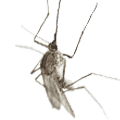
Aedes aegypti is the daytime biter. Females need a blood meal to develop each egg batch, lay eggs at the waterline of small standing-water containers, and the eggs survive desiccation for months. That last part matters. If you emptied a pot saucer two weeks ago and left it dry, refilled it last weekend, the eggs that were stuck to the inside rim of that saucer are now hatching.
The life cycle in a 32°C Abu Dhabi garden runs about 8 days from egg to adult. So a small ignored breeding source becomes a daily emergence event within ten days. That is why a single walk-through and source-removal beats anyone's fogging programme.
Other species we find in Al Rahba: Culex pipiens (night biter, larger, breeds in dirtier water — the storm drain at the front of the plot, the sub-floor cavity if there is one), and occasionally Anopheles stephensi which has been moving down the Gulf coast and was recorded in MoCCAE bulletins in recent years. Each one needs a slightly different control angle, which is why the inspection comes first.
The source-removal walkthrough in an Al Rahba villa
This is the order PestSwift technicians work through, and what we tend to find:
- Pot saucers and planter rims. Every one of them. If you can lift the pot and pour out 5ml of water, it was a breeding site. Replace with bare gravel saucers or none.
- Decorative fountain. Either keep it running 24/7 (moving water at >0.3 m/s does not breed Aedes), or drain it. Half-running it on a timer is the worst option.
- Drip irrigation joints. Walk the line. Any visible standing pool means a faulty emitter. Costs about AED 4 to replace one.
- AC condensate drains. The little white pipe coming out of the wall under each AC indoor unit. Should drip to a soakaway, not into a planter, not into a pool of grey water against the wall.
- Sub-floor void. Many Al Rahba villas have an inspection hatch under the staircase. Lift it. If you see water, you have a leak — and you have a breeding site we cannot reach without drying it.
- Roof drain catchment. The flat-roof areas above the majlis often have a 4–6cm scupper pool that never fully drains. Drill an extra weep hole and you have just removed your largest single breeding source.
- Pool surrounds and skimmer overflow. Chlorinated water is safe. The overflow grate channel running back to the equipment room often holds 2–3cm of untreated water for days.
- Bird baths, dog bowls, kid's paddling pool. Empty and refill every 48 hours, not weekly.
We photograph each one, mark the GPS pin on the plot map, and hand the resident a one-page maintenance schedule. About 70% of Al Rahba Aedes complaints clear from source removal alone, without any larvicide application.
When larvicide and adult control kick in
For the remaining 30% — typically villas with sub-floor leaks we cannot dry on the day, or large mature trees with bromeliad-style pooling in the canopy — we apply:
- Bti larvicide (Bacillus thuringiensis israelensis) in any remaining water source. Bti is target-specific to mosquito larvae, harmless to fish, frogs and bees, ADPHC-approved and labelled.
- Methoprene briquettes in long-life water (the fountain you cannot drain, the pool overflow channel). Methoprene is an IGR — sterilises emerging adults for 30 days.
- Residual ULV (ultra-low volume) treatment to vegetation perimeter for adult control. We use a pyrethroid (lambda-cyhalothrin or deltamethrin) at label rate. The treatment knocks down resting adults and gives a 14–21 day reduction in biting pressure.
- Outdoor misting system review if one is installed. Half the misting systems we inspect in Al Rahba are charged with off-label dilutions. We can correct the dilution and the timer programme. See our seasonal mosquito guide for UAE villas for the system schedule we recommend.
Cost for a full Al Rahba villa visit (inspection + source removal + larvicide + perimeter ULV) is AED 600–1,100 depending on plot size. Annual programmes with monthly visits May through October sit at AED 3,600–5,400 and include unlimited callbacks during peak.
What does not work
- Citronella candles and ultrasonic plug-ins. Evidence base is weak to non-existent. They smell nice. They do not reduce biting rate.
- Spraying inside the villa when the breeding source is outside. All you do is kill the indoor mosquitoes today. Tomorrow's emergence hits the same windows.
- Hose-fogging the garden once. Aedes eggs survive. You need the source removed and the larvicide installed.
FAQ
When is mosquito season worst in Al Rahba?
Mid-May through October. Aedes peaks early summer (the rains in March–April fill containers); Culex peaks late summer when humidity stays high overnight. Pre-summer source removal — done in April or early May — cuts the season's bite count by half or more.
Will ADPHC fine me if they find Aedes breeding in my villa?
They can. The first visit is usually a warning with a 14-day re-inspection. If the breeding source is still present at re-inspection, fines apply. A written source-removal plan from an ADPHC-registered company helps if it is presented at the second visit.
Do I need an annual contract or just one visit?
If you have mature landscaping, a fountain, a pool and an outdoor majlis used in summer evenings, a May–October programme works out cheaper than 3–4 separate callouts. If your plot is small and minimal, one well-done April visit can cover the season.
Is Bti safe around my kids and pets?
Yes. Bti is a bacterial larvicide that only affects mosquito larvae (and a couple of related dipterans). It is the standard ADPHC-approved tool for residential larviciding precisely because of that profile.
Al Rahba or New Shahama, villa or compound, before-summer or already covered in bites — book a free Aedes source-removal walkthrough and we will hand you the one-page maintenance schedule before we leave.
Tags
Written by
Dr. Karim El-Sayed, Lead Entomologist
PestSwift technicians and entomologists publish field-tested pest control guidance for UAE homes and businesses.