
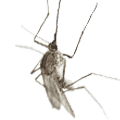





Mosquito populations in the UAE are cyclical and the cycle is steeper than most residents realise. Late winter (December-February) populations are very low. Early spring (March-April) populations begin rising. Late April through May is when Aedes aegypti activity becomes noticeably present in irrigated residential gardens. Through June, July, and August the population peaks; September begins the decline; October sees substantial reduction; November-February is the quiet season.
The mistake most residents make is responding when mosquitoes are obvious — typically June or July. By that point the population has been compounding for 8-12 weeks, the breeding sites are already active across the property, and treatment is reactive damage control. The intervention that actually works is in the late-April to mid-May window, when populations are starting to rise but haven't peaked.
Here's the seasonal logic and what to do about it.
The mosquito calendar in UAE residential settings
December - February. Adult mosquito populations very low. Larval breeding minimal because temperatures suppress reproduction cycles. Some Culex activity in well-heated indoor spaces but Aedes essentially absent.
March. First Aedes adult emergence. Females from over-wintered eggs begin feeding cycles. Populations small but the foundation is being laid.
Early April. Population doubling roughly weekly under typical UAE garden conditions. Still not visible to most residents. Larval surveys at this point find Aedes in 30-50% of UAE residential gardens (water-bearing receptacles).
Late April - early May. Population surge becomes visible. First waves of evening mosquito activity in gardens. Resident calls for mosquito control begin to spike.
Mid May - July. Peak season. Populations are at their largest, breeding cycles compressed (egg-to-adult in 7-10 days at UAE summer temperatures), residential biting pressure is high.
August - September. Population stabilises at high level. Continued breeding but limited expansion potential. Vector control activity (private and public) reduces but doesn't eliminate.
October. Population begins decline as outdoor temperatures soften and irrigation cycles shift.
November. Substantial reduction. By month-end, mosquito activity is low.
The critical window is late April to mid May — the two-week period when the population has just started doubling but the breeding-site count is still small. Eliminating breeding sites at this point reduces the population for the rest of the season by 60-85%. The same intervention in July reduces it by 25-40% — still meaningful, but much less.
Why source-removal works and fogging doesn't
Mosquito control works through two main mechanisms: killing adults (fogging, repellent foggers, indoor sprays) and eliminating breeding sites (source removal, larvicide).
Fogging. Kills adult mosquitoes present at the time of fogging, with limited residual effect (24-72 hours). Effective for short-term reduction before an outdoor event but does not affect breeding-site populations. Treated populations rebound within days.
Larvicide. Bacterial larvicides (Bti — Bacillus thuringiensis israelensis) applied to standing water. Kills mosquito larvae in 24-72 hours. Provides 4-8 weeks of residual protection in treated water. Highly effective for known breeding sites.
Source removal. Physically eliminating standing water — emptying plant saucers, fixing irrigation drainage, sealing manhole covers, repositioning AC condensate drains. The most durable intervention because the breeding habitat itself is removed.
For most UAE residences, the right protocol is source removal first, larvicide second, fogging third. Most pest companies do these in reverse order because fogging is the most visible intervention and the easiest to demonstrate immediate effect — which is the wrong reason.
Where Aedes actually breeds in UAE homes
From thousands of residential audits we've done, the breeding-site frequency ranking:
1. Plant saucers under potted plants. The single most common Aedes breeding site in UAE homes. Tannin-rich water (from organic matter in soil), partial shade, persistent moisture. Found in roughly 65% of audited UAE villas.
2. Irrigation manhole covers. Standing water in the cavity beneath the cover, often holding water for weeks between heavy rain events. Found in roughly 40% of villas.
3. AC condensate drainage points. Where the AC drain pipe terminates, especially when the drainage doesn't reach a proper sump or drain. Found in roughly 35% of villas.
4. Decorative fountains and water features without aerators. Including small ornamental water features in courtyards. Found in roughly 30% of properties with such features.
5. Drainage gulleys with poor flow. Inadequately-graded drainage that pools after rain or after garden irrigation. Found in roughly 25% of villas.
6. Pool covers with depressions. Standing water in low spots of swimming pool covers. Found in roughly 20% of villas with covered pools.
7. Roof-level drains and gutters. Particularly in older villas with debris-clogged gutters. Often missed because residents don't visually inspect. Found in roughly 15% of villas.
8. Discarded bottles, buckets, tarps in compound corners. "I'll clear that next weekend" items that have been there for months. Found in roughly 30% of villas.
9. Fish ponds without proper circulation. Standing-water sections become Aedes habitat unless the pond has active circulation or fish that eat larvae.
10. Children's toys, kiddie pools, abandoned containers. Anything plastic that holds water for a week.
In apartments, the equivalent breeding sites are: balcony plant saucers, AC drain pans (especially leaking units), buckets and containers stored outdoors on balconies. Apartment Aedes pressure is lower than villa pressure but not zero.
What a pre-summer source-removal audit looks like
Walk-around with breeding-site inspection. 30-60 minutes for a typical 4-5 BR villa. The technician inspects all known breeding-site categories and any property-specific items.
Site-by-site decision. For each identified breeding site:
Can the source be eliminated permanently? (Plant saucer replaced with a self-watering pot; AC drain extended to a soak-away; manhole cover sealed.) This is the preferred intervention.
If not, can the source be made unattractive? (Fish added to a pond; aerator installed in a fountain; drainage modified to prevent pooling.)
If still not, apply Bti larvicide. (Approved larvicide tablets or granules in any standing water that can't be eliminated.)
Larvicide deployment. Slow-release Bti in water-bearing zones that can't be drained. Effective for 4-8 weeks per application.
Documentation. Photographs of each treated zone, written list of recommended permanent modifications, schedule for follow-up larvicide visits if applicable.
Follow-up. A return visit 4-6 weeks later to re-treat persisting breeding sites and confirm the modifications have held.
Cost: AED 350-650 for the initial audit + larvicide deployment for a typical 4-5 BR UAE villa. AED 250-450 for follow-up visits.
For a quarterly mosquito programme covering pre-summer, summer, autumn, and winter touch-points: AED 1,200-2,200 annual.
Why timing changes the cost-effectiveness
Intervention in late April / early May, before the population peak:
- Each eliminated breeding site prevents an estimated 200-800 adults per breeding cycle for the rest of the season.
- Cost per prevented adult mosquito: very low.
- Resident-perceived effect: the season feels noticeably less mosquito-heavy.
Intervention in July, during peak:
- Each eliminated breeding site prevents the next cycle (still meaningful but the existing adult population persists for 2-4 weeks).
- Cost per prevented adult mosquito: meaningfully higher.
- Resident-perceived effect: gradual reduction over weeks.
Intervention in September, post-peak:
- Population is already declining due to seasonal factors. Intervention accelerates decline but isn't the dominant cause.
- Cost-effectiveness is meaningful but mostly tactical for specific events (outdoor party, etc.).
The leverage is highest in late April / early May. Yet most residents call us in late June or July, when the mosquitoes have become impossible to ignore but the season is already under way.
Combining with public-sector mosquito programmes
ADPHC in Abu Dhabi runs entomological surveys and Aedes-elimination programmes in residential areas. They've removed substantial numbers of breeding sites from public land in recent years. Dubai Municipality and Sharjah Municipality run equivalent programmes for public spaces.
These public programmes don't enter private property without invitation. Private-sector audit and treatment is the right tool for villas and apartments.
What the public programmes do affect: regional mosquito pressure baseline. A street where the municipality has eliminated public-land breeding sites has lower seasonal pressure than a street where they haven't. Worth knowing if you live near a known public-area breeding zone (community parks, road-median irrigation, undeveloped lots) and your villa-level work isn't fully resolving the issue — sometimes the public-sector intervention is the missing piece.
Specific tactics for UAE residents
Replace clay or terracotta plant saucers with self-watering pots. Eliminates the most common breeding site. AED 30-150 per pot conversion; the highest-leverage upgrade in the entire mosquito control space.
Run AC drainage to a proper soak-away. Or attach a drainage tube directing the discharge to a sandy garden bed where it absorbs immediately. AED 80-200 per AC unit modification.
Empty and refill water features weekly. Or add an aerator if continuous circulation isn't possible. Stagnation longer than 5-7 days at UAE summer temperatures creates Aedes habitat.
Walk the property after each irrigation cycle. Identify any pooling. Modify drainage at the source.
Keep a Bti larvicide tablet in any persistently-wet location. Cheap and effective for 4-8 weeks per tablet.
Don't rely on citronella or essential-oil candles for mosquito control. They have minor adult-deterrent effect but no impact on breeding cycles. Useful tactical accessories for outdoor evenings; not a substitute for source removal.
FAQ
When should I book a UAE mosquito audit?
Late April or first week of May for maximum seasonal leverage. If that window has passed, book immediately — early-season intervention compounds favorably.
Are UAE mosquitoes carrying dengue?
Aedes aegypti is capable of transmitting dengue. UAE has documented dengue cases each year, mostly in Abu Dhabi and Sharjah. The risk is real but localised; UAE health authorities run active surveillance. Source removal at the residential level is the single most effective resident-controllable factor.
Will a single visit eliminate mosquitoes from my villa?
For a property with a few breeding sites, yes — substantially eliminating means 80-95% reduction. For a property with many breeding sites or in a high-pressure regional area, expect a quarterly programme over a season for full results.
Is fogging worth it for a UAE villa?
Fogging is tactical, not strategic. Useful for an outdoor event in 24-72 hours, ineffective for season-long control. Not the right primary tool but worth knowing it exists for specific circumstances.
Related guides: Summer cockroach surge across the UAE
If your UAE villa or apartment is in the pre-summer mosquito window, contact PestSwift for a source-removal audit. We service Dubai, Abu Dhabi, Sharjah, and Ajman with villa pest control and Bti-larvicide deployment programmes.
Tags
Written by
Dr. Karim El-Sayed, Lead Entomologist
PestSwift technicians and entomologists publish field-tested pest control guidance for UAE homes and businesses.