







The May surge isn't a heat thing. It's a humidity thing.
Every UAE pest control operator can tell you, almost to the week, when summer cockroach calls start spiking. It's not when the air temperature first cracks 40°C — that's mid-April, and the call volume is still flat. It's when relative humidity at night first holds above 55% and morning dewpoint stops dropping below 22°C. In Dubai, that's typically the first week of May.
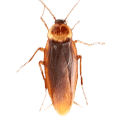
The biology is straightforward. Periplaneta americana — the big reddish-brown American cockroach you see flying lazily under streetlights — has a developmental sweet spot at 28–32°C with humidity above 50%. Below that humidity, female oothecae (egg cases) desiccate before hatching. Above it, hatch rates jump to 70–85%. So the population doesn't grow in linear lockstep with temperature. It steps up dramatically when humidity crosses the threshold.
For Blattella germanica — the smaller German cockroach in apartment kitchens — the dependence is similar but the indoor microclimate buffers seasonality. German colonies in JLT or Marina apartments cycle year-round because the kitchen stays warm and humid. American populations, which mostly nest in the building exterior (sewer manholes, utility chambers, garden palm canopies), are much more visibly seasonal.
The result: the call we get on May 6th is "I've never had cockroaches and now they're flying through my open window at night." That householder isn't doing anything wrong. The neighbourhood population just stepped up.
What an April prep schedule looks like
The right time to prepare for the surge is the four weeks before it starts. April is the leverage month. The population is small, larvae and oothecae are present in known harborage, the chemistry takes hold cleanly without competing with peak foraging pressure.
A standard PestSwift residential pre-summer prep covers four areas across two visits in the second half of April:
Exterior perimeter — a residual application along the building base, around utility manholes within 5m of the structure, around any palm tree base in a villa garden (American cockroaches love palm canopy harborage), and along garden walls. Active: bifenthrin or deltamethrin at the lowest effective rate.
Drain and chase treatment — gel-bait placement at every floor drain and every utility chase access point. American cockroaches in Dubai live in sewer chambers and travel up through dry P-traps in laundry rooms and storage majlises. Killing them in the chase before they reach the kitchen is much easier than killing them after.
AC condensate and chiller line voids — fogging or void-injection where these penetrations are located. These are common entry points and overlooked by surface-only contractors.
Interior harborage check — the kitchen, the laundry, the storage room. Any signs of active population get treated as a unit-level infestation rather than as preventive prep.
A standard 2-BR apartment April prep runs AED 250–400 for the two-visit programme. A villa with garden runs AED 500–900 depending on plot size. Building-wide programmes for OAs come in at AED 8–18 per unit when scheduled in advance.
Compared to an emergency July call (AED 350–600 for a single visit, often needing a second and third), April prep pays back the first time you'd otherwise have made an emergency call.
American vs German — different angles, different timing
The two species need different prep, and most "summer pest" content lumps them together unhelpfully.
American cockroach (Periplaneta americana) — outdoor-nesting, large (35–40mm), reddish-brown, can fly briefly. They show up in homes by entering through:
- Floor drains with dry traps (run water through unused drains weekly during summer)
- Front doors propped open during evening cooler temperatures
- Garage doors and exterior wall penetrations
- Palm tree canopies on garden boundaries (a treated palm base reduces home entry significantly)
April prep for Americans is mostly about the building exterior and drains. Once the population steps up in May, you're chasing them indoors instead of preventing entry.
German cockroach (Blattella germanica) — indoor-nesting, small (12–15mm), light brown, doesn't fly. They live entirely in voids inside the kitchen and bathroom. Summer doesn't dramatically increase the German population in a well-maintained apartment, but if there's a low-level resident colony you've been ignoring through the cool months, the warmer kitchen does increase oothecae production.
April prep for Germans is the same source-based gel-bait + IGR protocol used year-round. Summer doesn't change the chemistry; it just makes existing problems worse and hides new ones in increased general cockroach noise.
Villa garden specifics
Villa owners in Mirdif, Al Warqa, Al Khawaneej, and the Al Barsha villa stock should treat April as the only time the garden gets a comprehensive perimeter treatment for the year. Three reasons:
- Lower humidity in April means residual chemicals dry into surfaces cleanly without re-wetting.
- Lower foraging activity means the residual catches the population as it ramps up rather than competing with peak food sources.
- Garden plant tolerance is better in April. Tropical ornamentals are not yet stressed by full summer heat; if there's any phytotoxicity issue with a chemical, you'd notice it before peak flowering.
The garden treatment specifically: residual perimeter (bifenthrin or deltamethrin) along the boundary wall and 1m into landscaping. Granular bait around palm tree bases. Drain treatment on every external floor drain and every irrigation manifold.
A common mistake is to treat the garden in late June when the problem has already arrived. By that point, the population is huge, you're chasing rather than preventing, and the heat compromises chemical performance because residual breaks down faster on sun-baked surfaces.
Building-wide programmes — what to ask the OA about
If you live in a tower in Marina, JLT, Business Bay, JVC, or Reem Island, the building's pest control contract usually covers common areas (corridors, garbage rooms, basement) but not your unit. The OA-level scope to ask about:
- Garbage room frequency. If the bin store is treated less often than weekly during May–September, expect cockroaches in your corridor. Twice-weekly during summer is the right cadence.
- Floor drains in basement parking. These are the primary American cockroach entry route into the building. Quarterly drain treatment is the baseline; monthly during peak season is much better.
- Chiller plant and pump room. Warm, humid, often neglected. Should be on the same monthly cadence as the bin store during summer.
- Roof and rooftop ducting. American cockroaches harbour in rooftop equipment voids and travel down via service ducts.
Building managers sometimes resist increasing summer cadence because it reads as a cost increase. The honest framing is that the increase from quarterly to monthly during four months of the year typically costs the OA AED 8,000–25,000 depending on tower size, and prevents the AED 80,000+ in emergency unit-by-unit treatments and resident complaints that follow when summer hits an underprepared building.
What you can do without a professional
Three things move the needle without booking anything:
- Run water through every unused floor drain weekly from April onwards. A dry P-trap is an open road from the building's sewer chamber into your apartment. American cockroaches walk it. So do drain flies. So does the smell of the building's waste stack.
- Seal door bottoms and window screens. A simple bristle door sweep on the front door blocks the majority of American cockroach entry into ground-floor apartments and villas.
- Stop leaving fruit out overnight. Especially overripe banana, dates, and mango. They're powerful attractants and pull foragers from much farther than people realise.
These are the ten-minute moves. They prevent maybe 30% of summer infestations on their own.
Frequently asked questions
When does cockroach activity peak in Dubai and the UAE?
Population peaks in late June through late August. Call volumes peak slightly later (mid-July to early September) because residents take 2–3 weeks to escalate from "I saw one" to booking treatment. The first noticeable jump from spring baseline happens the week night-time relative humidity stays above 55% — typically the first week of May.
Should I do pest control before summer in Dubai?
For villas with a garden, yes — April is the leverage month for exterior + drain prep. For apartments, depends on your unit's recent history. A clean unit in a well-managed building doesn't need preventive treatment; running water through drains weekly is enough. A unit with any signs of activity, or in a building with weak common-area cadence, benefits from April prep.
Do American cockroaches really fly in Dubai summer?
They glide rather than truly fly, mostly downward from a higher perch. In late May through August, when temperatures spike at night and they're moving between palm canopies and ground-level harborage, you'll see them on the wing under streetlights and entering through open windows on lower floors. They're harmless, but unnerving. Closing balcony doors at dusk during peak summer cuts entry significantly.
Why are summer cockroaches different from winter cockroaches?
The species mix changes. Winter calls are predominantly German cockroaches (year-round indoor residents in kitchens). Summer calls add a heavy American cockroach component — the big outdoor-nesting species that emerges from sewers and palm canopies during humid nights and enters homes through drains, doors, and windows. Different species, different harborage, different treatment.
Get an April prep booked
We'll inspect, treat the perimeter and drains, and tell you whether your interior needs any work before the surge starts. Get a pre-summer pest survey or read about our villa pest control service. For broader cockroach context, see our cockroach pest page. For unit-level apartment work, see our apartment service page.
Tags
Written by
Rashid Al Mansoori, Operations Manager
PestSwift technicians and entomologists publish field-tested pest control guidance for UAE homes and businesses.