

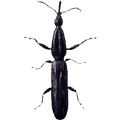
Honestly, this is the single most common pest call we get between mid-May and mid-July. "We turned the AC on for summer, two days later cockroaches in the kitchen — we never had any in winter." The household assumes either the new building maintenance team did something wrong, or the AC unit itself is somehow defective.
Neither. The AC vertical chase is a pest superhighway that runs the full height of the tower, and when the AC switches on across the building it triggers a coordinated migration of a population that has been quietly building for months.
What the AC chase actually is, structurally
Almost every UAE residential high-rise built since the early 2000s uses the same basic AC architecture. The fan-coil unit (FCU) inside the apartment connects to a chilled-water supply and return loop, and a condensate drain line, which all run vertically through a service chase — a continuous concrete or block-walled vertical void — that passes through every floor of the building.
The chase is structurally separated from the apartment interior, in theory. In practice it's connected at every floor through:
- The FCU access panel (a removable hatch in the bulkhead, usually 60 x 60 cm, with a rubber gasket that degrades faster than people think)
- The condensate drain penetration into the bathroom or kitchen wall
- The chilled-water pipe penetrations
- Maintenance access panels on the corridor side, one per floor
Every one of those penetrations is supposed to be sealed. In practice every one of them has a gap of a few millimetres after a few years of use — enough for German cockroach adults and definitely enough for nymphs.
That shared vertical chase, with apartment-side gaps at every floor, means a cockroach population on the 4th floor has continuous access to the 22nd floor through the chase cavity.
Why the AC switch-on triggers migration
During winter (November through March in the UAE) the AC chase is essentially dormant. No condensate water, ambient temperature in the chase tracks outdoor ambient (10 to 25°C at night, cool enough to slow cockroach activity significantly), no air movement.
When the building's central plant fires up for summer — typically in a coordinated way as multiple residents start running their AC continuously around mid-May to early June — three things change in the chase within 48 hours:
- The chilled-water pipes start cycling, raising chase ambient temperature paradoxically (the pipes are cold but the chase is now warmer than outdoor night ambient because the building is shedding heat into it).
- Condensate water begins draining continuously from every active FCU. Each apartment produces roughly 1 to 4 litres of condensate per day in summer. Multiplied across 100+ units in a tower, the chase floor is now reliably wet.
- The temperature differential between the chase (now warm and humid) and the apartment interior (now cool and dry) creates a slow but constant air movement from chase to apartment through every penetration gap — including odour cues that draw foragers.
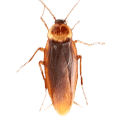
German cockroach (Blattella germanica) populations that overwintered in the chase or in lower-floor harborage now have a strong gradient drawing them upward and outward into apartments. Within 48 hours of building-wide AC ignition, foragers appear in kitchens on every floor.
Why apartment-only treatment fails
The household sees cockroaches in their kitchen, calls a pest control crew, the crew sprays the kitchen and lays gel-bait. Visible activity drops for 7 to 14 days. Then it comes back.
What happened: the crew killed the foragers currently in the apartment, but the population in the chase cavity (which is the actual reservoir) was untouched. Foragers from the chase re-colonise the apartment as soon as the residual chemistry degrades.
Worse, the household next door (or two floors up, or three floors down) often sees activity at the same time. Each of them treats independently. None of them addresses the chase. The cycle repeats every season.
What chase-cavity treatment looks like
Real control requires treating the chase cavity itself, which requires building-level access (the maintenance panels are on the corridor side, locked, accessible only via the building maintenance team) and OA-level commissioning.
Building-level inspection
Walk the chase from the top floor down, panel by panel. Inspect:
- Condensate drain accumulation at every floor (standing water indicates a drain backflow problem worth fixing)
- Rubber-seal integrity at every penetration
- Existing live cockroach activity (head-torch + 10x loupe — German roach is small but unmistakable in adult form)
- Roach droppings (small dark fleck deposits, often visible along the chase floor and on the pipe-bracket undersides)
- Egg cases (the brown leathery ootheca, 6 to 9 mm long, often glued to dry sheltered surfaces)
In a 20-storey tower this takes one technician one full day. By the end of the walk you have a chase-cavity activity map that tells you where the harborage zones are concentrated (typically the bottom 8 floors plus the mechanical floor at the top).
Treatment
Dust treatment is the standard. Boric acid powder, or a 50/50 boric acid + diatomaceous earth blend, hand-puffed into the chase along the pipe-bracket lines, around drain penetrations, on horizontal ledges, into corners. Dust persists in dry cavities for 12 to 18 months and is taken up by cockroaches grooming after walking through it.
For zones with heavy active populations, gel-bait deployment (hydramethylnon-based, food-grade) in 0.5 g dots at 1-metre spacing along the most active surfaces. Bait is consumed within days and transfers through the population via the corpse-cannibalism + faecal transfer mechanism that makes gel-bait so much more effective than spray.
IGR (insect growth regulator — typically hydroprene) applied as a fog inside the chase. The hydroprene fog disrupts nymph development across the entire chase volume, preventing the next generation from reaching reproductive maturity.
On the apartment side, every FCU access panel and every penetration is checked and re-sealed by the building maintenance team in parallel with the chase treatment. Without the re-sealing the next colony round will re-emerge through the same paths.
Follow-up
Quarterly inspection of the chase, with dust refresh and bait rotation. Apartment-side residual band at the FCU bulkhead refreshed at the same cadence. A tower running this protocol typically goes from "summer cockroach surge" being a known annual event to it being a non-event within two years.
Cost
For a single tower:
- Per-apartment surface treatment (which we recommend only as the interim while the OA arranges chase-level work): AED 350 to 550
- Whole-tower chase-cavity inspection and treatment, single visit: AED 8,000 to 16,000 for a 100-unit tower
- Annual building-wide IPM program including quarterly chase work, OA-level reporting, and per-apartment emergency callouts: AED 12,000 to 28,000 per year amortised over 80 to 120 units
The per-unit cost on the annual program works out to AED 100 to 350 per apartment per year — significantly less than two separate apartment-level emergency callouts.
What does not work
Fogging the apartment. Aerosol foggers reach surfaces, not chase voids. They trigger forager dispersal and gel-bait avoidance, both of which make the next cycle worse rather than better.
Sealing the apartment-side penetrations only. The chase reservoir continues feeding, and the foragers will find or create new paths within weeks.
Waiting until the surge happens to treat. Pre-summer chase work (April / early May) prevents the surge entirely. Reactive treatment after the surge has started buys 7 to 14 days at significantly higher chemical use.
Assuming the AC unit itself is the problem. The FCU is downstream of the chase. Servicing the FCU achieves nothing for the cockroach problem unless the chase work is done in parallel.
FAQ
Can cockroaches travel between apartments through the AC vent?
Not through the AC supply air vent (which is sealed and pressurised). Through the shared vertical AC chase, however, yes — the chase is a continuous void running the full height of the tower with rubber-seal penetrations into every apartment. German cockroaches use the chase routinely as a vertical migration corridor between floors and as a population reservoir.
Why do I see more cockroaches when I turn on the AC?
The AC startup raises chase humidity, raises chase ambient temperature, produces standing condensate water, and creates an air gradient from chase to apartment. All four changes draw the chase-resident cockroach population toward the apartment interiors. The activity you see is a population that was there all winter; it's just now mobile.
How do I seal AC chase gaps to stop cockroaches in a high-rise?
The apartment-side penetrations — FCU access panel gasket, condensate drain pipe collar, chilled-water pipe penetrations — should be re-sealed with foam backer rod plus high-quality acoustic sealant (not silicone, which cockroaches will chew through). The chase-side maintenance panels and the chase-floor drain are the building maintenance team's responsibility. Apartment-side sealing alone helps but doesn't solve the underlying chase reservoir.
Should the OA or the individual apartment owner pay for AC chase pest control?
The chase itself is OA-managed common-area infrastructure (the chase wall, the maintenance access panels, the chase-side equipment). Apartment-side penetration sealing and the FCU bulkhead are typically owner / occupier responsibility. A coordinated whole-tower program is significantly cheaper per unit than fragmented per-apartment work, which is why most well-run OAs include AC chase pest work in the annual building maintenance budget. For more on coordinated building-wide work, our whole building pest control cost Dubai apartment guide breaks down the economics.
If the AC just came on and the cockroaches just arrived, book an inspection. For broader seasonal cockroach context see our summer cockroach surge UAE and AC drain mosquito breeding UAE summer guides — the AC chase is the cockroach version of what the AC drain is for mosquitoes.
Tags
Written by
Dr. Karim El-Sayed, Lead Entomologist
PestSwift technicians and entomologists publish field-tested pest control guidance for UAE homes and businesses.