
The dishwasher motor cavity tells the story
The first PestSwift visit to a 12th-floor Al Majaz 2 tower last September pulled 31 adult German cockroaches from inside one dishwasher motor housing. The tenant had been calling a different company every two months. Each call ended with a kitchen surface spray, a two-week reprieve, then the same scuttle behind the kettle at midnight.
The spray was hitting the wrong place. The colony was three feet below the visible surface, breeding in a 28°C void next to the motor windings. Nothing the previous technician sprayed could reach it.
This is the Al Majaz pattern. Tower stock built in the mid-2000s through the lagoon's first development push, shared chiller plants threading every floor, lagoon humidity pushing 70% from May through October. German cockroaches don't survive in those buildings. They thrive.
What makes Al Majaz different from the rest of Sharjah
Al Nahda and Al Taawun have their own cockroach problems. So does Al Khan. But Al Majaz combines three things the others don't have together.
First, the Khalid Lagoon edge holds humidity in the corridor between the Al Majaz waterfront and Buhaira Corniche. Evening winds drop, evapotranspiration spikes, and the building service-shaft microclimate gets sticky. German cockroaches need above 50% relative humidity to develop from egg to adult. Al Majaz gives them 65–75% inside service shafts year-round.
Second, most of the 2005–2010 towers share central chiller plants. The chilled-water riser passes through every floor inside a wet service shaft. Condensation collects at riser supports. That's free water and a 26°C wall void — perfect harborage. One infested apartment becomes a building problem within six months.
Third, shared waste-chute floors. Al Majaz tower garbage rooms tend to sit on every third floor with non-sealed compactor doors. A late-night feeding population moves vertically through that void overnight. Treat one apartment and the surviving roaches from three floors below replace them within a fortnight.
So it's not your kitchen hygiene. Not entirely.
The species you're actually fighting
Ninety percent of indoor cockroach calls in Al Majaz towers are German cockroaches (Blattella germanica). Small, tan, two dark stripes behind the head. Females carry an egg case until 24 hours before hatch — which means traditional pyrethroid spray that kills the adult does nothing to the 30–40 nymphs about to drop. That's a big reason surface spray fails. You watched the adult die. You didn't see the egg case detach intact behind the cabinet kickplate.
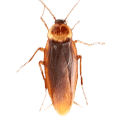
The other 10% are American cockroaches (Periplaneta americana) — the big russet-brown ones that fly under ceiling lights. They come from drains, sewer manholes, and the building's pump room. Different beast, different treatment.
This post is German. Almost every Al Majaz residential call is.
The protocol that actually works
Three pieces, in order.
1. Inspection — flashlight and glue strips, 30 minutes
Before any chemical, a proper Al Majaz technician spends half an hour with a torch and ten glue monitors. Behind the fridge. Under the dishwasher kickplate. Inside the cooker-hood greasebox. Underneath sink U-bends. In the hinge channel of every kitchen cabinet door. In the service shaft access panel — Al Majaz towers always have one, usually behind the washing machine in a galley kitchen.
Glue strips left 48 hours give a population estimate. Five adults per strip per night is heavy. Twenty is severe.
2. Gel bait placement — Hydramethylnon or Fipronil
We use Hydramethylnon 2.15% gel or Fipronil 0.05% gel depending on the building's recent treatment history. Resistance to Fipronil has been documented in coastal UAE German cockroach populations since 2022 — if the apartment got Fipronil six months ago and the problem returned, we rotate to Hydramethylnon.
Placements are deliberate: pea-sized drops, 15–20 of them in a 2-BR apartment. Inside the dishwasher motor cavity. The cooker-hood interior corners. Behind the kettle base. Inside the fridge motor compartment at the rear vent grille. Inside every cabinet hinge cup. Inside the sink trap inspection cap.
Bait works through horizontal transfer. A worker eats the gel, returns to the harborage, defecates the active ingredient, dies. Conspecifics consume the corpse and the feces, picking up a lethal dose. One properly placed bait kills the apartment over 14 days.
3. Insect growth regulator (IGR) — break the egg cycle
We combine bait with an IGR (Pyriproxyfen or Hydroprene) placed in voids. IGRs don't kill adults. They render any nymph that develops sterile and prevent hatching egg cases from producing viable adults. This is the part most surface-spray companies skip. Without it, your treatment ends the visible adults but the next generation hatches anyway.
For heavy infestations we add a crack-and-crevice residual (low-toxicity Indoxacarb) into wall voids and service-shaft access. Never on surfaces where you'd cook or where a child can touch.
What it costs in Al Majaz
A standard 2-BR apartment cockroach treatment runs AED 400–550 for the first visit and a 14-day re-inspection. Larger 3-BR or family duplex towers run AED 600–850. A whole-building owners' association programme for one Al Majaz tower with shared chillers is typically a 90-day onboarding programme at AED 18,000–32,000 depending on floor count.
If you've already paid a different company twice this year, the third company should not cost more than the first. Treatment failure is not a pricing tier.
Why the re-treatment matters
Bait kills adults over 7–10 days. The eggs that were carried by females at the time of treatment hatch 14–21 days later. The 14-day re-inspection is not optional. It's where the technician finds and treats the second wave, before they reach reproductive age. Skip it and you're three months from a fresh problem.
This is also where building-wide thinking matters. If your neighbour two floors below skipped re-treatment and the building waste room still has activity, your apartment will see migrants regardless of how clean your treatment was. PestSwift logs every Al Majaz building we've serviced and flags re-emergence patterns at the building level so we can recommend OA-level intervention.
The compliance side
All treatments in Sharjah require a licensed pest control company registered with Sharjah Municipality (Public Health Department). The technician carries an SM-issued pest control card. The chemicals we use are on the SM-approved list, which mirrors but is not identical to the Dubai Municipality list — Sharjah dropped one Pyrethroid formulation in 2024 that Dubai still permits.
If you're an OA chair or building manager and your contractor cannot produce the SM card and the chemical safety data sheets at the audit, that's a problem you want to find out before the next inspection rather than during it.
For verification, see the Sharjah Municipality approved pest control verification guide.
What you can do before the technician arrives
Honestly, not much. Don't deep-clean the kitchen the night before — bait works better against a population that's actively foraging. Don't move appliances unless asked. Don't lay out your own bait stations from the supermarket; over-the-counter bait can contaminate the void and reduce our gel uptake.
Do: clear the under-sink cabinet. Identify the service-shaft access panel if you know where it is. List which neighbours have complained or treated recently. That last one is the most useful information you can give us.
FAQ
How long until I stop seeing live cockroaches?
For moderate infestation, expect a 60–70% drop within 5 days and near-elimination by day 14. Heavy infestations or buildings with shared-chiller migration may need a second treatment at the 14-day re-inspection.
Is the gel safe with kids and pets?
Hydramethylnon and Fipronil gel-bait formulations are placed in voids and hinge channels — out of reach. They are odourless and contain bitter agents that deter mammalian ingestion. Pets would have to lick a specific hinge cup to encounter the bait, and even then the dose is well below a hazardous threshold for a 5 kg cat. We still mark placements on a card so you know where they are.
Will treating my apartment fix it if the building is infested?
It will give you 60–90 days. After that, migrants from untreated apartments will repopulate. Real building-level fix requires Owners' Association engagement — common-area treatment, waste-chute door sealing, and service-shaft access points. We can prepare a tower-level proposal for any OA that asks.
Do I need to leave the apartment during treatment?
No. Gel bait + IGR placements do not require evacuation. You don't need to wipe down surfaces, wash dishes, or remove pets. The whole visit takes 60–90 minutes.
Get the cycle broken
If you've had two surface-spray treatments this year and the cockroaches are back, the issue isn't your kitchen — it's the harborage strategy. We can audit your Al Majaz apartment, treat the actual sources, and document everything for your OA if the building needs collective action. Get a free PestSwift quote or read more about our cockroach control service.
Tags
Written by
Dr. Karim El-Sayed, Lead Entomologist
PestSwift technicians and entomologists publish field-tested pest control guidance for UAE homes and businesses.