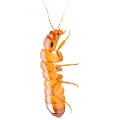
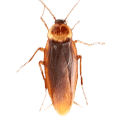

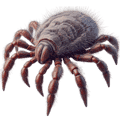
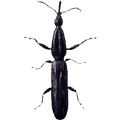
Thing is, Khalifa City has two different cockroach problems and most pest control crews only treat one. The small ones in the kitchen that never seem to leave even after a spray — those are German cockroaches, Blattella germanica, and they live in the dishwasher motor cavity and the kitchen-island plinth. The big brown ones the household sees scuttling across the patio at night — those are American cockroaches, Periplaneta americana, and they live in the garden, the wall cavity between your villa and your neighbour's, and the Khalifa Park irrigation overflow.
Treat one, ignore the other, and the household will be calling for a re-treatment in six weeks.
The villa architecture matters more than people think
Khalifa City A and B were built mostly between 2003 and 2012, with newer infill in Sector M continuing into the late 2010s. Two architectural features drive almost every cockroach call we get in the area.
First, the open-plan kitchen with a central island. Almost every Khalifa City villa has one. The island has a continuous toe-kick plinth that runs the full perimeter, and that plinth conceals a void that nobody opens — usually three centimetres deep, dark, warm, and crumb-rich. We have lifted the plinth on Khalifa City Sector 4 villas and found German cockroach populations in the thousands.
Second, the shared garden wall between adjacent villas. Khalifa City compounds sit close — sometimes a single-skin wall separates Villa 17 from Villa 18 — and the wall is hollow at the cap. Big American cockroaches use that cap cavity as a migration corridor between gardens, especially in summer when one neighbour starts composting kitchen waste and the population swells.
Nothing about either of those structural facts is unusual or specifically dangerous. They become problems only because the typical pest treatment doesn't address them.
German cockroach biology in a 25 to 30 degree AC'd kitchen
The Khalifa City villa kitchen is essentially a perfect breeding habitat for Blattella germanica. Stable temperature year-round, ample crumb supply under the island plinth and behind the dishwasher kickplate, condensate moisture from the dishwasher and the AC drip pan, and structural voids that nobody disturbs.
Under those conditions a single mated female produces 30 to 48 offspring in an ootheca, and the offspring reach reproductive maturity in around 50 to 60 days. From two adults you can hit a population of 800 in six months. The household will not see most of those — German roaches are nocturnal and avoid open spaces. They emerge to forage briefly when the kitchen is dark.
The surface spray a generic pest crew applies hits the foragers, kills a few hundred adults visibly, and the household assumes the problem is gone. The harborage population in the plinth and behind the dishwasher is untouched, and by week six the foragers are back.
American cockroach biology in the garden wall
Periplaneta americana is the big reddish-brown one. It is not nocturnal in the same disciplined way German roach is, and it is far more mobile — an adult will fly short distances and walk 10 to 15 metres a night. It breeds slower than German roach (six to eight ootheca per female per year, with 14 to 16 eggs each) but a single Khalifa City garden can support a colony of several hundred for years if undisturbed.
The garden wall cap cavity, the date palm trunk crevices, the irrigation manifold housing, and the under-floor void of the maid's annex are the four classic harborage sites. Add Khalifa Park irrigation overflow on the eastern side of the community and you get a roughly continuous outdoor breeding belt.
When the household sees a big roach in the kitchen at night, it is almost always an American roach that walked in from the garden through an under-door gap or a damaged AC drain seal — not a German roach.
What an actual Khalifa City villa cockroach treatment looks like
We run two parallel tracks. They are different chemistries, different placements, different inspection rhythms.
Track 1 — inside (German roach)
Lift the kitchen island plinth. Vacuum the void with a HEPA-fitted backpack vacuum. Apply hydramethylnon-based gel-bait (something like Maxforce FC Magnum or equivalent on the DM approved list) in 0.25 g pea-sized dots at 30 cm spacing along the inside lip of the plinth, behind the dishwasher kickplate, in the corner above the cutlery drawer rails, and inside the cabinet hinge channels.
Dust an IGR (insect growth regulator — typically pyriproxyfen or hydroprene) into the wall void behind the cabinet bank using a hand-pump duster with a 30 cm flexible wand. IGRs sterilise nymphs and break the breeding cycle.
Do not spray the kitchen surfaces. Spraying triggers gel-bait avoidance — the roaches stop feeding on the bait if their gustatory receptors are blunted by residual pyrethroid. The whole point of the gel-bait approach is the colonial transfer effect: foragers eat the bait, return to the harborage, defecate and die, and the harborage population eats the corpses. Spray contamination ruins that chain.
Track 2 — outside (American roach)
Apply a granular bait around the garden perimeter, with concentration along the shared wall and around any date palm trunk. Fipronil bait granules at 30 g per linear metre is the standard concentration. Place bait stations (tamper-resistant, lockable) at the garden-tap junctions and at the gate piers.
Dust the wall-cap cavity if accessible (you usually need to remove a coping stone or two — most villas have at least one loose cap stone we can use as access without damaging anything). Diatomaceous earth or boric acid powder, hand-puffed.
For the under-floor void of the maid's annex, place sticky monitoring traps and treat with a chlorpyrifos-MC microencapsulated residual along the access hatch perimeter — this is one of the few places we still use chlorpyrifos because the area is sealed, has no human food contact, and the long residual life (eight to twelve weeks) matches the natural re-invasion cycle.
Follow-up
At three weeks we return, inspect both tracks, and re-bait. American roach colonies in the wall cap take longer to suppress than German roach colonies in the plinth, so the outdoor refresh usually continues for a second cycle at the six-week mark. By twelve weeks both populations are at undetectable levels in 90% of jobs.
Cost
For a standard 4-BR Khalifa City standalone villa, the first-visit cost is AED 450 to 800, depending on garden size, whether the maid's annex is included, and whether the dishwasher needs full pull-out for plinth access (it usually doesn't — we have a slim wand for cabinet plinth gel-bait that reaches without removal).
The three-week follow-up is included in the first visit price. Subsequent monthly bait-station refresh, if the household opts for an ongoing arrangement, runs AED 250 to 400 per visit.
For a Sector M townhouse with no real garden and only the indoor track, the figure drops to AED 320 to 520 for the first visit.
For an annual contract covering quarterly visits plus emergency callouts, expect AED 1,800 to 3,200 per year for a 4-BR standalone villa. That works out roughly the same as four separate calls but includes guaranteed callout response within forty-eight hours.
What does not work
Fogging the kitchen. Aerosol foggers reach surfaces, not harborages, and they trigger the German roach avoidance response. Households who fog every two weeks for months usually end up with the largest in-plinth populations we see — the colony has effectively been selected for behavioural deep-hiding.
Spraying only. Same problem, plus the residual on counters and inside cabinets ends up in food preparation areas, which is the opposite of what most families want.
Treating only inside or only outside. The two species cycle independently, and the household perception that "the cockroaches came back" is usually the other species — German roach customers who got chemical-only treatment will see the next big American roach from the garden and assume it's the same problem.
Ignoring the dishwasher. The dishwasher motor cavity is the single most reliable German roach harborage in a UAE villa kitchen, full stop.
FAQ
Why do Khalifa City villas keep getting cockroaches after treatment?
Usually because only one of the two cockroach species was actually addressed. German cockroach lives in the kitchen and needs gel-bait inside cabinet voids and behind the dishwasher; American cockroach lives in the garden and the wall cap, and needs perimeter granular bait plus wall-cap dusting. Generic pest crews often spray the kitchen, kill visible foragers, and call the job done — that addresses neither population effectively.
How do I tell which cockroach species I have in my Khalifa City villa?
German cockroach is small (1.3 to 1.6 cm adult), light tan with two dark parallel stripes on the pronotum, and you see them at night in the kitchen — never outside. American cockroach is big (3.5 to 5 cm adult), reddish-brown, with a yellow-margined pronotum, and you see them outdoors or crossing the kitchen floor at night. Most Khalifa City villas have both.
Is gel-bait safe around children and pets?
The modern gel-bait formulations (hydramethylnon, fipronil, indoxacarb) at the 0.01 to 2% active concentrations used in pest control are placed in voids and cracks that children and pets cannot physically reach — inside cabinet plinths, behind dishwasher kickplates, in hinge channels. The bait is bitter to mammals and the placement is deliberate. Tamper-resistant lockable stations are used outdoors where pets roam.
Does the Tadweer e-contract cover residential cockroach treatment?
Yes — Abu Dhabi Public Health Center / Tadweer requires residential pest contractors to be registered on the e-contract system regardless of pest type. The registration covers the contractor-client relationship, not the individual treatment. We submit the e-contract before the first visit. More on this in our Tadweer pest control compliance Abu Dhabi residential guide.
If the small ones are back in your kitchen or the big ones keep crossing the patio at night, get a free villa cockroach inspection. For related Khalifa City pest patterns, see our ant control Khalifa City Abu Dhabi and rat control Khalifa City villa guides — the trifecta worth running together if you're starting an annual contract.
Tags
Written by
Dr. Karim El-Sayed, Lead Entomologist
PestSwift technicians and entomologists publish field-tested pest control guidance for UAE homes and businesses.