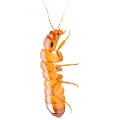







Most Khalifa City villas were built between 2005 and 2012. That cohort is now entering the window where subterranean termite damage shows up — typically 12 to 18 years after handover, once the original DM-approved soil treatment has degraded past effective concentration and mature landscape trees have established a steady cellulose food chain in the surrounding soil.
We see this pattern weekly. A family puts their Sector 4 villa on the market, the buyer's inspector taps the majlis skirting, hears a hollow note, and the sale stops dead. Arbitration follows. Six months later we're treating the villa anyway, just under worse commercial circumstances.
Better to find it before either side has signed.
What changes about a villa at the 15-year mark
A new Khalifa City villa, treated pre-construction with imidacloprid or fipronil at standard 0.05 to 0.1% concentration, carries effective soil residual protection for around eight to twelve years. After that the soil concentration drops below the threshold needed to repel or kill foraging worker termites. Some villas got better treatment than others — the contractors who used Premise 200SC (imidacloprid) at full label rate tend to be at the high end of that range, while villas built by lower-budget developers with poorly mixed application sit at the low end.
Meanwhile the landscape matures. The original date palms put down deeper roots, the ghaf trees in shared green corridors establish, and the leaf-litter base under decorative shrubs builds up. Subterranean termites — primarily Coptotermes gestroi and Heterotermes indicola in the AD region — have an expanding food base and a thinning chemical barrier between them and the villa structure.
Most owners don't notice anything until one of three things happens.
The three giveaways
Mud tubes on the garden wall or expansion joint
Subterranean termites build pencil-thick mud shelter tubes to travel from soil to wood without exposing themselves to dry air. The classic place to find them in a Khalifa City villa is the vertical expansion joint between the villa wall and the boundary garden wall — particularly on the shaded north or east side.
Walk the perimeter slowly, look at every expansion joint and every garden-tap junction at ground level. The tubes look like miniature versions of a fossilised mud root. They're brittle and pale when fresh, darker and harder when old.
Swarming wings after the first heavy summer humidity
When humidity spikes — usually late May to mid June in Abu Dhabi — colonies release alates (winged reproductives). They fly briefly, shed their wings, and the discarded wings collect on window sills and around exterior lights. Finding a small pile of glassy translucent wings is one of the most reliable termite signatures there is. The flight itself is brief and easy to miss; the shed wings stay around for days. We covered the wider pattern in our flying termites after rain UAE guide.
The tap test
This is what the buyer's inspector does. Take a heavy coin or the back of a Maglite, tap firmly along every horizontal surface — skirting boards in the majlis, the underside of staircases, the wood door frames, the back of fitted wardrobes. Sound, solid wood gives a clean dull thud. Termite-eaten wood, which is hollowed out internally even while the surface paint is intact, gives a notably more papery sound. Once you've tapped one of each you'll never miss it.
The majlis and the formal dining room skirting are the most common Khalifa City find — those rooms have heavy carpets that the household never lifts, and termites work in undisturbed darkness for years.
The pre-purchase inspection in practice
If you're buying a Khalifa City villa, the inspection we recommend takes about ninety minutes for a 4-BR and includes:
- A full perimeter walk-around at ground level, checking every expansion joint, every garden-tap junction, every utility-pipe entry, and the boundary wall caps.
- A tap-test along every accessible horizontal wood surface — skirting boards, door frames, staircase risers, built-in wardrobe bases, kitchen cabinet plinths, the maid's room door frame (a quiet termite favourite because nobody pays attention to it), and the inside of any storage room.
- Moisture-meter readings at three to five points where the slab meets exterior wall — high moisture readings often mean a leaking irrigation line that's bringing the soil termite zone right up to the villa face.
- A check inside the AC plant-room and the water-tank cupboard, both of which are termite-favourite undisturbed wood-frame spaces.
- A report you can hand to the seller, the buyer, or the conveyancing lawyer.
If the inspection is clean, you've got a documented baseline for negotiations. If it isn't, the cost of treatment is now a price discussion before the sale rather than an arbitration after.
Two treatment paths and why the choice matters for resale
There are two real options for a Khalifa City villa with confirmed termite activity. The cheaper option is fine for many owners; the more expensive option is the one that retains its commercial value.
Chemical barrier (post-construction soil treatment)
We drill the floor slab at 30 cm intervals along the interior wall lines, inject Premise 200SC (imidacloprid) at label dilution into each hole, plug with cement, and re-coat. Around the exterior perimeter we trench 25 to 30 cm down along the foundation wall and saturate the trench bottom before backfill. The whole operation on a 4-BR villa takes one and a half to two days.
This approach gives you a five-year warranty under standard PestSwift terms. It's effective, it's well-documented, and the chemistry is on the DM and ADPHC approved lists. Cost: AED 2,800 to 5,400 for a typical Khalifa City 4-BR standalone villa.
Reticulation retrofit
The reticulation system installs a permanent perforated piping network around and under the slab through which we can pump termiticide on a scheduled basis (typically every 18 to 24 months) without re-drilling. The retrofit installation is invasive on day one — exterior trenching plus a small number of internal access points — but the system then handles every subsequent re-treatment cleanly.
This gives a 10-year warranty with the scheduled re-injections included. Cost: AED 6,500 to 9,800 for the same 4-BR standalone villa, including the first three years of scheduled re-injections.
For resale value the 10-year reticulation warranty is the one that matters. Buyers' inspectors look for current warranty paperwork; a freshly installed reticulation system with documented re-injection schedule is a positive line item in negotiations. A five-year chemical-barrier treatment with three years left on the warranty is neutral. No treatment at all when there's confirmed activity is, increasingly, a deal-breaker.
Tadweer compliance for AD termite work
Termite chemicals are MoCCAE-controlled biocides; the application contractor must be Tadweer registered for AD residential, and the technician applying them must hold the appropriate Tadweer technician card. Ask for the contractor registration number and the technician card before treatment day — a legitimate contractor produces both without hesitation. We covered the broader AD framework in Tadweer pest control compliance Abu Dhabi residential.
What does not work
DIY surface sprays from a hardware store. The active ingredients are not labelled for subterranean termite use, the concentrations are wrong for slab-injection, and the application method (surface spray) hits zero percent of the foraging worker population.
Spot-treatment only where the mud tubes were found. Subterranean colonies extend tens of metres underground; spot-treating the visible damage leaves the colony intact and the activity reappears at a different point on the slab six months later.
Waiting until the sale to deal with it. The arbitration delay alone usually exceeds six months in AD, the price hit during arbitration is significantly worse than a clean pre-listing treatment, and you'll pay for the work either way.
FAQ
How do I check a Khalifa City villa for termites before buying?
The practical short version: walk the perimeter and look at expansion joints for mud tubes, look at window sills for shed alate wings (especially in late May / early June), and tap-test the skirting boards in the majlis and dining room. Anything suspicious, get a professional inspection before the sale closes. A documented inspection report is worth far more in negotiations than a verbal "looks fine."
What does an Abu Dhabi villa termite chemical barrier cost?
AED 2,800 to 5,400 for a standard 4-BR Khalifa City standalone villa, including soil injection, exterior trench treatment, and a five-year warranty. Larger villas, especially those with detached maid's quarters or a separate driver's annex, run higher because the linear metres of treatment increase.
How long does a Khalifa City termite warranty actually last?
A standard chemical-barrier warranty is five years and is contingent on no major structural changes to the villa during that period (extensions, new pool, new landscape irrigation can void portions of the warranty unless re-treated). A reticulation system warranty is ten years and includes scheduled re-injections, so the chemical concentration is actively maintained rather than degrading from the day-one figure.
Does the seller or buyer pay for pre-purchase termite treatment in Khalifa City?
There's no fixed convention. In practice, if the inspection happens before the sale price is agreed, treatment cost is usually rolled into the negotiation (seller absorbs or splits). If the activity is discovered after sale close, it's typically the buyer's cost unless the sale contract included a clean-bill-of-pest representation, in which case it becomes a warranty claim. The clean reading from an independent inspection is what keeps either side from being surprised. For warranty mechanics across UAE, our termite warranty UAE villa 5 vs 10 year guide is the deeper read.
Thinking about buying or selling a Khalifa City villa, or just want a baseline inspection on the one you already own? Get in touch for a termite assessment. For related AD villa pest patterns, see our termite treatment Reem Hills Abu Dhabi villa and pre-handover termite inspection Dubai villa guides.
Tags
Written by
Rashid Al Mansoori, Operations Manager
PestSwift technicians and entomologists publish field-tested pest control guidance for UAE homes and businesses.