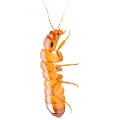











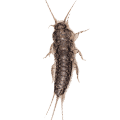


First-phase Reem Hills handovers started this quarter. We've already had three Q Properties buyers ring us during snagging visits — all three found small mud-tube fragments near the maid-room slab edge or against the kitchen-side garden wall. Two were active termite trails. One turned out to be old residue from a builder soil treatment that hadn't been disturbed. All three asked the same question: did Q Properties actually apply a termite barrier during construction, and if so, why is there evidence so soon?
The short answer is that the barrier was applied — it's standard spec for Abu Dhabi handover — but Reem Hills sits on reclaimed land, and reclaimed-land chemistry isn't the same as inland sandy soil. The 8–12 year hold time you'd get on Mussafah or Khalifa City doesn't apply here. Here it's 5–8 years on a good application, and the clock starts at the day of slab pour, not at your handover.
What you're actually getting at handover
Q Properties' handover spec for the Reem Hills villa collection (5-, 6- and 7-BR hilltop villas plus townhouses) includes a builder-applied pre-construction soil treatment. The standard chemistry is fipronil emulsifiable concentrate (Termidor SC equivalent) applied at the 60 L/m³ rate against the foundation footprint and along the post-pour trench around the perimeter. Some plots get imidacloprid SC instead — same general class, slightly different residual profile. The choice depends on which subcontractor Q Properties used at that phase of the site.
At handover the chemical record should be filed under the Building Management System (BMS) record for the villa. You can request it. Specifically:
- Chemical product name + active ingredient (fipronil / imidacloprid)
- Concentration applied (look for 0.06% v/v for fipronil)
- Application date
- Applicator company name + ADPHC PCO license number
- Volume applied per zone (perimeter trench + slab footprint, recorded in litres)
- Warranty certificate — typically 5 years from the application date
If any of those are missing or vague, you have grounds to demand reapplication at builder cost during the snagging window. ADPHC backs this if you escalate via the TAMM portal.
Why Reem Island reclaimed land changes the chemistry
Reem Island was reclaimed beginning 2005 — dredged sand fill, predominantly carbonate marine sediment. The water table sits 2.5–4 m below grade and is saline. That changes termite barrier durability in three ways.
First, fipronil hydrolysis accelerates at higher pH. Reclaimed carbonate fill is alkaline (pH 8.2–8.6 in the upper soil profile) compared to inland Abu Dhabi sand (pH 7.4–7.8). Fipronil breaks down faster — closer to 5–8 year hold rather than the 8–12 you'd see at Mussafah.
Second, salinity disrupts the residual film. Salt-water capillary rise during summer evaporation cycles pulls dissolved salts up through the upper 30 cm of soil, where the barrier sits. Some active ingredient gets partitioned and removed.
Third, Reem termites trend toward Anacanthotermes ochraceus — the dune termite. Surface-foraging behaviour, less subterranean than the Heterotermes species you'd see inland. Translation: a perfectly intact subterranean barrier won't necessarily stop a dune termite trail entering at ground level via a wood-mulch garden bed or a paving join.
Reem Hills villas also tend to have wooden pergolas, exterior cladding, and sunken garden boxes — all high-risk termite contact zones the standard subterranean barrier doesn't protect.
What to do during snagging
If you're a Reem Hills buyer in handover this quarter or the next, do this before you take keys.
- Request the BMS record for the termite treatment. Get a copy in your hands. Verify chemical, date, applicator license, warranty.
- Walk the perimeter carefully. Look at the foundation join where exterior wall meets ground. Look at the kitchen + maid-room corners. Look at the base of any wooden pergola post. Mud tubes are 3–8 mm wide, pale grey, brittle — they're earth tunnels termites build to maintain humidity above ground.
- Check the garden boxes + sunken planters. The soil should be 6+ cm below the structural slab edge — if it's level or above, that's a termite contact path.
- Snag any wood-soil contact as a defect. Pergola posts should sit on concrete footings 8 cm above grade; wooden landscape steps should be treated CCA-grade lumber.
- Verify the developer pesticide application record is uploaded to the TAMM-linked Reem Hills building file. ADPHC requires this; many handover packages miss it.
Post-occupancy protocol — what we recommend
The builder barrier is your starting position. Plan for active monitoring and reapplication ahead of the 5-year mark.
Option A: baited monitoring stations
Sentricon Always Active (Corteva system) is the gold standard here. In-ground stations placed at 3 m intervals around the villa perimeter. Each station contains a bait matrix (noviflumuron, an IGR that prevents termite moulting). Stations are inspected quarterly for termite activity; positives are recharged with active bait. Colony elimination follows within 90–180 days of bait acceptance.
- First year setup + monitoring: AED 4,800–8,500
- Annual monitoring thereafter (6-monthly inspections): AED 1,800–2,800
- 10-year warranty if monitoring continues
Option B: reactive barrier reapplication
Fipronil or bifenthrin barrier reapplied at the 4-year mark, before the original is exhausted.
- 5BR Reem Hills villa: AED 3,400–6,800 depending on landscape access
- 7BR hilltop villa with extensive pergola/garden: AED 5,800–9,200
- 5-year written warranty from reapplication date
For most Reem Hills buyers we recommend Option A — Sentricon — because the dune-termite surface-foraging behaviour means you want continuous monitoring, not a fixed reapplication interval. The cost over 10 years is comparable, and the warranty structure is stronger.
For a fuller cost breakdown across villa sizes and regions, see our termite treatment cost for UAE villas. For neighbouring Reem Island apartments, the issues differ — see our termite treatment for Al Reem Island Abu Dhabi towers (note: that page covers bed bugs; the apartment-side termite is less of an issue than villa-side).
ADPHC compliance for your PCO
Under ADPHC rules, the pest contractor you use for termite work in Abu Dhabi must hold:
- A valid ADPHC commercial PCO license
- A technician category that explicitly covers wood-destroying organisms (WDO)
- Tadweer registration if work involves community-wide infrastructure
Verify on the TAMM portal before signing any quote. Anyone offering a termite treatment without showing a current ADPHC license — walk away. Our Tadweer pest control compliance guide covers the Abu Dhabi authority split.
Booking a Reem Hills handover survey
PestSwift services the whole Reem Island development, including the Reem Hills hilltop villas. We do pre-handover snagging-stage termite surveys at AED 380 (waived if you book a treatment with us afterward). The survey includes a written report on the existing barrier status, any active termite evidence, and a recommendation for post-occupancy strategy.
Book a survey — same-week appointments available throughout this handover phase.
FAQ
Does the Reem Hills handover already include a termite barrier?
Yes. Q Properties applies a pre-construction soil treatment as standard. The chemical is usually fipronil EC at 60 L/m³ along the perimeter trench plus slab footprint. The warranty is typically 5 years from application date — but application happens during construction, not at handover. If your villa pour was 2.5 years ago, you're already a fair way through the warranty period.
How do I tell if I have active termites in a new Reem Hills villa?
Look for mud tubes — pale grey earth tunnels 3–8 mm wide along foundation walls, on the maid-room slab edge, or up wooden pergola posts. Look for shed wings near windows after rain (alate swarmers reveal an active colony). Look for hollow-sounding wood when you tap any timber element. Any of these within the first 12 months of handover is unusual and indicates a barrier defect.
Should I bait or barrier-treat a Reem Hills villa?
Baiting (Sentricon) is the better long-term answer for Reem Island reclaimed-soil villas because the surface-foraging dune termite species don't always trigger a subterranean barrier. Barrier reapplication is cheaper upfront but gives less continuous protection. For most Reem Hills buyers we recommend setting up Sentricon at year 3–4 post-handover.
Does anti-termite cover red palm weevil?
No — they're completely separate problems. Red palm weevil (Rhynchophorus ferrugineus) attacks date palms specifically, and treatment is trunk injection with imidacloprid, AED 320–680 per palm annually. If your Reem Hills villa garden includes date palms (Phoenix dactylifera), budget the palm weevil program separately. See our red palm weevil treatment guide for the protocol.
Tags
Written by
Rashid Al Mansoori, Operations Manager
PestSwift technicians and entomologists publish field-tested pest control guidance for UAE homes and businesses.