







Honestly, the reason a Saadiyat Island villa needs termite re-treatment sooner than a Khalifa City or Mirdif villa isn't the termites — it's the soil.
Saadiyat's coastal sand is salt-saturated, irrigated daily through subsurface drip lines, and almost entirely silica with very little clay-fraction binding. Pour a chemical termite barrier into that profile and it doesn't bind the way it does in the heavier mainland silts. The half-life of imidacloprid — the active ingredient in most modern UAE termite barriers — drops from a textbook 8-10 years in clay-heavy soil to closer to 4-5 years in Saadiyat's sand.
That doesn't mean termite treatment on Saadiyat doesn't work. It does. It just means the assumptions a developer used at handover, copy-pasted from a generic UAE specification, will leave your villa exposed by year five if you don't plan re-treatment.
What's actually attacking Saadiyat villas
Two species do the work in Abu Dhabi residential.
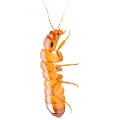
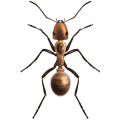
Coptotermes heimi is the larger subterranean species. Mature colonies of 60,000+ individuals, mud tubes you can see, capable of crossing slab construction joints, attacks dimensional timber including pergola posts and decorative wood. This is the one that gets a homeowner's attention because the damage is visible.
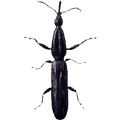
Microtermes obesi is smaller, less dramatic, but more pervasive in coastal sand. Colonies disperse along irrigation drip lines feeding on cellulose mulch and the cellulose binder in some types of sub-base material. Microtermes activity often goes undetected for years before someone notices a soft strip of skirting board or a hollow-sounding architrave.
On Saadiyat we find Coptotermes more often around the perimeter of beach-facing villas (the District One, Saadiyat Beach, and Mamsha plots especially), and Microtermes more often around the interior gardens of cluster villas where the irrigation runs are densest.
Why the irrigation makes everything worse
Subsurface drip irrigation on a Saadiyat villa garden runs typically 30-45 minutes daily, often twice a day in summer. That puts moisture into the upper 10-20 cm of soil at exactly the depth where the original termite barrier was placed during construction.
Imidacloprid is moderately water-soluble. Bifenthrin (the older alternative) is less soluble but still leaches. Daily wetting and drying cycles, combined with high salinity, accelerate hydrolysis of the active ingredient. Your barrier doesn't disappear suddenly — it thins out, weakens, and creates gaps the termites probe. By year 5-7 in a typical Saadiyat irrigation regime, gaps are large enough for a Microtermes colony to bridge.
The villas that hold their barriers longest are the ones where the homeowner switched to drought-tolerant landscape planting (ghaf, sidr, native shrubs) and dropped daily irrigation. We've seen these go 8-10 years without breach.
The chemical barrier we actually deploy
PestSwift's standard Saadiyat residential anti-termite treatment uses imidacloprid 30.5% SC at a rate of 1 litre of dilute solution per 5 metres of perimeter. We trench 30 cm wide and 30 cm deep along the foundation line, apply, backfill with treated soil, and inject under any concrete that abuts the foundation (driveway, pool deck, AC plant pad).
For Saadiyat villas specifically, we add two protocol changes compared with a Mirdif or Khalifa City villa:
Stronger initial dose at the beach-facing wall. Salt spray and tidal moisture push hydrolysis there fastest. We apply 1.5x the standard volume on that elevation.
Sleeve injection at the irrigation manifold. The irrigation control box is usually within 2 metres of an external wall. We inject around the manifold and the first 3 metres of every drip line that runs against the structure.
Cost for a typical Saadiyat 4-BR cluster villa: AED 4,200-6,800 for full perimeter + sub-slab injection. AED 6,800-9,500 for a 5-BR detached beach-facing villa with pool and outdoor kitchen.
Pre-construction barrier (slab-down treatment before the concrete pour) is roughly AED 9-15 per square metre of footprint and is by far the cheapest prevention if you're still in handover or building. Most developers contract this in but the quality of execution varies — we audit completed pre-construction work and re-do gaps for AED 1,800-3,500.
What a real inspection looks like
Saadiyat villa termite inspection runs about 90 minutes for a 4-BR. We walk:
- Full perimeter looking for mud tubes (Coptotermes signature), softwood frass at deck-edge joints (Microtermes), and any hollow-sound timber via tap-test.
- AC plant room — the warm humid floor under condensate units is a frequent first attack point.
- Pool deck expansion joints — silicone sealant degraded by 5+ years of UV opens an entry.
- Pergola and outdoor wood — usually the first visible damage.
- Internal: skirting boards in the master bedroom (ground floor) and any built-in wardrobes against external walls.
- Garden: irrigation manifold, palm tree bases (palms are not termite food but the irrigation around them is the corridor), composted-mulch beds.
We carry a borescope for the interior void inspection and a Termatrac T3i moisture/movement detector for non-invasive wall checks. The Termatrac is what tells us whether a "soft skirting" is current activity or historical damage.
Inspection alone runs AED 450-650 with a written report, redeemable against full treatment if we proceed.
The developer warranty trap
Most Saadiyat developers (Aldar, IMKAN, Saadiyat Reserve developers) include a 1-year termite warranty in handover documentation. After that, you're on your own.
Here's the trap: the warranty terminates exactly at the point Microtermes colonies are first becoming detectable. Subterranean termite colonies need 3-5 years post-construction to reach the size where damage shows. The 1-year warranty almost guarantees the developer never sees a claim — which is why developers offer it.
The real protection window is years 4-8 post-handover. Our standing recommendation: book an inspection in year 3 and a fresh barrier application in year 5, before any visible damage shows. AED 4,500 in year 5 prevents AED 25,000-80,000 in structural and cabinetry repair in years 7-10.
A real Saadiyat case from last winter
A 5-BR District One beach villa, handed over February 2020. Owner called us in November after the gardener noticed a thin trail of mud running from a planter bed to the pergola post. Tap test on the pergola: soft over a 40 cm section. Borescope into the post: active Coptotermes heimi gallery, a column maybe 12 cm wide running halfway up the timber.
Pre-treatment inspection found three more attack points: the AC plant room threshold, the under-pool-deck expansion joint, and one ground-floor wardrobe against the seaward wall. The villa had received no anti-termite work since the developer's pre-construction barrier in 2019.
Treatment: full perimeter trench-and-treat with imidacloprid 30.5% SC at 1.5x rate on the beach-facing elevation, sub-slab injection at three points along the pool deck, foam injection into the pergola post, replacement of the affected skirting board section behind the wardrobe. Two return visits at 30 and 90 days for monitoring.
Total cost AED 7,200 for the treatment, plus AED 1,400 for the carpentry repair. Saved a structural problem that, left another 18 months, would have meant a pergola rebuild (AED 18,000+) and possible slab-side concrete spalling.
The owner now books a PestSwift inspection annually and a refresh barrier scheduled for year 6, which would be 2026.
FAQ
Do beachfront villas need different termite treatment?
Yes. Salt-saturated sand degrades chemical barriers roughly 1.5-2x faster than inland soil. Beach-facing elevations get a higher application rate (we use 1.5x on the seaward side) and we recommend re-inspection every 24 months instead of every 36-48 inland.
How long does a chemical barrier last in UAE soil?
Mainland Abu Dhabi clay-loam: 8-10 years for imidacloprid. Saadiyat coastal sand with daily irrigation: 4-5 years. Reduce irrigation and shift to native landscaping and you can stretch that to 7-8.
Will treatment damage my landscaping?
No. Imidacloprid at the rates we apply is a residual chemical that sits in the soil within 30 cm of the foundation. It does not translocate into mature plants more than 2-3 metres away. We do recommend pulling annual flowers from the trench area for 30 days post-application, then replanting.
Is termite cover required by the developer warranty?
Most Saadiyat developers offer a 1-year warranty post-handover. After that, structural termite damage is your responsibility unless it's a known construction defect. Re-treat in year 5 to keep continuous protection.
If you own a Saadiyat villa and you're past handover year 4, book a PestSwift inspection — we'll tell you honestly whether you need re-treatment now or whether you can wait another year. We also handle pre-construction treatment and full perimeter villa pest control packages for new builds.
Tags
Written by
Dr. Karim El-Sayed, Lead Entomologist
PestSwift technicians and entomologists publish field-tested pest control guidance for UAE homes and businesses.