












A Mirdif majlis floor opens cleaner than a JLT chiller riser
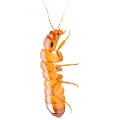
Subterranean termites travelled up through the AC trunk channel of a Mirdif Phase 2 villa last winter and built a working tube into the timber framing of the wardrobe in the upstairs guest bedroom. The owners noticed when one of the wardrobe shelves collapsed under a stack of folded shirts. By that point the colony had been there for somewhere between 8 and 14 months.
The fix was an AED 4,200 chemical barrier injection across the affected wing of the villa, which sounds like a lot until you understand the alternative. The owners had been quoted AED 1,950 by a competitor for "termite spray" — a surface spot treatment that, even applied competently, would have killed the visible workers in the wardrobe and left the underground colony entirely intact. Twelve months later they'd be calling again, with damage now in the load-bearing wall plate.
So when villa owners in Mirdif, Al Warqa, Mira, or older parts of Al Barsha ask why termite quotes vary from AED 800 to AED 9,000 — the spread is the difference between killing what you can see and ending the colony.
The Mirdif termite problem in one paragraph
Most of Mirdif Phase 1 and 2 sits on alluvial fill with a high seasonal water table during winter rains. The villa stock is older, with original landscaping that's had 25–40 years to mature. Subterranean termites — almost always Heterotermes indicola in Dubai, occasionally Coptotermes heimi — establish underground colonies in the moist soil around villa perimeters and travel up through expansion joints, AC trunk channels, irrigation conduit penetrations, and any timber-to-soil contact in the garden. By the time you see a mud tube on a wall, the colony has been there for months and is well-resourced.
Spot treatment vs chemical barrier — different products
When a villa owner in Mirdif gets a termite quote, the first question to ask is what scope is being priced. There are essentially three product types in this market:
Spot or local treatment (AED 300–1,200): a technician injects termiticide into the visible mud tube and the affected timber. Kills workers in that tube. Does not address the colony. Useful for an isolated incursion in a single wardrobe or door frame plus a follow-up barrier — useless on its own for established colonies.
Perimeter chemical barrier (AED 2,500–6,500 for a Mirdif G+1 villa): drilling 12–18mm holes at 30cm centres around the entire villa perimeter and slab penetrations, injecting a non-repellent termiticide (fipronil 0.06% or imidacloprid 0.05% are the two DM-approved standards) at depth. Creates a continuous chemical zone that workers travel through, carrying active back to the colony.
Whole-villa baiting system (AED 4,000–9,000+ depending on size): in-ground bait stations on the perimeter with a chitin-synthesis inhibitor (typically hexaflumuron or noviflumuron). Slower but elegant — colony elimination in 90–180 days, no chemical injection into the structure.
For a confirmed active infestation in a Mirdif villa, the right answer is almost always option 2 or option 2+3 combined. Option 1 alone is a waste, no matter how cheap.
What a real chemical barrier looks like
Drilling pattern matters more than chemical brand. The DM-approved actives all work when applied properly. They all fail when not.
For a typical Mirdif G+1 villa (250–400 sqm built area, garden on three sides):
- Perimeter trench or drilling at 30cm centres along the external slab edge. Holes go through the slab edge into the soil at 25–30cm depth.
- Internal slab drilling at every wall-to-floor junction inside ground-floor wet areas (kitchen, bathrooms, laundry) and at the AC trunk channel penetrations. These are the routes subterranean termites use to bridge from soil to structure inside the villa.
- Chemical injection of fipronil at 0.06% or imidacloprid at 0.05%, at a rate of 5 litres per linear metre of perimeter. A 250 sqm villa needs 250–400 litres of mixed solution. If a quote tells you the same villa is treated with 50 litres, the application rate is wrong.
- Soil saturation around irrigation manifolds, the boundary wall footing, and any tree pit within 2m of the structure. Termites love mature ghaf and frangipani roots; the soil around them is usually moist year-round.
- Documentation: a treatment certificate listing the chemical name, batch number, drilling pattern, and litres applied, signed by the licensed technician and bearing the company's DM licence number.
A villa correctly treated this way carries a 10-year warranty in our standard contract, with annual inspection visits to verify barrier integrity.
Fipronil vs imidacloprid — does it matter for Mirdif soil?
Both are non-repellent termiticides. Both are on the Dubai Municipality approved list. Both work as a transfer toxicant — workers travel through the treated zone, pick up sub-lethal doses, and return to the colony where the active ingredient is transferred via grooming and trophallaxis.
The practical differences:
- Fipronil binds tightly to soil organic matter and stays put. In Mirdif's older landscaped soils with high organic content, fipronil has excellent persistence, often 8–10 years on a properly applied barrier.
- Imidacloprid is more mobile in the soil profile. In sandy fill with low organic matter (newer Mirdif Hills, parts of Al Khawaneej), imidacloprid disperses faster and may need re-treatment at 5–7 years.
For most Mirdif Phase 1/2 villas, fipronil is the right call. For newer-build villas on imported sand fill, imidacloprid often works equally well at lower cost. A technician who refuses to specify which they're using is a technician you should not hire.
Garden, kids and pets — what's the re-entry timing
A correctly applied subterranean termite barrier is sub-surface. The chemical is in the soil at 25cm depth and below the slab — not on garden surfaces. Standard re-entry timing for outdoor areas is 4 hours after the last injection once any temporary surface wetting has dried. Kids and pets back in the garden the same day is normal.
Indoor drill points (wet area floors) close with cement plug + tile patch. Re-entry to those rooms is 2 hours after the cement sets, usually faster.
What we tell families with very young children or immunocompromised members: schedule the treatment when you'll be out of the villa for the morning, return in the evening. We've never had an issue, but the optics matter and the precaution costs nothing.
Pre-construction vs post-construction — a different price point
Mirdif Phase 3 and the newer Mirdif Hills extensions are still seeing some new-build activity. If you're at foundation stage, a pre-construction termite treatment (chemical barrier applied to the soil before slab pour, plus the backfill against foundation walls) is dramatically cheaper than retrofitting later — typically AED 12–18 per square metre of slab footprint. Same chemicals, no drilling needed, results in a uniform sub-slab barrier.
For a 350 sqm villa that's AED 4,200–6,300 at construction stage, vs the AED 6,000+ post-construction equivalent. We strongly encourage builders and self-developers to budget for it. See our pre-construction termite treatment service for the protocol detail.
Frequently asked questions
How long does anti-termite barrier treatment last in Dubai?
A correctly applied fipronil barrier in Mirdif soil typically lasts 8–10 years before re-treatment is recommended. Imidacloprid in sandier fill: 5–7 years. The 10-year warranty we offer assumes annual inspection visits — if the inspection finds compromised areas (new garden landscaping that disturbed the barrier, plumbing repair that breached the perimeter), spot re-treatment is included.
Do termites come back after a chemical barrier?
The colony that triggered the treatment is killed by transfer over 60–120 days. New colonies establish in UAE soil constantly, and the barrier is what prevents them from reaching the structure. As long as the barrier is intact and inspected, the structure stays protected. Termites coming back after a "barrier" treatment usually means a spot treatment was sold as a barrier — different product, different outcome.
What's the difference between fipronil and imidacloprid for villa termite treatment?
Both are non-repellent transfer toxicants on the DM list. Fipronil persists longer in organic-rich soils (typical Mirdif Phase 1/2). Imidacloprid is more mobile and slightly less persistent but applies well to sandy fill (newer Mirdif Hills). Either works correctly when applied at the right rate. Application quality matters more than chemical choice.
Is post-construction termite treatment safe for the garden?
Yes when applied correctly. Injection is sub-surface at 25cm+. Surface wetting from over-spray (which shouldn't happen with proper equipment) dries within hours. Edible plants in the treated zone are not absorbing termiticide from sub-surface application — neither active translocates significantly into plant tissue at use rates. We still suggest waiting one growth cycle before harvesting fruit from any tree within 2m of the injection zone, as a precaution.
Get a survey
A real villa termite survey takes 45–90 minutes — perimeter inspection, internal wet-area inspection, garden tree-pit check, AC trunk and conduit penetration check. We give you a fixed quote, name the chemical, and explain the drilling pattern before you sign anything. Book a free Mirdif villa survey or read about our villa pest control service. For more on subterranean termite biology, see our termite pest page.
Tags
Written by
Rashid Al Mansoori, Operations Manager
PestSwift technicians and entomologists publish field-tested pest control guidance for UAE homes and businesses.