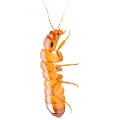




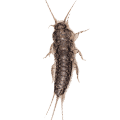

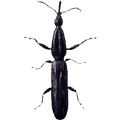
Mud tubes on the garden wall expansion joint of a Hayat 2 townhouse last week. The owner had just bought the villa from the original handover buyer in March — three weeks past her Nshama warranty expiry. She'd been told the property was "pest-free." Looking at the joint, the colony had probably been active for 9–14 months already.
Town Square villas are now hitting the age where subterranean termite (Heterotermes indicola) emergence becomes statistically routine. The first phase of Hayat Boulevard handed over in 2019. Hayat 2, Hayat 3, Zahra apartments, Safi townhouses — all in the 4-to-7-year window where the warranty expires, owners stop thinking about pest pressure, and the colony's first mud tube appears.
This post covers what's actually happening underneath those villas and what the AED 2,200–3,800 chemical barrier protocol looks like in practice.
The Nshama construction profile that termites like
Town Square villas were built fast — that's not a criticism, it's a fact of the development model. The construction approach has three features that are termite-favourable in UAE conditions, and unless you understand them you'll keep treating the symptom rather than the source.
Sand fill under engineered floor slab. Most Nshama villas sit on graded sand fill, 600–1,200 mm deep, capped by a reinforced concrete floor slab on a damp-proof membrane. The sand fill is great structurally — it compacts well and drains quickly. It's also a permanent termite highway. Heterotermes indicola tunnels through compacted sand with ease, doesn't need surface mud tubes when underground, and reaches the slab edge undetected.
District cooling chilled-water lines. Town Square is served by district cooling (Empower or Emicool depending on the cluster). The chilled-water supply lines run 700–1,200 mm below grade along the property side-strip. In Dubai summer, with chilled water at 4–6°C and ambient soil at 35°C, the pipes condense. That condensate creates a permanent moisture corridor along the property perimeter — exactly the conditions Heterotermes indicola needs to maintain colony hydration. Soil moisture at 12–18% (around chilled-water lines) versus 3–6% (general garden soil) is the difference between colony survival and colony death.
Garden wall + paver expansion joints. The boundary wall and the driveway pavers have expansion joints filled with closed-cell foam strip and a flexible mastic cap. Over 4–6 years of UAE thermal cycling the mastic cracks. The expansion joint becomes a vertical chase from the moist soil up to the warm wall surface. That's where the mud tubes appear first — climbing the inside face of the boundary wall, the kitchen-extension wall on Hayat townhouses, and the staircase abutment on Zahra ground-floor units.
Put these three together and you get a textbook subterranean termite scenario, with the colony living in the chilled-water-line moisture corridor and foraging up through expansion joints to find cellulose. The cellulose, in case anyone's wondering, is the timber inside skirting MDF, the paper face of gypsum board, the kitchen-cabinet carcass material, and — most expensively — any exposed structural timber in roof trusses if the villa has them.
What the early signs look like in Town Square specifically
Not all termites in Town Square look the same as the textbook "mud tubes on a basement wall" image. Here's what gets called in by Nshama villa owners:
- Pencil-width mud tubes on the outside face of the boundary wall, usually within 30 cm of the expansion joint, often partially hidden by garden hose reels or AC condenser unit feet. The classic sign. Easy to spot if you know where to look.
- Soft, hollow-sounding skirting in the kitchen or ground-floor majlis. Tap the skirting MDF with a coin. A solid skirting rings; a hollowed one thuds. Often combined with tiny pinholes where alates exited months earlier.
- Sagging or bubbling paint on the inside of an external wall, ground floor only, usually behind a sofa or large furniture piece where the owner hasn't looked for years. Moisture from termite-broken plaster face.
- Flying termites (alates) after the first heavy rain of the season. UAE alate flights happen mostly Nov–Feb after rain events. If you saw alates inside the villa in winter, the colony was already established.
Don't wait for the alate flight. By that stage the colony has been mature for 2–3 years.
The chemical barrier protocol
For a typical Town Square 4-BR townhouse or Hayat boulevard villa, the protocol is a continuous fipronil chemical barrier around the structure plus targeted slab injection at expansion joints. We use fipronil because it's non-repellent — termites can't detect it and walk through, picking up a dose, then carry it back via trophallaxis (mouth-to-mouth food sharing) and grooming, taking down the colony from within. Repellent barriers like older pyrethroids just push the colony to find another way in.
Application volume: 5 litres of fipronil 0.1% finished slurry per linear metre of perimeter, applied via rod-injection at 25–30 cm intervals into a 150 mm-deep trench cut along the wall-to-soil junction. For garden-wall side: trench cut into garden soil. For driveway side: 10 mm injection holes drilled through the paver, plugged after with cement-coloured mastic.
Linear metres for typical Nshama villas:
| Villa type | Approx perimeter (m) | First treatment AED |
|---|---|---|
| Safi 3-BR townhouse | 38–46 | 2,200–2,800 |
| Hayat 4-BR townhouse | 52–64 | 2,800–3,400 |
| Zahra ground-floor apartment garden | 28–36 | 1,800–2,400 |
| Hayat boulevard 5-BR end-unit | 68–84 | 3,200–3,800 |
Internal targeted treatment: Where mud tubes have already entered the building, we drill the slab at expansion joints (kitchen-to-garden wall junction, staircase-to-external-wall junction) and inject 200–400 ml of fipronil into the slab void. Plus skirting injection along any wall section that tested soft on the survey.
Wood treatment: Any visibly damaged timber gets surface borate (disodium octaborate tetrahydrate at 15% concentration) brushed on — long-residual, non-toxic to humans, deters re-attack.
Warranty and follow-up
PestSwift issues a 5-year warranty on the full chemical barrier protocol, with mandatory annual inspections. If termites re-enter inside the 5 years, we re-treat the affected zone at no charge. Standard UAE warranty terms — see our termite warranty UAE comparison for the differences between 5 and 10 year warranties and what carriers actually honour.
Annual inspection costs AED 300–500 and includes a full perimeter walk, mud-tube spot check, kitchen and majlis skirting tap test, and roof-truss visual if accessible. If you skip the annual inspection the warranty lapses.
What new Town Square buyers should ask before completion
We get a lot of calls from buyers about to complete on a resale Town Square villa, asking what to inspect for. Three things:
- Ask for the original Nshama warranty documentation and check whether it transferred. Most Nshama warranties are 1-year structural + 1-year MEP — they don't cover termite. So even "in warranty" usually means no termite cover. Don't be reassured by "under warranty."
- Walk the property perimeter and tap every expansion joint mastic cap. Crumbling mastic = exposed joint = future entry point. Easy to re-mastic for AED 200–400 from a maintenance company.
- Get a pre-purchase termite inspection. AED 350–500 for a Town Square villa. If anything shows up, you negotiate the price down or require the seller to treat before handover. See our pre-handover termite inspection guide for the inspection checklist.
For a Town Square villa termite quote or inspection booking, contact PestSwift or see our termite treatment service page.
FAQ
Are termites covered under Nshama's snagging or DLP warranty?
No. Nshama's Defect Liability Period (typically 12 months) covers structural and MEP defects, not pest emergence. Once the DLP ends, termites become the owner's responsibility. We've never seen a successful termite-related DLP claim in Town Square.
Can I just spread granular termite treatment from a hardware store around the villa?
The retail granular products are mostly bait-only chitin inhibitors that take 6–18 months to show colony effect and don't establish a continuous soil barrier. For a confirmed active infestation in a Town Square villa with district cooling moisture corridors, retail won't keep up. For a brand new villa pre-emergence, granular bait can be a reasonable supplement to professional barrier treatment, not a replacement.
Will the chemical treatment hurt my dog or my garden plants?
Fipronil at the dilution used for soil barrier (0.1%) bonds tightly to soil particles and doesn't move into plant roots or surface runoff. The dog should be kept off the treated trench for 24 hours while the surface dries. After that, normal use is fine. Garden plants right at the trench edge may show slight wilt for 2–3 weeks then recover. Lawn growth is unaffected.
How long does the barrier last in UAE soil conditions?
Fipronil barrier has a published 5-year half-life in UAE soil under chilled-water-line moisture exposure (slightly faster degradation than dry soil). That's why the warranty is 5 years and annual inspection is required — we want to catch any breach early. Some PCOs sell 10-year warranties on the same chemistry, which is optimistic; we'd rather not over-promise.
For area-wide termite information across Dubai villa communities, see our Dubai termite control service page or browse our other community-specific guides for Damac Hills, Mirdif and Sustainable City.
Tags
Written by
Dr. Karim El-Sayed, Lead Entomologist
PestSwift technicians and entomologists publish field-tested pest control guidance for UAE homes and businesses.