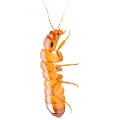

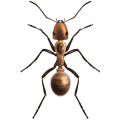






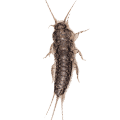

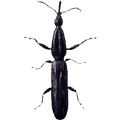
Our team pulled a 2.4 m mud tube out of a Frond G villa pergola last September. The previous owner had renewed their anti-termite contract three times in six years and still ended up with active Microtermes mycophagus colonies behind the cladding on the pool side. The barrier they paid for had broken down faster than the technician's warranty card said it would. That isn't a contractor problem. It's a Palm Jumeirah problem.
What's actually under your villa
The Palm was built between 2001 and 2006 on dredged seabed sand pumped up from offshore. Geotechnical reports for the trunk and fronds show a uniform fill profile: medium-coarse calcareous sand to a depth of 3-5 m, with the natural water table sitting at 2-3 m below ground level depending on tide and which frond you're on. Frond tips (positions 17-18 on most fronds) have a slightly higher water table than the bases nearer the trunk.
That water is saline. Salinity readings on Palm groundwater hover around 38-45 g/L, which is in the seawater range. Saline groundwater isn't neutral when it comes to soil insecticides.
Fipronil, the most common anti-termite active in the UAE (sold as Termidor SC, Goliath, and a few municipality-approved generics), is hydrolytically stable but degrades faster in alkaline saline conditions than in neutral inland sandy soil. Inland villa stock in Mirdif, Al Furjan or Arabian Ranches typically holds a fipronil barrier 7-10 years before residual activity drops below the lethal threshold for Heterotermes indicola. On the Palm, we see the same product breaking down in 4-6 years on the seaward side of a villa.
Which termites are actually showing up
Three species dominate Palm Jumeirah call-outs:
- Microtermes mycophagus — small subterranean termite, the most common UAE villa species. Builds tubes against irrigation feeder lines and through expansion joints.
- Heterotermes indicola — the species that actually eats your pergola. Stronger jaw, faster damage rate. We see it on villas with reclaimed teak or hardwood decks.
- Anacanthotermes ochraceus — the dune termite. Less common but turns up in fronds 12-17 where landscaping included imported topsoil over the original fill.
We rarely see Coptotermes on the Palm. That's good news because it's the destructive Formosan-relative species that costs villas in Singapore millions a year.
The chemistry choice on saline soil
Dubai Municipality's approved chemical list updated in 2024 to 18 active ingredients for residential termite control. Six of those are practical for villa work. On Palm Jumeirah specifically, our default rotation is:
- Fipronil 9.1% SC for the primary barrier. We apply at 2.0 L/m² instead of the 1.5 L/m² that works inland — the extra solution compensates for accelerated breakdown.
- Bifenthrin 25% EC as a supplemental band around irrigation laterals and pool-deck slab edges. Bifenthrin holds up better in alkaline soil than imidacloprid.
- IGR (chlorfluazuron) baiting stations on the seaward perimeter for villas with active colonies. The bait converts the barrier-only treatment into a colony-elimination program. Sentricon-style stations work well here but cost more.
Imidacloprid (Premise 200 SC) is the textbook second-choice anti-termite chemical inland. Don't use it as a primary on the Palm. It breaks down too quickly under saline conditions and you'll be back inside three years.
The frond villa drainage problem
Original Palm landscaping included drip irrigation rings around the date palms plus lateral garden lines feeding the lawn. Both of those run in shallow gravel beds 200-400 mm below grade. Termite scouts find those feeder lines fast — there's the holy trinity of moisture, darkness and a clear path to a food source.
The kitchen and maid-room slab edges are where we see the most damage. Plumbing chases run from a manifold near the front utility room, under the kitchen slab, and out to the laundry pad. Any irrigation lateral that crosses that chase becomes a termite highway straight into the structural plate.
When we do a Palm villa pre-treatment inspection, we map every irrigation line against the slab perimeter and any kitchen extension. That mapping isn't on a standard inland inspection checklist, because inland villas don't have the same garden-to-slab proximity.
What treatment actually costs
Real numbers from the last 60 Palm villa jobs we've quoted:
- Signature Villa (Frond G-Z, ~5,000-7,000 sqft built-up) — post-construction barrier with chemical reapplication: AED 3,200-4,800 single visit. Add AED 1,200-1,800 if active colonies need elimination first.
- Garden Home (~3,500-4,500 sqft) — barrier + foundation perimeter: AED 2,800-3,800. The smaller footprint helps; the irrigation density doesn't.
- Signature Villa with annex/maids block — AED 4,500-6,500. Annexes almost always need separate barrier treatment.
- Shoreline Apartments ground-floor terrace — AED 1,400-2,200. Yes, ground-floor apartments get termites too, through the planter boxes.
- Sentricon-style baiting station program (alternative to spray barrier) — AED 6,500-9,500 first year, AED 2,400-3,200 annual monitoring. Better long-term economics on the seaward fronds.
We charge a separate AED 380-580 for the initial soil-pH and moisture test we run on Palm jobs to decide which chemical to deploy. Inland villas get this for free as part of the inspection — on the Palm it's actually doing decision-grade work.
Reapplication windows that match reality
The manufacturer literature for fipronil SC will tell you 7-10 years. Don't use that timeline on the Palm.
Our field data from villas we've serviced continuously since 2018:
- Trunk villas (more sheltered from sea breeze, lower salinity intrusion) — 6-7 year reapplication interval holds.
- Frond villas, landward side — 5-6 years.
- Frond villas, seaward side — 4-5 years. Annual top-up bands around pergola posts and pool-deck edges recommended.
- Tip-of-frond positions (17, 18) — 4 years. The water table is closest here.
We issue a 5-year warranty on Palm anti-termite work, with a stipulation that the seaward side gets a no-cost inspection at year 3. Inland we issue 10-year on the same work.
What about red palm weevil
Different insect, same villa. If your landscape includes date palms — and most Palm villas do — red palm weevil (Rhynchophorus ferrugineus) is a separate intervention. Symptoms: brown frond tips, sawdust at the base of the crown, weakened stem on lateral pressure. Treatment is trunk injection with abamectin or emamectin benzoate, AED 320-680 per palm per annual application.
We cover red palm weevil on our residential pest control program when villa termite work is in scope. Treat them together — same crew, same visit.
When to do a pre-purchase inspection
If you're buying on the Palm, get a termite inspection before you sign. Active colonies inside the original anti-termite warranty period (most Palm villas were treated at original construction) become a negotiation point. We've found active termite damage on 14 of 28 pre-purchase inspections we ran in the last 12 months — half. Sellers usually agree to a price adjustment or to fund the remediation pre-handover.
Need a quote for your villa? Get in touch with the frond number and we'll send a technician within 48 hours.
FAQ
Does the Palm's saline water table mean my villa is constantly at risk of termites?
The saline water doesn't favour termites — they prefer freshwater. But irrigation, AC condensate and rainfall create freshwater pockets above the saline zone, and that's where colonies establish. The salinity issue is about how long your chemical barrier lasts, not about how many termites the soil supports.
Can I use the same pest control company for my Palm villa and my Marina apartment?
Yes — we run both. But ask about their Palm-specific protocol. Any contractor quoting you the same chemical, same application rate and same warranty for a Palm Frond villa as for a Mirdif villa is missing the salinity factor and will likely come back inside five years.
Is anti-termite required at handover for Palm villas?
Nakheel's original construction included a pre-handover termite barrier as standard. That treatment is now 18-25 years old depending on the villa. Most Palm villas have been re-treated at least once. If you've never had post-handover anti-termite work done on a villa that's older than five years, you're due.
What's the difference between baiting stations and chemical barrier on the Palm?
Chemical barrier creates a treated soil zone around the foundation — termites die crossing it. It's a one-shot job that needs reapplying. Baiting stations are placed in the ground around the villa and contain slow-acting bait — termites take it back to the colony and the whole colony dies over 8-16 weeks. Baiting works better on the Palm because it isn't relying on a soil residual. Higher upfront cost, better long-term result.
Tags
Written by
Dr. Karim El-Sayed, Lead Entomologist
PestSwift technicians and entomologists publish field-tested pest control guidance for UAE homes and businesses.