








Mud tubes on the skirting after the November rains
Most Nad Al Sheba termite calls start the same way. Owner walks the perimeter the morning after a heavy rain. Notices a thin brown line of caked earth running up a skirting board or a garden wall. A finger flicks it and it crumbles. Inside is a tunnel barely wider than a pencil lead.
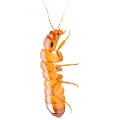
That's a subterranean termite shelter tube. It's not graffiti, it's not gecko dirt, and it's not from the gardener. It's Heterotermes indicola or Coptotermes heimi moving from a soil colony into your villa, following moisture and cellulose.
Nad Al Sheba sees this almost every winter. The villa stock, the soil profile, and the irrigated landscaping work together to make this one of the higher-pressure termite zones in Dubai.
Why Nad Al Sheba specifically
Three factors compound here.
The villa stock runs older than newer Dubai communities. NAS Villas (the original phase) handed over 2008–2010. NAS 1 followed in 2011, NAS 2 in 2013, NAS 3 from 2018 onward. Anything from the first wave is now 14–18 years old. The pre-construction termite barrier — assuming there was one — has aged out. Most chemical barriers from that period used Chlorpyrifos, which has a real-world service life of around 8–10 years in UAE soil pH and temperature.
The soil profile sits on sabkha-influenced sand with thin caliche pockets. Termite shelter tubes find easy passage through the loose granular layers. After irrigation, the upper 30 cm holds moisture long enough to sustain foraging columns near the building line.
The landscaping is the third factor and the one most owners don't connect. Nad Al Sheba villas average 600–900 m² plots with substantial date palm, Ficus altissima, and Ziziphus planting. Irrigation runs daily, often via drip lines that pool moisture exactly along the foundation edge. That perimeter wet zone is the entry corridor every subterranean termite colony wants.
What you'll actually see
The shelter tube is the most reliable sign. Look at:
- Garden wall skirting where soil meets render
- Inside the indoor majlis or formal living room where the slab meets the wall (often hidden behind skirting board)
- Around the maid's room and laundry external wall — these rooms typically sit on the cooler side of the villa and condensation makes them attractive
- Inside built-in wardrobes on ground-floor bedrooms — particularly the back panel where it touches the external wall
- Around the pool deck where the deck slab meets the boundary wall
Flying termites — alates — emerge from established colonies, usually after the first November rain and again after January rains. If you saw a swarm last winter, you have an established colony nearby. The swarm doesn't damage your villa; the colony that produced it does.
For more on what to watch for after rain, see flying termites after rain in the UAE.
Two treatment methods. Pick based on your villa.
Liquid soil barrier — chemical perimeter
The traditional method. We drill the perimeter at 30 cm intervals (paving, tile or concrete) through to soil, injecting Imidacloprid 21.4% or Fipronil 9.7% at a calculated rate — typically 5 litres per linear metre at full depth.
This creates a chemical barrier from foundation top to slab bedrock. Termites attempting to cross it pick up the active ingredient, return to the colony, and the slow-acting transfer dose collapses the population over 6–10 weeks.
Best for: villas with intact concrete or tiled perimeter walkways, owners who want a single intervention with a clear warranty period.
Not ideal for: villas where the landscaping touches the wall (Ixora hedges, soil flower beds along the foundation) — we'd have to disrupt planting to inject properly. For those, see method two.
Bait stations — slow colony elimination
Sentricon Always Active or equivalent in-ground bait stations placed at 3-metre intervals around the villa perimeter, supplemented near identified activity. Stations contain Noviflumuron or Chlorfluazuron — a chitin synthesis inhibitor. Foraging termites take it back, the moulting cycle collapses, and the colony is eliminated over 8–14 weeks.
Best for: heavily landscaped villas like Nad Al Sheba where breaking irrigation lines or damaging planting beds is unacceptable. Also: villas with the original chemical barrier still partly intact — bait + residual barrier combine cleanly.
Monitoring is monthly for the first 90 days, then quarterly. The trade-off is visit frequency for landscaping preservation.
What the cost looks like
Real pricing for Nad Al Sheba villas, based on actual PestSwift jobs in the last 12 months.
| Villa size | Chemical barrier | Bait system (first year) |
|---|---|---|
| 4-BR townhouse, NAS 3 | AED 1,800–2,400 | AED 2,400–3,200 |
| 5-BR detached, NAS 1/2 | AED 2,800–4,200 | AED 3,500–4,800 |
| 6-BR villa, NAS Villas | AED 4,000–6,500 | AED 5,000–7,500 |
Pre-construction barrier (during slab pour) is a different scope at AED 12–18 per m² of slab area. That's a builder conversation, not a homeowner one — unless you're renovating an extension.
Warranties: chemical barrier 5 years against re-infestation, with annual inspection requirement. Bait system on annual renewal — typically AED 1,800–2,800 per year for ongoing monitoring after year one.
The pre-handover inspection most NAS 3 owners skip
If you bought a NAS 3 villa from Nshama or a secondary-market sale in the last three years, request the developer's pre-handover termite treatment certificate. RERA-registered handover packages should include it. If yours doesn't or you can't find it, the pre-construction barrier life is uncertain and a soil-probe inspection is worth the AED 300–450 it costs.
Pre-handover termite inspection for Dubai villas covers the full checklist.
What Dubai Municipality requires
Anti-termite treatment in Dubai must be performed by a DM-approved pest control company holding the relevant category licence. The technician carries a DM card. The chemical used must be on the approved list — Imidacloprid 21.4%, Fipronil 9.7%, Bifenthrin 25.1%, Permethrin 25%, and the Sentricon bait actives are currently listed. Chlorpyrifos is no longer permitted for residential termite work as of the 2020 list revision.
The completion certificate matters if you ever sell the villa or claim against a warranty. We issue one for every chemical barrier or bait installation, with the chemical name, batch number, application date, and treated area diagram.
If you want to confirm a contractor's status, the verify Dubai Municipality pest control licence post walks through the public-facing check.
Why the irrigation conversation matters
This is the part most Nad Al Sheba owners ignore. We can put down the best chemical barrier in the city, and if your gardener still runs the drip line directly along the foundation 14 hours a week, you've maintained the moisture corridor termites need. Reroute drip lines to at least 30 cm from the foundation. Slope the planter bed soil away from the wall. Mulch with gravel rather than wood chips along the perimeter strip.
We document this in the post-treatment report and walk the gardener through it on the second visit. It's not extra cost. It's the difference between a 5-year warranty period that actually holds and one where you need a top-up at year 3.
FAQ
How do I know if the mud tubes are old or active?
Flick the tube open with a screwdriver. If you see live termites — small, soft-bodied, pale — it's active. If the tunnel is empty and dry, it could be abandoned, but in Nad Al Sheba abandonment is rare. The colony usually just shifted entry. Have it inspected either way.
Will the chemical barrier hurt my plants?
Imidacloprid and Fipronil at the injection rate used are systemic-safe for ornamental plants when applied below the root zone. We avoid direct injection into root balls. The 30 cm drill grid keeps the active ingredient in the soil column where termites travel, not where date palm feeder roots sit.
What if the treatment doesn't work?
Our 5-year warranty on chemical barriers covers re-treatment at no cost. The annual inspection is mandatory to keep the warranty active — miss it and the warranty voids. Bait systems are different: the monitoring fee is what keeps the protection live.
Can I treat just one room where I saw activity?
You can spot-treat a localised entry point, but subterranean colonies are 30,000–500,000 strong and forage across 50–80 metres. Spot treatment displaces them; they re-enter elsewhere. Whole-perimeter treatment is the only intervention that actually clears the property.
What to do this week
If you've seen mud tubes, swarming alates, or any signs of activity, book an inspection now — termites do not pause for summer. A 60-minute villa inspection identifies the entry corridors, the recommended method (barrier vs bait), and a budget range. Request a Nad Al Sheba villa termite inspection or read our full termite treatment service overview.
Tags
Written by
Rashid Al Mansoori, Operations Manager
PestSwift technicians and entomologists publish field-tested pest control guidance for UAE homes and businesses.