






A Quortaj townhouse, three thin lines on the boundary wall
The owner of a Quortaj townhouse in Al Furjan called us about "weird mud streaks" on the inside of his garden boundary wall. He'd assumed the kids did it. Up close, the streaks were three perfect mud tubes, each about the diameter of a pencil, running from the soil up to a wooden gate frame.
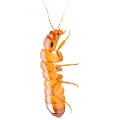
Subterranean termites, foraging from a colony probably under his neighbour's lawn, had built tunnels to reach the wood. The villa was nine years old. Nakheel's pre-construction anti-termite treatment had done its job for almost a decade. But chemical barriers in UAE soil don't last forever, and his had reached the end.
This is the conversation we end up having a lot in Al Furjan. The Nakheel-developed sub-clusters — Quortaj, Masakin, Murooj, Dreamz — were largely handed over between 2015 and 2018. The original developer barrier is now expiring across most of the community.
What "pre-construction termite barrier" actually means
When Nakheel built Al Furjan, the contractor was required to do soil treatment before the slab was poured. Either chlorpyrifos or imidacloprid was sprayed into the trench around the foundation perimeter and into the sub-slab fill, then the slab went down. That treated soil layer is what kept termites out for the first decade.
The lifespan depends on three things:
- The active ingredient. Imidacloprid lasts longer than chlorpyrifos in alkaline UAE soil, but neither is permanent.
- Soil disturbance. Every time someone trenches for irrigation, lays a new garden bed, or installs a pool, the chemical layer is broken.
- Water table. Al Furjan's water table varies — Quortaj sits a touch higher than Masakin — and irrigation overwatering accelerates breakdown.
In practice, we see the barrier failing reliably in years 8–10 across this community. If your villa was handed over in 2016, you're now in the window where mud tubes start appearing.
How to know which Al Furjan sub-cluster you're in (and why it matters)
The four main sub-clusters have different villa designs and slightly different soil profiles:
- Quortaj. North and South. Single-row townhouses with shared boundary walls. The boundary wall is the most common termite entry point because it's the one structure that touches the neighbour's soil directly.
- Masakin. Mid-density villas with proper garden setbacks. More foundation perimeter to protect, but no shared walls. Mud tubes usually appear at the irrigation trench edge.
- Murooj. Larger villas with deeper foundations. Termite pressure tends to come from chiller plant access cavities and pool plant rooms.
- Dreamz. Newer (handover 2018+), so chemical barrier is still active for most owners.
Your treatment plan changes based on which one. A Quortaj re-treatment that ignores the shared boundary wall will fail in 18 months. A Masakin treatment that doesn't reach under the garden bed will leave a gap.
What termite re-treatment actually involves
This isn't the spray-on-the-wall job people think it is. For a proper subterranean termite re-treatment in Al Furjan, here's what we do:
Trenching
We dig a 30cm-deep, 15cm-wide trench around the entire foundation perimeter — both villa and boundary wall in Quortaj. The trench goes right against the foundation. Where there's a paved driveway or patio in the way, we drill 12mm holes through the paving at 30cm intervals down to the underlying soil.
Termiticide injection
Fipronil (typically marketed as Termidor) or imidacloprid is mixed at the label rate and pressure-injected into the trench at roughly 5 litres per linear metre. The chemical disperses laterally through the soil, creating a continuous barrier. Fipronil has the advantage that termites can't detect it — they walk through, contact it, and carry it back to the colony where it transfers through grooming behaviour. This is what eliminates the colony, not just the foragers.
Soil backfill and surface treatment
The trench gets backfilled with treated soil (we mix the displaced soil with termiticide before returning it). Surface joints between slab and patio get a topical treatment for redundancy.
Wood spot-treatment
If mud tubes have already reached wooden elements (door frames, gate frames, attic timber, kitchen cabinet plinths), those points get a directly-injected borate or fipronil treatment.
Documentation
You get a treatment certificate with the active ingredient, the DM registration number, the dose, the date, and the warranty period. This document is what banks and future buyers will ask for.
Real cost bands for Al Furjan villa termite re-treatment
Perimeter-based pricing, full chemical barrier with 5-year warranty:
| Villa type | Perimeter (typical) | Cost band |
|---|---|---|
| Quortaj townhouse | 35–45m | AED 2,800–4,200 |
| Masakin 4-BR | 55–70m | AED 4,200–6,500 |
| Murooj 5-BR | 75–95m | AED 6,500–9,500 |
| Dreamz 4-BR | 50–65m | AED 3,800–5,800 |
If there's already an active infestation with established mud tubes inside the villa, add AED 1,200–2,400 for interior wood treatment and follow-up. Pool plant rooms and chiller cavities add another AED 600–1,000 each.
If you've been quoted under AED 2,500 for a full Al Furjan villa, the contractor is either skipping the trench, under-dosing the chemical, or not actually doing the boundary wall. Ask to see the chemical batch label and compare litres-applied to perimeter-metres. The maths will tell you.
Things people get wrong about termites in Al Furjan
- Mud tubes mean active termites. "They look old" doesn't matter — termites build new tubes when the old ones get damaged. Any tube on your property is a current problem.
- Discarded wings near a window in March or April mean a swarm came out of your foundation. That's the colony reproducing. Vacuum the wings, save a few in a small container, and call within the week.
- Hollow-sounding wood inside the villa is end-stage. The colony has been active for 3+ years by the time you can hear it.
- Garden mulch and decorative wood chips against the villa wall are termite buffets. Pull them back to a 30cm gap.
If you want to compare what re-treatment looks like in other Dubai villa communities, see our piece on Mirdif villa termite work and the Al Furjan area page. For the underlying termite biology, the termite pest profile covers both subterranean and dry-wood species. Booking takes about two minutes via our contact form — we'll send a technician for a free perimeter inspection within the week.
Frequently asked questions
How do I know if my Nakheel pre-construction barrier is still active?
Ask Nakheel Customer Care for the original termite treatment certificate. They have it on file for most Al Furjan handovers. The certificate will show the chemical and the date. Add 8–10 years for a realistic expiry estimate. After the eighth year, an annual visual inspection of the boundary wall and garden edge is sensible.
Should I do termite treatment if I'm just renting an Al Furjan villa?
The landlord should. Termite damage to the structure is a structural issue, not a tenancy issue. RERA's standard tenancy contract treats termite remediation as the landlord's responsibility unless the tenant caused the conditions (e.g. by leaving wet timber against the wall). Send the landlord written notice with photos of any mud tubes within seven days of spotting them.
What's the difference between baiting systems and chemical barriers?
Baiting (e.g. Sentricon-style stations) places termite-attractive cellulose with a slow-acting toxin in the soil around the villa. Termites find it, feed, share, and the colony collapses over 3–6 months. It works, but in Al Furjan's high-pressure soil environment, most contractors recommend a chemical barrier as the primary treatment with bait stations as supplementary. Bait alone in Al Furjan tends to underperform.
Will the treatment damage my garden plants?
No, when applied at label rates. Fipronil and imidacloprid bind tightly to soil particles and don't move laterally into plant root zones at trench-application doses. We avoid spraying foliage and we caution about edible-garden zones (we'll skip the trench section under herb gardens and recommend physical barriers there instead).
Tags
Written by
Rashid Al Mansoori, Operations Manager
PestSwift technicians and entomologists publish field-tested pest control guidance for UAE homes and businesses.