





A date palm farm and a skirting board
A homeowner on Al Khawaneej Second called us in early March about hollow-sounding skirting boards along the kitchen wall. The villa was eleven years old, on a 12,000-sqft plot, with three mature date palms in the rear garden and a drip irrigation system feeding the lawn and ornamental beds.
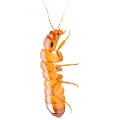
When we tapped the skirting and pulled it back, the gypsum board behind was a paper-thin honeycomb of Heterotermes indicola galleries. The termites had come up the foundation perimeter under the kitchen, found a moisture gradient at the slab edge, and worked their way through the gypsum cavity for an estimated eighteen months.
This is the Al Khawaneej termite story. It repeats from Mushrif Park's eastern boundary all the way out to Al Khawaneej Walk and the new Phase 2 villa releases. The pest isn't unusual; the soil moisture is.
Why Al Khawaneej is Dubai's worst termite belt
Dubai has roughly four villa termite zones we treat differently: dry sandy plots in places like Arabian Ranches outer ring, irrigated compounds in Mirdif, lakeside developments in Damac Hills, and the heavily-irrigated date-palm belt of Al Khawaneej, Al Awir, and Al Aweer.
Al Khawaneej is the worst because three things stack:
- Persistent soil moisture from drip irrigation. Most villas have 15-30 emitters per zone running 20-40 minutes daily, six days a week. The top 30-40 cm of soil never fully dries between cycles.
- Mature date palms and ornamentals. Old date palms have deep root systems and shed cellulose continuously. Termite scout colonies establish around root crowns within two years of planting.
- Sandy-loam soil with clay lenses. Dubai municipality's soil maps show patchy clay deposits across Al Khawaneej. Termites use the moisture-trapping clay layers as travel corridors. We've followed mud tubes 14 metres along a clay seam to reach a villa.
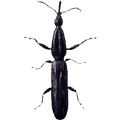
The species we see is almost always Heterotermes indicola — a subterranean termite originally Indian, now established across the UAE Gulf coast. Less commonly we find Anacanthotermes ochraceus, a desert harvester termite, on the desert-edge end of Al Khawaneej Walk.
What chemical barrier actually means
There's a lot of vague talk in the UAE termite market. "Anti-termite treatment" can mean anything from a perfunctory perimeter spray to a proper soil-injected chemical barrier. The real protocol for an Al Khawaneej villa with active infestation:
- Trench the perimeter. A trench 15 cm wide and 30 cm deep is dug along the foundation. We do this in 2-metre sections to avoid leaving the foundation exposed too long.
- Drill the slab perimeter. Inside the villa along the slab-wall junction, we drill 12 mm holes every 30 cm to a depth of 45-50 cm. Holes are angled 30 degrees outward to reach the foundation footing.
- Inject termiticide under pressure. We use fipronil (Termidor SC at 0.06%) or imidacloprid (Premise 200 SC) at the rates approved on the Dubai Municipality biocide list. Each linear metre of perimeter receives 5 litres of finished spray. Each drilled hole receives 1.5-2 litres until refusal.
- Treat around utility entry points. Every plumbing and conduit penetration gets a 50-cm radius soak.
- Backfill with treated soil. The trench is backfilled with the excavated soil mixed with diluted termiticide.
- Patch the drilled holes with cementitious filler tinted to match the floor.
The whole job for a 5,000-sqft Al Khawaneej villa runs one full day with a four-technician crew and three pressure pumps.
What pre-construction looked like (and why retrofit is harder)
If the villa was built after 2010, it most likely had a pre-construction termite barrier — termiticide sprayed onto the prepared sub-grade before the slab pour. Those barriers are warranted for ten years. Many Al Khawaneej Phase 1 villas are now past warranty, which is why we're seeing a wave of post-construction calls in 2025-2026.
Retrofit is harder because:
- The slab is already poured, so we drill instead of spray
- Landscaping is established, so we trench around plants
- Utilities are in the ground, so we have to trace cable and pipe routes before drilling
- Hardscape patios, paved driveways, and pool decks need core-drilling at every metre or termiticide injection through expansion joints
Add-on cost for a paved-driveway villa is typically AED 800-1,400 over the base treatment.
Real AED pricing for Al Khawaneej villas
For a clear chemical barrier with 5-year warranty, current 2026 pricing:
- Up to 4,000 sqft built-up: AED 2,400-3,200
- 4,000-6,000 sqft: AED 3,200-4,500
- 6,000-8,500 sqft: AED 4,500-6,500
- 8,500+ sqft (large compound): AED 6,500-9,500
If there's an active infestation with visible damage, add AED 800-2,000 for the localised wood treatment, drywood remediation if present, and damaged-section repair coordination.
The warranty terms matter. A 5-year chemical barrier warranty should include free re-treatment for any fresh termite activity inside the warranty period, plus an annual inspection. If the warranty is conditional on monthly contracts at AED 200+, the up-front quote is misleadingly low.
The pre-handover Phase 2 angle
Al Khawaneej Phase 2 villas are still being handed over from the developer through 2026. We strongly recommend a pre-handover termite inspection before the developer's defects-liability period closes — typically 12 months from handover.
What we look for in a pre-handover inspection:
- Documentation of the original pre-construction barrier (warranty certificate from developer)
- Date of pre-construction treatment vs slab pour (should be same week, not months apart)
- Soil sampling at the perimeter for mud tubes
- Moisture mapping with a calibrated wood moisture meter at base of internal walls
- Garden zone walk-through for early scout colony evidence
We write this up as a defects letter the homeowner can submit to the developer. About 1 in 5 Phase 2 villas we inspect have something the developer should remediate — usually the original barrier wasn't applied, or it was washed out by an irrigation leak before the slab cured.
What to do today
If you're in Al Khawaneej and you haven't had a termite inspection in the last 18 months, you're overdue. Telltale signs that a colony is already established:
- Mud tubes on the inside of the boundary wall, especially the irrigated side
- Hollow-sounding skirting boards or door frames
- Tiny gritty piles next to the wall (frass)
- Discarded wings near windows in March-April (alate swarming season)
- Soft spots in any wooden built-in furniture against an exterior wall
We do free 45-minute Al Khawaneej villa inspections including a moisture map and a written quote.
FAQ
How often should an Al Khawaneej villa get a termite inspection?
Every 12 months is the right cadence. Drip irrigation keeps soil moisture high enough year-round that scout colonies can establish quickly, and the yearly inspection catches them before structural damage. After a clear chemical barrier, the inspection is included in our 5-year warranty at no extra cost.
Do date palms attract termites?
They don't attract termites the way a damp wood pile does, but their continuous root cellulose and shed frond debris give established colonies an easy food source. We treat the soil within a 1-metre radius of every mature palm during the chemical barrier and recommend keeping fronds and trunk debris cleared from the base.
What's the warranty period on a chemical barrier in Dubai?
Our Al Khawaneej standard is 5 years for the chemical barrier with free re-treatment if termites return inside that window. Some companies offer 1-2 years; that's a thinner application or older actives. The Dubai Municipality biocide registration system records active ingredient and rate. Ask any provider for their DM-approved chemical list entry and the rate they're applying.
Can you treat a villa while we're living in it?
Yes. The chemical barrier is sub-slab and exterior trench work. Drilled holes inside are 12 mm and patched the same day. Residents can stay in the villa throughout. We do ask that pets be kept indoors during the trenching and that the drilled rooms stay closed to children for 4 hours after injection.
Book a free Al Khawaneej villa inspection
We service Al Khawaneej First, Al Khawaneej Second, Mushrif Park boundary, Al Awir Road villas, and the new Phase 2 releases. Same-week scheduling for active infestations.
Book a free villa inspection or read more about termite treatment and the pre-handover inspection process.
Tags
Written by
Dr. Karim El-Sayed, Lead Entomologist
PestSwift technicians and entomologists publish field-tested pest control guidance for UAE homes and businesses.