



A pile of wings, a hundred dead bodies, no idea what to do
The call always sounds the same. "There's, like, a hundred dead bugs by my window. They have wings. Or had wings — most of the wings are off. Are these flying ants?"
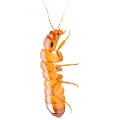
No. They're termite swarmers. The wings on the floor are alate wings shed after a brief reproductive flight. The bugs without wings are the survivors trying to find soil to start a new colony. And the colony they came from is somewhere within about 12 metres of your foundation, almost always closer.
This is one of the most common pest calls we get in the days after a UAE winter rain. People panic, sweep the bodies up, and assume the problem solved itself. It didn't. The dead alates are evidence that an established subterranean termite colony nearby just released its annual reproductives — which means the colony has been sitting near your home for at least 3–5 years.
What's actually happening biologically
The dominant subterranean termite in the UAE is Heterotermes indicola, with Microcerotermes diversus in some inland areas and Coptotermes species occasionally in older Sharjah housing stock. All of them follow the same broad pattern.
A colony spends years (typically 3–7) building up worker numbers in soil and structural wood. Once the colony reaches reproductive maturity, the queen produces a generation of alates — winged males and females whose only job is to fly out, mate, drop their wings, find soil, and start a new colony. Alates are produced once or twice a year. In the UAE the dominant flight window is late winter and early spring — late January through March most years — and the trigger is a combination of:
- Recent rainfall raising soil moisture
- A warm, calm evening, ideally still and humid (winds under ~10 km/h)
- The colony reaching the right developmental stage
Rain isn't strictly the trigger — colony maturity is — but the post-rain warm calm evenings are when alates choose to fly. That's why flying termites in UAE homes cluster in the days right after a winter rain event.
Are they ants or termites?
This matters because flying ants (winged reproductive ants — same alates concept) look superficially similar but mean nothing structurally. Cheap pest companies sometimes misidentify them and sell you treatment you don't need. The differences:
| Feature | Termite alate | Ant alate |
|---|---|---|
| Antennae | Straight, beaded | Bent (elbowed) |
| Waist | Thick, broad | Pinched, narrow |
| Wings | All four wings the same length and shape | Front pair longer than rear pair |
| Wing colour | Translucent, pale | Often slightly tinted, more substantial |
If you've already swept them up, look for shed wings specifically. Termite alates drop their wings within 30–60 minutes of landing — you'll find piles of identical wings near windows, light fixtures, or sliding doors. Ant alates keep their wings longer and the wings are uneven.
In over 200 UAE villa swarmer calls last year, the species split was roughly 80% subterranean termite, 15% ant, and 5% mixed. The visual identification is reliable.
What it means for your villa
A termite swarm event tells you three things, all important:
- There is an active colony within about 3–12 metres of your foundation. Subterranean termites build sub-soil galleries that extend up to 50 m from the main nest, but reproductive flight happens close to the colony. If the alates are inside your villa, the colony breached your foundation; if they're on the patio or in the garden, the colony is in the soil within sight of the house
- The colony has been there for years. Reproductive maturity takes time. A villa with swarmers has had termites since before the swarm event
- There may already be structural feeding. Swarmer flights often coincide with active worker feeding on cellulose. The colony doesn't show its hand to the homeowner; you only see it once it's ready to reproduce
This is why a swarmer event is a strong cue for a full termite inspection, not a sweep-and-forget moment.
What to inspect after you see swarmers
- Door and window frames near the swarm site. Look for mud tubes — pencil-thin, pale brown, sometimes vertical along masonry. These are termite worker tunnels that protect them from desiccation. If you see mud tubes, you have active foraging
- Under-stair voids, garage floors, AC plant rooms. These are the most common subterranean entry points in UAE villas because they're typically below grade and have minimal foundation seal
- Wooden skirting and door bottoms in any room where you've seen a swarmer. Tap with a screwdriver handle — hollow sound vs. dense thunk tells you whether termites are inside the wood
- Garden timber. Pergola posts, sheds, fence posts, even buried wood from old construction. Subterranean colonies often nest in buried wood and forage outward toward the villa
Treatment options
Soil-applied chemical barrier (residential)
The traditional approach. We trench around the villa perimeter (or drill through the slab edge) and apply a termiticide such as imidacloprid or fipronil at the soil layer. The termiticide creates a continuous treated zone that subterranean termites cannot cross without dying. Modern non-repellent termiticides are particularly effective: termites walk through the treated soil unaware, carry the active back to the colony, and the colony collapses over 60–90 days.
For a typical 4-BR UAE villa with 80–120 m of perimeter, expect AED 2,000–4,500 for full chemical barrier work, with a 5-year warranty when applied to current DM-approved formulations.
Bait stations (in-ground monitoring + treatment)
We install in-ground bait stations every 3 m around the villa perimeter, loaded with cellulose plus a slow-acting IGR like noviflumuron or hexaflumuron. Termites foraging through soil find the stations, feed, and carry the IGR back. The colony stops moulting and dies over 4–6 months.
Baiting is non-disruptive, doesn't require drilling, and is the better choice for villas with extensive landscaping or where chemical drilling would damage hardscape. Cost is comparable: AED 2,500–5,000 for installation plus annual monitoring.
Hybrid approach
We often recommend a chemical barrier on the foundation perimeter plus baiting stations in the garden — the barrier protects the structure immediately, and the baits work to eliminate the source colony. Total cost runs AED 4,000–7,500 for a typical 4–5-BR villa.
See our termite treatment service page for the full protocol comparison and our termite cost guide for current pricing across UAE villa sizes.
What not to do
- Don't surface-spray the swarmers. They're already dying — they shed wings and desiccate within hours regardless. Spraying does nothing for the colony in the soil
- Don't seal the entry hole and assume it's solved. The colony will find another entry. Sealing without treating just buys time
- Don't ignore it. Subterranean termite damage in UAE villas runs into AED 30,000–80,000 in repair costs by the time the homeowner is forced to act. Catching it at the swarm event is dramatically cheaper
Pre-handover and pre-purchase context
If you're buying a UAE villa or accepting handover from a developer, swarmer evidence on the property is a serious finding. RERA and most developer warranties don't cover post-handover termite emergence; the buyer carries it. We do dedicated pre-handover termite inspections for this exact reason — catching evidence before signing changes the negotiation.
FAQ
Why did flying termites appear inside my house and not outside?
They emerge near light. Indoor lights left on after dark are visible through windows; alates fly toward them. The colony is outside (or under the slab); the swarmers came in chasing the light. This is why outdoor lighting is sometimes adjusted as part of preventive landscaping in termite-prone areas.
Will flying termites come back next year?
Yes, if the colony is alive. Reproductive flights are annual or biannual. If you treat the colony successfully, future flights from that colony stop. New alates can still fly in from neighbouring colonies — which is why annual inspection is valuable for vulnerable areas.
Are flying termites dangerous to people or pets?
No direct danger. They don't bite, don't sting, don't carry disease. The hazard is the structural damage from the colony, not the alates themselves.
Is it worth treating if I haven't seen damage yet?
If you've seen alates indoors or mud tubes anywhere, yes. By the time visible damage appears, the colony has typically been feeding for 12–24 months. Early treatment is much cheaper than damage repair plus treatment.
Seen wings on the floor? Book a free termite inspection — we'll walk the perimeter, check the entry points, and tell you whether you're looking at a treatment or a sweep-up.
Tags
Written by
Dr. Karim El-Sayed, Lead Entomologist
PestSwift technicians and entomologists publish field-tested pest control guidance for UAE homes and businesses.