







Mudon villa owner, Phase 1 four-bedroom, called me last August. He'd booked a AED 99 "villa pest control" package off Instagram, the technician sprayed under the kitchen kickboard, handed him a sticker, left. Two months later he found mud tubes climbing the inside of the garden wall and a soft patch in the skirting near the maid's room. The original technician hadn't even touched the slab perimeter, where actual subterranean termite work happens.
This is the Mudon termite problem in one anecdote. The villas are vulnerable because of where they sit — the desert edge of Dubailand pushes Coptotermes gestroi and Microcerotermes diversus colonies up against the development from the south. The treatment isn't complicated, but it has to be done correctly, and the two Mudon villa generations don't get treated the same way.
What's Actually Eating a Mudon Villa
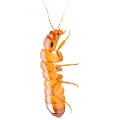
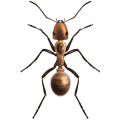
Two subterranean species do almost all the damage in Mudon: Coptotermes gestroi (the Asian subterranean, more aggressive, moves fast) and Microcerotermes diversus (the desert subterranean, slower, found in landscaped sandy edges). Drywood termites (Cryptotermes brevis) occasionally appear in imported furniture but they're not a Mudon-specific problem. The flying termite swarms you see after a Dubai rainstorm in March or November are Coptotermes alates — they're how new colonies establish, and Mudon's garden walls are exactly the kind of contact point they prefer.
The colony itself lives in moist soil typically 30 to 90cm below ground. Workers tunnel up through expansion joints in the concrete slab, through the gap between the slab and the rising garden wall, and through any concealed plumbing penetration. They build mud tubes the diameter of a pencil to maintain humidity along the way.
By the time you see a mud tube on the inside of a wall, the colony has been active around the villa for somewhere between 6 and 24 months. The visible damage is the tail of a long process.
Why Phase 1 and Phase 2 Mudon Villas Get Different Treatment
Mudon's first phase came online around 2010 to 2012 under Dubai Properties. Phase 2 (Mudon Al Ranim, Mudon Views, Arabella) was completed roughly 2017 to 2020. Construction spec changed in three ways that matter for termite work:
- Slab edge detail. Phase 1 villas have a flush slab-to-garden-wall transition. Phase 2 villas have a 200mm pebble strip along the slab perimeter that drains differently and changes where the drill holes need to land.
- Plumbing penetrations. Phase 1 has cast-in-place plumbing chases at the kitchen and ensuite. Phase 2 uses sleeved penetrations that are easier to access for direct injection.
- Garden wall foundation depth. Phase 1 garden walls sit on a 400mm foundation. Phase 2 walls go to 600mm. Trench depth for the wall-side barrier injection is different.
A technician using the same drill pattern on both phases will under-treat one and waste chemical on the other.
The DM-Approved Chemical Barrier Protocol
Dubai Municipality maintains an approved chemical list for anti-termite work. The two main actives we use in Mudon villas are fipronil-based formulations (typically 2.5% emulsion concentrate, diluted to 0.075% working solution) and imidacloprid-based formulations for the IGR component. Both have been on the DM list for years; both are stable in alkaline UAE soil.
Fipronil is non-repellent. That's important. Older repellent chemistries (permethrin, cypermethrin) drove termites away from treated soil but they kept foraging elsewhere. Non-repellent fipronil lets termites walk through the treated zone, contact the chemical, return to the colony, transfer it through trophallaxis (mouth-to-mouth feeding), and kill the queen and brood within 60 to 90 days. The colony collapses rather than relocates.
The protocol for a typical Mudon four-bedroom villa:
- Site survey. External and internal walk-through. Probe suspect timber with a screwdriver. Open garden wall expansion joints. Photograph mud tubes if present. 45 to 60 minutes.
- Slab perimeter drilling. 12mm holes every 30cm along the slab-to-floor join inside the villa (in ceramic tile, drilled through grout joints where possible to leave no visible mark). Phase 1: drilled at the wall base, perpendicular. Phase 2: drilled 200mm out from the wall base to clear the pebble strip drain.
- Garden wall trench. External trench 30cm wide, 30cm deep along the full garden wall perimeter. Phase 1: trench goes against the wall. Phase 2: trench goes 200mm out from the pebble strip.
- Chemical injection. Fipronil emulsion at 5 litres per square metre of treated soil surface, pressure-injected into each drill hole and trench. A four-bedroom villa typically takes 180 to 280 litres of working solution.
- Plumbing penetration treatment. Each visible penetration (kitchen sink, bathroom drain, washing machine outlet, garden bib tap) gets a direct fipronil injection into the surrounding soil.
- Trench backfill. Soil returned, raked, watered lightly to seal.
- Hole sealing. Drill holes filled with matching tile-grout cement.
- Written report and warranty certificate. Five-year warranty standard, ten-year warranty with annual top-up inspection.
A full treatment takes one technician 6 to 9 hours, two technicians 4 to 5. We typically run two-technician crews on Mudon.
Realistic Cost Bands
For a Mudon villa anti-termite treatment:
- 3-bedroom (1,800-2,400 sqft): AED 1,500 to AED 2,200
- 4-bedroom (2,400-3,200 sqft): AED 1,800 to AED 2,800
- 5-bedroom (3,200-4,500 sqft): AED 2,400 to AED 3,500
- Twin villa or attached townhouse cluster: per-villa cost reduces 20-30% when neighbours coordinate
Those prices include the chemical, drilling, trench work, warranty, and one inspection visit at 12 months. A five-year warranty is standard; the ten-year warranty adds AED 300 to AED 500 and includes an annual top-up assessment.
If you're being quoted under AED 1,000 for a Mudon four-bedroom anti-termite job, the technician will spray the kickboards. That's it. The fix doesn't work and the warranty doesn't exist. The general termite treatment cost in UAE breakdown explains how the math works at the villa scale.
When You Need Pre-Treatment vs Curative
Mudon's villa stock is past handover, so most jobs are curative (post-construction). The exception is when an owner is doing a major extension — adding a majlis, a maid's annex, or a back-garden room. Any new slab pour needs a pre-treatment barrier before the concrete goes down: 5 litres per square metre of fipronil applied to the prepared base, then the slab cast directly over it. Without it, you've created a fresh entry point that bypasses the existing perimeter.
Our pre-handover termite inspection post walks through the same protocol for new-build villas across other communities.
What Owners Often Miss
Three mistakes show up repeatedly in Mudon callbacks:
- Watering the garden over the treated zone within 14 days. Fipronil binds well to soil but excessive irrigation can leach the upper centimetres. Hold off heavy watering for two weeks post-treatment.
- Stacking firewood or palm fronds against the garden wall. Both are termite-attractive cellulose. Mud tubes climb the wood and skip the chemical barrier underneath.
- Burying woody construction debris in the garden. Common during landscape redos. Buried wood is a colony food source that sits inside your treated perimeter.
For villa owners across Dubailand's other communities — Town Square Nshama, Tilal Al Ghaf, Arabian Ranches 3 — the protocol differs slightly but the principle is the same: treat the perimeter, treat the penetrations, don't undermine it with cellulose contact afterward.
Scheduling Around Mudon's Realities
A few practical things specific to Mudon villas:
- The community gate guard wants the resident to pre-register pest control vehicles. We send the vehicle plate and technician Emirates ID 24 hours before arrival.
- Garden trench work makes a mess. We tarp the immediate area and clean up but the lawn near the perimeter will look disturbed for two to three weeks until grass regrows.
- Some Mudon villas have decorative tile right up to the slab edge inside. We drill through grout where possible; if a tile must be drilled it'll have a small filled hole afterward. We discuss this on the inspection visit.
- Treatment can be done with residents in the villa. Fipronil dries within hours and the chemical isn't released into living spaces.
FAQ
How long does a fipronil termite barrier in Mudon last?
Five years guaranteed, often eight to ten in practice when the soil is undisturbed. Garden re-landscaping, swimming pool installation, or extension work can compromise the barrier and trigger a partial re-treatment.
Will the treatment kill termites already inside the villa walls?
Direct injection into active mud tubes inside the villa, plus the chemical barrier outside, eliminates the existing colony within 60 to 90 days. Workers carry fipronil back to the queen through trophallaxis. The colony collapses rather than relocating.
Do I need to do anti-termite if I haven't seen any termites in my Mudon villa?
If your villa hasn't been treated since handover and is now five-plus years old, yes. The Phase 1 stock is approaching 15 years post-handover and many original developer treatments are well past their warranty. A AED 250 inspection is the right way to confirm before committing to a full barrier.
Can I do anti-termite myself with retail products?
The DM-approved professional fipronil formulations aren't sold retail. The retail termite sprays you see in Ace Hardware are surface contact products — they kill what you spray but don't transfer through the colony. They're also not approved for soil injection. A DIY job will at best buy you a few months.
Mudon's villas are a good investment in any market, but they need active termite protection to stay that way. If you're approaching the five-year mark since handover or you've spotted mud tubes anywhere on the property, book a PestSwift inspection and we'll quote the right protocol for your phase.
Tags
Written by
Rashid Al Mansoori, Operations Manager
PestSwift technicians and entomologists publish field-tested pest control guidance for UAE homes and businesses.