










A Sustainable City villa owner emailed us three months ago with a specific request: termite barrier needed, but no fipronil and nothing that could leach into the organic soil beds her family grows tomatoes in. Three previous companies had quoted her standard Termidor SC trenching at AED 2,800. She'd turned them all down.
This is the conversation Sustainable City residents keep having with pest control companies. And the honest answer is uncomfortable: there is no truly "chemical-free" subterranean termite treatment that works in UAE conditions. What does exist is a tier of lower-toxicity options that the standard contractor doesn't quote because they're more expensive and slower.
Why The Sustainable City is a different brief
Sustainable City — Diamond Developers' netzero villa community off Al Qudra Road — has design rules and an active HOA that most other Dubai villa communities don't. Residents grow food in the front-of-villa biodomes. The community has its own composting system. Many households have chemical-sensitivity profiles that wouldn't tolerate a 0.06% fipronil residual in soil 30cm from a herb bed.
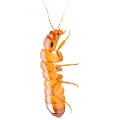
Subterranean termites in Dubai are Heterotermes indicola and Coptotermes heimi — both aggressive species that will absolutely attack wooden door frames, kitchen cabinetry, and decking timber. Sustainable City villas have a lot of decorative timber. We've seen Coptotermes galleries running up a perimeter wall into a roof joist within 18 months of villa handover. So treatment isn't optional. The question is what to treat with.
Three honest tiers
Here's what we actually offer for Sustainable City and similar eco-restricted properties.
Tier 1: Hexaflumuron bait stations only — no soil treatment
The Sentricon-style bait approach. We install in-ground bait stations every 3-3.5m around the villa perimeter, monitor for termite hits (8-week inspection cycle), and load active stations with hexaflumuron (an insect growth regulator — chitin synthesis inhibitor). Stations are sealed plastic cylinders below grade. Nothing leaches.
Pros: zero soil contamination, no impact on the biodome or compost, HOA-approvable. Cons: doesn't work if you have active termite damage today. It works prophylactically and reactively, but the colony has to find a station and recruit before it collapses. Typical knockdown: 90-150 days. Cost: AED 5,500-7,800 for villa installation (8-14 stations depending on perimeter) plus AED 2,400-3,200/year monitoring.
Tier 2: Chlorantraniliprole soil treatment — low-toxicity barrier
Chlorantraniliprole (sold as Altriset in the regional market) is the option most "eco-friendly" claims should be referring to. It binds to insect ryanodine receptors — a target site mammals don't share, which is why the EPA classifies it in the reduced-risk category. We apply it via drilled-injection along the perimeter slab, not trenching, to minimise surface disturbance.
Pros: works on existing infestations within 7-14 days. Soil-binding, very low leaching (log Koc ~3.5). Won't bioaccumulate in the kitchen garden. Cons: still a registered termiticide, just a low-toxicity one. Some residents prefer pure baits. Cost: AED 3,800-5,500 for a standard Sustainable City villa perimeter.
Tier 3: Standard fipronil barrier — what we DON'T recommend here
For comparison: a standard chemical barrier using Termidor SC (fipronil 9.1%) runs AED 2,400-3,800. It works. It's also banned for use within 1.5m of edible plantings under DM IPM guidelines, and Sustainable City villas are essentially edible-planting zones front and back. We'll quote this if asked but we tell you why we'd push you to Tier 1 or 2 instead.
What the HOA actually requires
The Sustainable City HOA approval process for any chemical application includes a Safety Data Sheet submission, evidence of DM approval for the specific product, and a 14-day neighbour notification window. We handle this paperwork for residents — most contractors don't, which is why some quotes come back as "we can do the job tomorrow." If they're skipping HOA approval, that's a flag.
You can verify any product we propose against the Dubai Municipality approved pesticide list and the Moccae biocide registration database before we apply.
When you have active damage today
If you've already seen mud tubes on a perimeter wall, swarmers in March-April, or hollow-sounding skirting boards, baits-only is too slow. We default to chlorantraniliprole injection at the affected wall section plus baits across the rest of the perimeter. That gets the active feeding column killed within two weeks and the broader colony pressure managed with baits over the following six months.
A real Sustainable City job, anonymised
The villa I mentioned at the top — we ended up doing a hybrid. Chlorantraniliprole injection at four points along the south wall where mud tubes were visible. Twelve hexaflumuron stations around the remaining perimeter. Total cost AED 6,800 including first-year monitoring. Three months in, two stations had active hits and were loaded with bait. The south-wall column was dead inside 12 days. The biodome plants were undisturbed. The HOA paperwork was signed by both neighbours before we started.
Compare that to the AED 2,800 fipronil quote she turned down. Yes, ours cost more than double. It also kept her family's food garden out of the soil-binding fipronil zone, which was the entire reason she was asking.
The other timber risk: drywood termites
Subterranean termites get most of the attention, but Sustainable City villas with a lot of exposed structural timber (some have feature beams in the living rooms) can host Cryptotermes brevis — drywood termites that live entirely in the wood and never touch soil. No soil barrier helps. Treatment for drywoods is targeted injection of orange oil or borate into galleries, plus heat treatment for severe colonies. AED 1,200-3,500 depending on extent. We inspect for these whenever we're on a villa.
FAQ
Is there a truly chemical-free termite treatment? Only hexaflumuron baits come close — the active is delivered inside sealed below-grade stations and never enters the soil at residential application rates. But it's still a chemical (an IGR). Anyone claiming "100% natural termite barrier with essential oils" or similar is selling something that doesn't stop Coptotermes in UAE conditions.
Can I use neem oil or borax myself? For very localised drywood termite issues in furniture, borate-based products help. For subterranean termites with a thriving colony 30m away in the soil column — no. The infestation pressure here is too high for DIY botanical solutions.
Does the Sustainable City HOA actually enforce chemical restrictions? Yes. We've had two jobs where neighbour complaints triggered an HOA inspection mid-treatment. Both times the paperwork we'd filed was what kept the job legal. Skip the paperwork and you risk a stop-work order and an HOA fine.
How long does the chlorantraniliprole barrier last? Manufacturer claim is 5+ years; UAE soil conditions (high temperature, high salt) reduce that to roughly 3-4 years in practice. We re-inspect annually and recommend re-treatment of the active edge around year 4 if monitoring shows pressure.
If you live in Sustainable City — or anywhere with similar chemical-restriction concerns — book a site visit. We'll walk the perimeter, identify any active mud tubes, and quote a treatment plan with HOA paperwork included. Honest pricing, no greenwashing, no hidden fipronil.
Tags
Written by
Dr. Karim El-Sayed, Lead Entomologist
PestSwift technicians and entomologists publish field-tested pest control guidance for UAE homes and businesses.