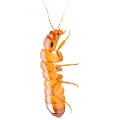








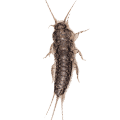


Subterranean termites don't care that the villa overlooking the 14th green of Earth course costs AED 18 million. They care about three things: cellulose (the timber in your skirting and door frames), moisture (the irrigation drip line two metres from your boundary wall), and a temperature stable underground gradient (the soil under your foundation).
Jumeirah Golf Estates serves all three on a plate.
We've inspected 31 villas across Fire, Earth, Flame Tree Ridge, Lime Tree Valley, Whispering Pines, Sienna Lakes and Alandalus. About a third had active termite evidence. Not always severe — sometimes just a couple of mud-tubes on the inside of a service-yard wall — but active.
This is the post we wanted to write four months ago when a Sienna Lakes owner discovered Coptotermes damage in a guest-bedroom skirting on the day the property was due to complete a sale. The deal nearly collapsed. The repair plus retrofit ran AED 24,000. Half of it was avoidable with a routine annual inspection.
Why JGE villas are unusually termite-prone
Most JGE villas were handed over between 2010 and 2018, with a second wave in the Sienna Lakes and Alandalus phases through 2022. Construction quality is high and warranty programmes from the original developer typically included a 5-year anti-termite barrier. Two issues compound:
The barrier was applied at construction, not maintained. Termite barriers using fipronil or imidacloprid emulsions degrade over 5-8 years depending on soil composition and irrigation regime. JGE soil is loamy-sand with high cation-exchange in the landscaped zones, and chemical persistence at the front-of-villa drip-line edge can drop below efficacy threshold by year 6.
Golf-course-edge irrigation is heavy. The fairways are irrigated to maintain bent-grass and overseeded ryegrass quality, and the moisture plume extends into adjacent villa gardens. Subterranean Coptotermes gestroi (the species responsible for around 70% of UAE residential termite damage we identify) needs constant soil moisture. The irrigated golf edge gives them a stable corridor straight into your villa boundary.
The third factor is wood furniture imports. JGE villas typically have substantial timber: solid-oak kitchens, walnut entertainment units, teak garden furniture. Some of that arrives via shipping from origin countries with their own termite risk. Drywood termite Cryptotermes brevis introductions through imported furniture have shown up in three of our JGE inspections — a different species, a different treatment, and one that no soil barrier addresses.
What the original construction warranty actually covers
Every JGE villa we've inspected was built under a developer warranty that included anti-termite. That sounds reassuring. It often isn't.
What the warranty typically covers: pre-construction barrier (poured-slab application of imidacloprid or fipronil at construction stage) plus a 5-year guarantee against subterranean termite intrusion if the barrier is verifiable on inspection.
What it doesn't cover: any disturbance to the soil after handover. Adding a swimming pool, planting trees within the barrier zone, regrading the garden, installing a new boundary wall footing — any of these breaks the barrier. The warranty silently voids and most homeowners only find out when they file a termite claim eight years in.
If you're inside year 5, get the original developer's anti-termite documentation and a current re-inspection by a third-party DM-licensed company before relying on the warranty. We've seen developers honour claims at year 4 only when the homeowner can produce annual maintenance reports proving no soil disturbance.
The two treatment options for established JGE villas
Once the original barrier has lapsed or been compromised, you have two retrofit paths.
1. Trench-and-treat (chemical barrier retrofit)
The traditional approach. We dig a 30-cm trench around the villa perimeter, mix a fipronil 0.06% or imidacloprid 0.05% emulsion, pour into the trench at 5 litres per linear metre, then backfill. Drilled penetrations through the slab patio cover the under-pool and under-driveway sections.
Pros: chemical kill happens fast (fipronil non-repellent, termites contact and transfer through colony), 5-7 year residual, lower upfront cost.
Cons: disruptive (garden re-landscaping needed), drilling required for hardstanding, retreatment in 5 years means the same disruption again.
JGE villa pricing: AED 2,800-4,800 for a standard 4-BR detached villa with one boundary wall. Larger 6-BR villas with extensive hardstanding (Lime Tree Valley, Earlsfield, Redwood Park) run AED 4,500-7,200.
2. Termidor reticulation system retrofit
A perforated polymer pipe is installed around the villa perimeter (under planting beds, no surface visibility) connected to fill ports. Annual top-up of fipronil emulsion is delivered through the system without touching the garden. Some installs include sub-slab reticulation through service-cavity drilling.
Pros: lifetime barrier with annual servicing, no garden disturbance after install, easier to certify for property valuation, transferable to new owners.
Cons: higher upfront cost, only worthwhile if you intend to hold the villa five-plus years or if you have substantial mature landscaping you don't want disturbed.
JGE villa pricing: AED 9,000-16,000 for retrofit install (depending on perimeter length and whether sub-slab penetrations are needed), then AED 1,800-2,800 per year for top-up service. Over a 12-year horizon, often lower total cost than two trench retreatments plus the landscaping rework.
Drywood termites: the other problem
About 1 in 8 JGE inspections we run finds drywood damage in furniture or door frames — Cryptotermes brevis or Incisitermes minor. Soil barriers don't touch them. Drywood treatment options:
- Localised injection with disodium octaborate tetrahydrate or fipronil into infested timber via small drill access. AED 800-1,400 per affected piece. Works for early-stage isolated infestation.
- Whole-villa fumigation with sulfuryl fluoride. The villa is tented, evacuated for 48-72 hours, fumigated to label rate. Eliminates 100% of drywood termites including hidden colonies. AED 18,000-32,000 for a JGE villa, valid only with DM-issued fumigation permit. Reserve for confirmed multi-room drywood infestation.
What an annual JGE villa inspection should include
If you're not already on a maintenance contract, here's what a competent annual inspection covers:
- Visual perimeter walk — look for mud tubes on boundary walls and the bottom 60 cm of villa exterior.
- Sub-slab moisture probe — a few hand-drilled access points below skirting in ground-floor rooms most exposed to garden moisture.
- Roof void inspection — drywood and Coptotermes both colonise UAE rooflines through unscreened ventilation.
- Furniture sampling — tap wooden door frames, skirting, fitted wardrobes; listen for hollow response.
- Bait monitoring station check — if reticulation or in-ground monitors are installed, read activity logs.
Annual inspection alone in JGE: AED 600-900. Inspection bundled with quarterly residential pest service: AED 1,800-3,400 per year.
For comparable termite-treatment context in other Dubai villa communities see Damac Hills, Mirdif and Al Furjan.
FAQ
Q: My villa is in year 4 of the developer warranty. Do I still need annual inspections?
Yes. The warranty depends on you proving no soil disturbance and presenting annual records. Most developer warranty contracts require this in the fine print and homeowners discover it only when they file a claim.
Q: Will Termidor reticulation hurt my landscaping?
No. The pipe is installed inside planting beds at 15-20 cm depth, no visible surface elements, and the fipronil emulsion is at concentrations that affect only invertebrates. Mature trees, lawn and ornamental plants are unaffected. We've installed reticulation under existing rose gardens and grass lawns without die-back.
Q: We're buying a JGE villa next month. What termite due-diligence should we ask for?
Three things: original developer anti-termite certificate, any subsequent treatment receipts (ask for company name + DM license number), and a fresh independent inspection within 30 days of completion. Budget AED 600-900 for the inspection. If the seller refuses, treat that as a red flag.
Q: Are there termite species in JGE that we should be specifically worried about?
Two: Coptotermes gestroi (subterranean, accounts for most structural damage in UAE residential) and Cryptotermes brevis (drywood, furniture-borne, harder to detect). The third species we sometimes find — Heterotermes indicola — is less aggressive but treatment overlap with Coptotermes makes it manageable.
If you own a villa in Jumeirah Golf Estates and you're approaching the end of your developer warranty window, request an inspection. We'll provide a written report you can use for warranty claims, property valuation, or simply for peace of mind.
Tags
Written by
Dr. Karim El-Sayed, Lead Entomologist
PestSwift technicians and entomologists publish field-tested pest control guidance for UAE homes and businesses.