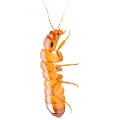








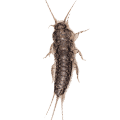

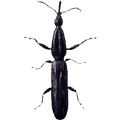
The first mud tube I personally inspected in Damac Hills ran six metres along the inside face of an Akoya Park villa's perimeter wall, from the irrigation drip line up to a wooden pergola post buried 30 cm into the bed of decorative wood-chip mulch. The owner had moved in 14 months earlier. Damac's pre-construction barrier was still well within its claimed 10-year warranty period. The termites did not care.
This is the Damac Hills pattern. Subterranean termite pressure on golf-course-frontage villas in this community is materially higher than the Dubai villa norm, and almost no one talks about why. The driver isn't the building. It's the landscaping that came with it.
If you own a villa in Damac Hills — especially one of the Park Residences, Akoya Park, Akoya Imagine, or Brookfield clusters with a boundary on the Trump 18-hole course — this guide explains what's actually attacking the building and what a real treatment looks like.
Why golf-course-frontage villas are different
The Trump International Golf Club Dubai sits at the centre of Damac Hills. Maintaining championship turf in a desert climate requires sustained subsurface irrigation through perforated drip and pop-up sprinkler systems running on automated cycles, often overnight. Soil moisture along the boundary line stays elevated year-round.
Subterranean termites — almost always Heterotermes indicola in Dubai, sometimes Coptotermes heimi — need exactly two things to colonise a structure: persistent soil moisture and a cellulose food source within tunnelling range of their underground colony. Golf-course-edge villas hand them both.
Layer in the landscaping decisions Damac's standard villa package included at handover:
- Decorative wood-chip mulch in flower beds against the villa's external wall. Free buffet.
- Wooden pergolas, decking, and trellis features in 30%+ of villas. Direct soil-contact wood is the textbook conducive condition.
- Buried irrigation manifolds at the villa boundary, periodically failing and seeping.
- Palm clusters along Hessa Street and Damac Hills Boulevard with substantial root mass and seasonal frond decay.
By contrast, Mirdif (which we covered in the Mirdif termite guide) is hot, dry, sand-dominated and the moisture pressure is a fraction of Damac Hills'. A single Mirdif barrier does ten years easily. Damac Hills frontage villas are running closer to six.
Sub-cluster differences inside Damac Hills
Not every villa here has the same termite profile. The four sub-clusters behave differently:
- Akoya Park — closest to the central park lake and a strip of fairway. Highest pressure I've measured in the community. Mud tubes commonly visible on perimeter walls within 3–5 years of handover.
- Akoya Imagine and Park Residences — backing the golf course on the inland side. Moderate-to-high pressure. Wood-mulch beds against the villa wall are the most common entry path.
- Brookfield — slightly more elevated topography, drier soil profile. Lower pressure unless the villa has a wooden deck.
- Trump Estates and Golf Town — premium plots, often with bespoke landscaping, sometimes with their own water features. Highly variable. We've seen villas here that needed full chemical re-barrier at year five.
The one overhead view that helps: pull up your villa on Google Maps satellite. If you can see the green of the course or a community lake within 50 metres of your boundary wall, you should be on a 12-month inspection cycle, not a 5-year one.
What the developer's pre-construction barrier actually was
Damac's standard pre-construction termite treatment, applied during the slab pour, was a soil drench of fipronil at the recommended UAE labour rate, plus chemical treatment of the foundation backfill. This is industry-standard and works as advertised — the warranty is real and Damac honours it.
What the warranty doesn't cover:
- Damage from re-introduction after the slab was poured. If your landscaping contractor brought in mulch or imported topsoil with active colonies, that's outside the warranty.
- Damage from breaches caused by post-handover modifications. Pool installation, garden lighting trenching, irrigation upgrades — anything that broke the chemical envelope.
- Wooden landscape features added after handover — pergolas, decking, planters built by the owner's contractor.
- Performance beyond the chemical's effective half-life in your specific soil. Fipronil in the moist clay-loam fill on a golf-frontage plot degrades faster than in dry sandy fill in Mirdif. We typically see effective residual ending around year 6–8 on Damac Hills frontage versus 9–11 on inland Dubai sand.
The practical implication: a Damac Hills frontage villa that's six years past handover should be inspected, even if there's no visible damage. We've found active colonies feeding on door-frame timber inside villas that looked perfectly fine from the boundary.
Identification — what to look for
Four signs warrant an inspection:
- Mud tubes — pencil-width earthen tunnels running vertically up the inside face of perimeter walls, the outside of the villa, or up the leg of garden furniture. Snap one open: if there's pale, soft, blind insects inside, that's a live colony.
- Wood that sounds hollow when you tap it. Skirting boards, door frames, wardrobe interiors. Pay attention to the bottom 30 cm.
- Damaged paint or thin blistering on internal wall surfaces, particularly near floor level. Termites push through paint last when they're a millimetre from the room.
- Discarded wings in window sills or on tile floors, particularly in March–May (alate swarming season in Dubai). Confirms a mature colony nearby.
If you find any of these, do not spray a retail aerosol on what you can see. You'll kill 1% of the population, alarm the rest, and the colony will simply re-route. Call for an inspection.
What a real treatment looks like
Pre-treatment inspection (AED 200–400, refundable against treatment)
A technician walks the perimeter, probes mulch beds, lifts decking edges, inspects every door frame and skirting accessible inside. We use moisture meters on suspect timber and a thermal imager on warm days — active colonies show as cooler patches in mud tubes. Output is a report with marked plan, infestation severity score, and a quoted protocol.
Perimeter chemical barrier
The standard remedial treatment is a trenched chemical barrier around the entire villa perimeter:
- Trench dug 30 cm wide × 30 cm deep along every external wall.
- Soil treated with a non-repellent termiticide — fipronil (e.g. Termidor SC) or imidacloprid at label rate. Non-repellent means the termites can't detect it and walk through, contaminating the rest of the colony on return.
- Vertical drilling through any concrete patio, driveway, or pool deck abutting the villa, with chemical injection at 30 cm centres.
- Trench backfilled with treated soil.
For Damac Hills clay-loam fill we generally choose fipronil over imidacloprid — it has better persistence in moist soil and a longer half-life. Cost difference is marginal.
In-ground monitoring stations on the golf-course boundary
For frontage villas, we install in-ground monitoring stations every 3 metres along the course-facing boundary. Each station is a sealed plastic housing with a piece of untreated softwood inside — termites find it, feed, and we replace the wood with a chitin-synthesis-inhibitor bait (hexaflumuron or noviflumuron). Colony elimination through bait transfer typically takes 60–90 days. Inspections monthly for 6 months, then quarterly.
Stations are not strictly necessary for inland Damac Hills villas. They're worth the cost on the boundary plots.
Internal spot treatment
If the inspection found active galleries inside the villa — door frames, skirting, attic timber — we drill 4 mm holes at gallery centres and inject foaming termiticide. The foam expands through the gallery and contacts the workers directly. Holes are then plugged and painted to match.
Real cost band by villa size
From our last 80 Damac Hills villa jobs:
- Townhouse (THK / THM, ~200 m² plot): AED 2,400–3,800 for full perimeter barrier, no monitoring stations. Add AED 1,200–1,800 for stations on a course-facing boundary.
- Villa V3 / V4 (~400 m² plot): AED 4,500–6,800 perimeter. AED 1,800–2,400 for stations.
- Villa V6 / Park Residences (~600–800 m² plot): AED 7,500–11,000 perimeter. AED 2,400–3,200 for stations.
- Trump Estates, custom mansions (1,000 m² +): AED 12,000–18,000 perimeter, often with bespoke station layout.
These numbers align with the broader UAE termite range Saniex and pestcontrol.ae publish (AED 2,000–15,000) — Damac Hills sits in the upper half because of plot size and station inclusion on frontage.
Warranty: 1 year on remedial chemical barrier, 5 years on combined chemical-plus-station programme, transferable on resale (we've issued seven transferable certificates this year — buyers ask).
What you can do between treatments
- Pull wood-chip mulch back from the villa wall. Replace with gravel, river stone, or simply leave bare soil for the first 50 cm out from the wall. Cellulose against masonry is asking for it.
- Audit irrigation drip lines twice a year. A failed manifold seeping near the boundary is a five-year colony invitation.
- Lift garden furniture off direct soil contact. Concrete pavers under wooden chair legs prevent satellite colonies.
- Annual visual perimeter walk. Five minutes. Look for the mud tubes.
FAQ
How much does anti-termite treatment cost for a Damac Hills villa?
AED 2,400 to 18,000 depending on villa size, with stations adding another 15–20% on golf-frontage plots. A Park Residences mid-size villa with stations typically lands around AED 9,000–13,000 for the combined programme. See the bedrock cost breakdown for similar villas in Al Furjan for a comparable benchmark.
Does the Damac developer warranty cover termite damage?
The pre-construction chemical barrier is warranted, but the warranty covers the chemical application itself, not subsequent damage, not landscape-induced re-infestation, and not wooden features added after handover. In practice, owners file claims and Damac's response varies. Document everything — soil photos, mulch installation receipts, dated mud tube photos.
Should villas backing onto the golf course be treated more often?
Yes. Inspection annually, full chemical re-barrier every 6–8 years rather than the dry-soil 10-year norm. Stations along the course-facing boundary are worth the cost for any Park Residences, Akoya Park, or Trump Estates plot.
Is the chemical treatment safe for pets and kids in the garden?
Fipronil and imidacloprid at soil-application rates have very low surface residue once the trench is backfilled. We ask owners to keep pets and children off the immediate perimeter strip for 24 hours post-application; after that, the soil is safe for normal use. Our technicians wear PPE because they're handling concentrate; you're walking on diluted, soil-bound active that's stable underground for years.
Want a Damac Hills villa termite inspection? Get a free quote — we cover the whole community and can usually be on-site within 48 hours.
Tags
Written by
Dr. Karim El-Sayed, Lead Entomologist
PestSwift technicians and entomologists publish field-tested pest control guidance for UAE homes and businesses.