










The Marina tower bed bug case that finally forced a riser treatment
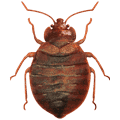
A 40-storey Marina tower brought us in for a single-flat bed bug treatment in February. By the third call-out from neighbouring flats in the same vertical stack — flat 1804, then 1904, then 2104 — it was obvious the population was moving along the riser, not from luggage.
The owners' association held a meeting in March. The proposal was a riser-wide treatment of all 22 flats on one vertical stack, in a single mobilisation. Cost came to AED 18,200, which the OA spread across the riser's flats as a one-off service-charge top-up at AED 827 per flat. Three flats on the riser were vacant; the OA absorbed their share rather than chase the absentee owners. Treatment ran over two consecutive Saturdays. Reported bites across all flats on the stack dropped to zero by week six and stayed there.
If the OA had refused to coordinate and the affected flats had paid individually, the same job would have cost each treated flat about AED 1,400–1,800, the population would have continued reseeding from the untreated vacant flats, and the cycle would still be running.
This is what whole-building pricing exists for: the buildings where single-flat work can't, by physics, fix the problem.
When whole-building treatment actually makes sense
Three scenarios cover almost all whole-building work we do.
Bed bug riser spread. Once Cimex lectularius is in three or more flats on the same vertical stack, single-flat treatment becomes a treadmill. The wall-socket conduit cavities and the bathroom waste stack are inter-unit highways. Treating the riser is cheaper per affected flat than treating affected flats individually.
German cockroach building-wide population. Once a building's kitchen waste riser hosts an established Blattella germanica population, every flat on the affected riser will reinfest within 6–8 weeks of any single-flat treatment. The math forces a riser-coordinated job.
Construction-handover pest seeding. New buildings sometimes hand over with a substantial pest population from the construction phase — workers' food waste in voids, cockroach colonies in the unfinished kitchen risers, occasional rodent activity from the back-of-house. A pre-handover building-wide treatment is cheaper than the per-flat treatments that would otherwise be needed in year one. We do this work for several developers in Dubai South, MBR City, and Damac.
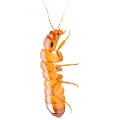
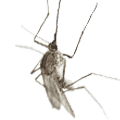
For most other pest issues — termites, mosquitoes, ants, rodents — single-unit or amenity-area treatment is fine, and a whole-building program would be overkill.
The three pricing models
Dubai whole-building pest work prices in three different scales, depending on what's being treated.
Per-riser-stack pricing
A vertical stack of flats sharing one set of risers — typically 8 to 24 flats on one stack, depending on tower height. Used when the problem is contained to one stack and the OA can isolate the cost to the affected owners.
Real numbers, AED, VAT-included:
- 8–12 flat stack, bed bug riser treatment: 8,000–14,500
- 8–12 flat stack, cockroach riser treatment: 6,500–11,000
- 14–22 flat stack, bed bug riser treatment: 14,000–22,000
- 14–22 flat stack, cockroach riser treatment: 11,000–17,500
Per affected flat, the per-stack model usually works out to 35–55% of standalone treatment cost.
Per-floor pricing
Used when the problem affects most flats on one or two floors (often the result of an extreme bed bug spread in a hotel-converted property, or a cockroach issue traced to a specific shared amenity on one floor).
Real numbers, AED, VAT-included:
- 4–6 flat floor, bed bug treatment all units: 4,500–9,500
- 8–12 flat floor, bed bug treatment all units: 9,500–18,000
- 4–6 flat floor, cockroach treatment all units: 3,500–7,500
- 8–12 flat floor, cockroach treatment all units: 7,500–14,000
Per affected flat, per-floor pricing comes in at 45–65% of standalone.
Full-building pricing
Used for new-build handover, post-major-renovation, or buildings where the OA accepts that a complete reset is needed. Pricing scales with storey count, flat count, and the presence of amenity floors.
Real numbers, AED, VAT-included:
- 6-storey low-rise, 32 flats, bed bug + cockroach + rodent comprehensive: 60,000–95,000
- 12-storey mid-rise, 96 flats: 130,000–195,000
- 25-storey tower, 200 flats: 195,000–340,000
- 40-storey tower, 320 flats, with amenity floors: 290,000–520,000
Per-flat, full-building pricing typically runs at 25–40% of standalone treatment cost.
Three anonymised recent jobs
Real numbers, scrubbed for confidentiality.
Case 1: 40-storey Marina tower bed bug riser
- 22-flat vertical stack on the F-line
- 3 confirmed active flats, 6 with reported but unconfirmed bites, rest precautionary
- Heat treatment + chlorfenapyr + diatomaceous earth + party-wall dust for entire stack
- Two-Saturday mobilisation, 6 technicians + 4 heat units
- Total: AED 18,200
- Per-flat OA levy: AED 827
- Outcome: zero reported activity at 6-month follow-up
Case 2: 12-storey JLT cockroach building-wide
- 96 flats, all 8 kitchen-riser stacks active
- German cockroach traced to ground-floor restaurant kitchen sharing the building's waste riser
- Risers + every flat + restaurant kitchen on coordinated treatment
- Three-week phased mobilisation
- Total: AED 145,000 (building) + AED 28,000 (restaurant treatment, separate invoice)
- OA cost recovery via one-off service-charge top-up at AED 1,510 per flat (some owners disputed; OA absorbed shortfall)
- Outcome: activity reduced 95%+ at 4-month follow-up; ongoing monthly maintenance contract at AED 4,800/month
Case 3: 6-storey Karama low-rise bed bug
- 24 flats, 11 confirmed active, building manager confirmed riser-spread pattern
- Heat treatment + chemical residual + 21-day re-treatment
- Single-week mobilisation, 4 technicians
- Total: AED 67,000
- OA cost recovery: building manager negotiated 60/40 split between landlord and tenants because building was on a master-lease arrangement
- Outcome: zero activity at 3-month follow-up
OA cost recovery — what actually works
Three models we see in practice.
One-off service-charge top-up. Most common for stack and floor pricing. The OA invoices the affected owners as a one-off, separate from the annual service charge. Disputed by 5–15% of owners in our experience, usually resolved within 60 days under the OA By-Law arbitration framework.
Annual service-charge inclusion. Used by OAs that plan ahead. The annual service charge includes a building-wide pest control program (typically AED 350–950 per flat per year) with whole-building or per-stack treatments as triggered. No per-event invoicing means no per-event disputes.
Landlord-tenant split. For older buildings on master-lease arrangements, the landlord pays the structural-cause share and the tenants pay the occupant-cause share, usually negotiated case by case. We provide a written cause-attribution report on request to support the split.
OA By-Law 6/2019 in Dubai gives the OA enforcement teeth where individual owners refuse to participate in a building-wide program that the committee has resolved. In practice the enforcement path is slow; voluntary compliance through clear cost-attribution communication is faster than escalation.
Operational logistics
Whole-building work runs on a different operational rhythm from single-flat. A few things that catch OAs off-guard:
Resident notice period. Dubai's residential tenancy framework expects 14-day written notice for any treatment that requires resident participation (clearing rooms, vacating during heat treatment). Less notice means refusals; more notice gives time for OA committee approval and resident scheduling.
Service-lift booking. A 22-flat stack treatment needs the service lift for both Saturdays. Build the lift block into the OA approval at the same time as the treatment approval.
Vacant-flat access. Vacant flats on the riser have to be treated or the population reseeds. Building manager-coordinated access with the absentee owner usually works; if the owner refuses or can't be reached within the notice window, the OA committee usually has By-Law authority to enter for common-area pest control.
Post-treatment cleaning. Heat treatment doesn't leave residue; chemical treatment does. For chemical-residual work, residents should be advised on first-day return protocol (open windows for 60–90 minutes, wipe kitchen surfaces, leave deep cleaning of bedding until day three).
For the bed bug treatment fundamentals, see bed bug treatment cost Dubai. For the cockroach treatment fundamentals, see cockroach treatment cost Dubai breakdown. For the FM-side mechanical floors that the OA also has to think about, see cooling tower and plant room pest control Dubai.
FAQ
How is whole-building pest control priced in Dubai?
Three models: per-riser-stack (8–24 flats sharing one set of risers, AED 6,500–22,000 depending on pest and stack size), per-floor (4–12 flats on one floor, AED 3,500–18,000), and full-building (entire tower, AED 60,000–520,000+ depending on size and pest stack). Per-flat economics typically run at 25–55% of standalone single-flat treatment cost, because mobilisation, heat-unit setup, and supervision overhead are spread across more units.
Can one apartment force the whole building to treat for bed bugs?
Not unilaterally. A single owner can document the issue and request OA committee action under By-Law 6/2019; the committee then decides whether riser, floor, or building-wide work is warranted. In practice the lever is a written pest-contractor report showing inter-unit migration through identified pathways. We've written enough of these to know they generally trigger committee action within one billing cycle.
Who pays for building-wide pest control in a Dubai apartment block?
Depends on cause attribution. Structural causes (riser cavities, common-area harborage, building-design pathways) put the bill on the OA and recoverable from owners via service charges. Occupant causes (a single flat introducing the population, identifiable as the original source) put the bill on that flat's owner, with the OA charging back. Mixed-cause cases get split, usually 60/40 in favour of structural attribution where the building is older.
How long does a whole-building treatment take?
Per-stack work runs over 1–2 Saturdays (real elapsed: 14 days for first visit + 21-day re-treatment). Per-floor work runs similarly. Full-building work runs over 3–5 weeks in a phased mobilisation — we treat 4–6 flats per day to manage heater logistics and resident scheduling, then loop back for the re-treatment cycle. Plan for 6–10 weeks from OA approval to final follow-up inspection.
Talk to our commercial team
For a confidential walk-through with your OA committee and a scoped quote for stack-level, floor-level, or full-building treatment, contact our commercial team. We bring a building-survey supervisor on the first visit rather than a residential technician, and we can write the cause-attribution report the OA needs to recover cost cleanly.
Tags
Written by
Rashid Al Mansoori, Operations Manager
PestSwift technicians and entomologists publish field-tested pest control guidance for UAE homes and businesses.