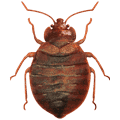





Azizi Plaza, ninth floor. A Pakistani roommate trio called us in March. Three single beds, three sets of bites, and a confession that they'd been spraying with the can the building's tea boy had recommended for almost five weeks. By the time I inspected, the harborage along the bedframe seam had grown into a cluster the size of a credit card, and there was activity behind the wallpaper near the AC return-air grille of the neighbouring bedroom.
That second cluster was the giveaway. Bed bugs don't relocate without pressure. The DIY sprays had moved them across the wall void into a room they'd never been in before. We've seen this pattern across at least 40 Al Furjan treatments since the Azizi towers filled up: spray-driven dispersal is what turns a localised bedroom infestation into a whole-flat problem.
Why Al Furjan Is a Harder Bed Bug Treatment Than People Expect
Al Furjan covers two distinct build types. The Nakheel-led villas and townhouses (Quortaj, Masakin) handle bed bug treatment like any standard villa. The Azizi towers — Plaza, Pearl, Daisy, Yasamine, Aliyah, Roy Mediterranean across the road — are a different problem entirely.
The Azizi stock was built between roughly 2014 and 2020 with maximum density in mind. Studios are 380 to 480 sqft. One-bedrooms are 580 to 720. The bedrooms share walls with neighbouring units, the AC ducting branches off a corridor trunk that runs the length of the floor, and the balcony slider track has a 4mm gap at the base that's wide enough for a bed bug nymph to walk through.
For heat treatment — which is the protocol most reputable companies prefer — that geometry creates three problems.
First, the shared wall heats unevenly. A target temperature of 50 to 55°C has to be sustained for 90 minutes at the coldest point in the room. In an Azizi studio, the coldest point is almost always the wall that backs onto an unoccupied neighbouring flat, because that wall is acting as a heat sink. We routinely need to run the heat treatment two hours longer than the manufacturer guideline because of this.
Second, the AC duct return air will pull treated heat out of the room if the building's central system is still running. We always coordinate with building security to shut the floor's air handling for the duration. That's a phone call most pest companies don't make.
Third, the balcony slider gap pushes bugs outward under heat stress. Without a perimeter chemical band along the slider rail, you'll move the colony onto your neighbour's balcony. We've literally received call-backs where the neighbour was treated four weeks later and the bugs were traced back to the original flat.
Heat vs Chemical: The Honest Comparison
Most commodity Dubai pest control companies sell either heat or chemical and tell you the other one doesn't work. Both work. They work differently.
Chemical treatment (DM-approved formulations — typically a synergised pyrethroid like beta-cyfluthrin combined with an IGR like pyriproxyfen, plus a desiccant dust into wall voids):
- Lower upfront cost: AED 500 to 900 for a 1-BR
- Requires three visits over six weeks
- Effective when applied to every harborage, useless when applied only to visible bugs
- Residual continues working for 8 to 12 weeks
- Tenant has to vacate for 4 to 6 hours per visit
Heat treatment (sustained dry heat at 50 to 55°C):
- Higher upfront cost: AED 1,500 to 2,500 for an Azizi 1-BR
- Usually a single 6 to 8 hour session
- Kills every life stage including eggs in one pass
- No residual — re-introduction risk if luggage or second-hand furniture is involved
- Tenant vacates for the full day
For an Azizi studio with one bed and one wardrobe, heat treatment is the cleaner option. For a 2-BR with three wardrobes, two bedframes, and a sofa bed, chemical is usually more cost-effective because the heat treatment cost scales with treatable cubic metres while the chemical cost scales with linear harborage edge.
We explain this on the phone before the inspection. If you're being quoted only one option, that's a sign the company sells only what they own equipment for.
The Inspection Walks the Whole Flat
Bed bug inspections in Al Furjan are not visual-only. We use a torch, a credit-card scraper, a CO2-baited monitor under the bed for 24 hours when the infestation is suspected but not confirmed, and on commercial-grade jobs a canine-handler partner.
A proper inspection checks:
- Bedframe seams (top), box-spring fabric (most common harborage)
- Mattress piping and tag area (second most common)
- Headboard back, especially if mounted to a shared wall
- Picture frames and wall art within 1.5 metres of the bed
- Curtain hems where they touch the floor
- Skirting board joins and floor-to-skirting gap
- AC return air grille seal
- Behind power sockets on the bedroom shared wall (we unscrew the faceplate)
- Wardrobe interior seams, particularly the back-panel join
- Underside of bedside drawers
In Al Furjan flats specifically, the AC return grille and the shared-wall power socket are the two locations we find evidence in when the bed itself looks clean. If you've already treated the bed and you're still being bitten, that's where the colony retreated to.
What a Real Treatment Day Looks Like
For heat treatment in an Azizi studio:
07:00 — Tenant vacates. Phones, medications, plants, candles, anything that melts below 60°C is removed.
08:00 — Two electric resistance heaters (we use propane only in villa work — never in tower flats) are positioned in opposite corners. Fans circulate. Probes are placed at the coldest expected point (shared wall, lowest skirting join) and the hottest expected point.
09:30 — Room ambient reaches 50°C. Sustained until coldest probe reads 50°C for 90 minutes. That usually happens around 11:30 to 12:30 in an Azizi studio.
12:30 — Heat off. Perimeter chemical band applied along balcony slider, threshold of bedroom door, AC return grille frame.
14:00 — Temperature back to liveable. Tenant can return.
We leave a written report, a follow-up monitor under the bed for two weeks, and our phone number. Re-inspection at day 30 is included.
Realistic Cost for Al Furjan Flats
- Studio (Azizi Plaza, Pearl, Daisy): heat AED 1,500-1,800, chemical AED 500-700
- 1-BR (Azizi towers, Roy Mediterranean): heat AED 1,800-2,400, chemical AED 700-900
- 2-BR: heat AED 2,400-3,000, chemical AED 900-1,200
- Villa or townhouse (Quortaj, Masakin): heat AED 3,500-5,500, chemical AED 1,500-2,500
If a quote is materially below those bands, ask what's omitted. Common omissions: no follow-up visit, no perimeter chemical band after heat, no AC duct coordination with building security, no luggage and clothing protocol guidance.
The broader Dubai market sits in similar bands — our bed bug treatment cost guide breaks down the variables. For a head-to-head on the two methods generally, see our heat versus chemical bed bug treatment breakdown.
What You Need to Do Before We Arrive
This preparation list is non-negotiable. Skipping any of it reduces treatment success.
- Wash all bed linen, pillowcases, blankets at 60°C minimum. Tumble dry hot for 30 minutes minimum.
- Bag clothing from wardrobes near the affected bedroom. Heat-treat with the room or wash before re-introducing.
- Vacuum the bedroom carpet and dispose of the bag immediately in a sealed plastic bag, outside the flat.
- Move the bed 45cm from the wall.
- Don't apply any DIY spray within 72 hours of our visit. It pushes bugs into hiding and reduces the effectiveness of professional chemistry.
For villa work in Al Furjan's Quortaj or Masakin clusters, we'll add an exterior perimeter inspection — the back garden wall is a typical bridging point in attached townhouse rows.
FAQ
Can bed bugs survive in an empty Azizi flat between tenants?
Yes. Adult bed bugs can live four to six months without feeding at typical UAE indoor temperatures of 24 to 26°C. We've found viable adults in flats that had been vacant for over five months. Pre-move-in inspection is worth the AED 250.
Will the heat treatment damage my electronics?
Most electronics tolerate 50°C without damage — that's well below their factory storage spec. Phones, laptops, watches, and anything with a lithium battery should still be removed as a precaution. Wall-mounted TVs and ceiling-fan motors stay. We've never had a damage claim from a properly conducted heat treatment.
Does the building's AC system spread bed bugs between Azizi flats?
It can, but rarely. The more common cross-unit pathway is the wall void behind the shared power socket and the corridor under the door. We seal both during treatment as a precaution.
How soon after treatment can I see if it worked?
For heat: zero live activity from day one. Any subsequent bites are either from re-introduction (luggage, second-hand furniture) or evidence the treatment didn't reach a harborage. For chemical: bite frequency should drop by 70% within two weeks and reach zero by week six. A monitor under the bed gives you objective data instead of guesswork.
Al Furjan flats don't need to be a permanent bed bug problem. If you're seeing bites, blood spots on the sheet, or fast-moving brown insects when you flip the mattress, book an inspection now. We're in the area three times a week and we'll be honest about whether you need heat or chemical.
Tags
Written by
Dr. Karim El-Sayed, Lead Entomologist
PestSwift technicians and entomologists publish field-tested pest control guidance for UAE homes and businesses.