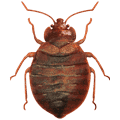


Three weeks ago a tenant in an Al Nahda Dubai building called us at 11:40pm. She'd just discovered bed bugs across two box-spring seams and the wall corner behind her headboard. Her upstairs neighbour had moved out the previous Saturday. The mattress and sofa they'd left in the corridor sat there for two days before the building disposal team cleared them.
That sequence — upstairs neighbour move-out, abandoned soft furniture in the corridor, bed bugs in the unit below within ten to fourteen days — is one of the most common stories we hear in Al Nahda Dubai. The other story involves a sofa picked up off Damascus Street or Najda for AED 400 because the price was unbeatable.
Al Nahda Dubai is not Al Nahda Sharjah
This matters more than people realise. The two Al Nahdas share a name and a road, but treatment logistics are completely different.
Al Nahda Sharjah, on the eastern side of the border, falls under Sharjah Municipality pest control regulations. Al Nahda Dubai sits under Dubai Municipality. This post is specifically about the Dubai side: roughly the area between Al Mamzar Park and the Sharjah border, north of Al Ittihad Road.
Why does it matter? Because most Al Nahda Dubai buildings are attached or share common walls with their immediate neighbours. We've worked on three buildings off Al Nahda 1 Street where you can walk from one building's stairwell into the adjacent building's corridor without going outside. Bed bugs travel through wall outlets, light switch backings, and shared service ducts between connected blocks. A treatment that stops at the unit door is a treatment that doesn't last.
How bed bugs actually move in Al Nahda
Three vectors account for almost every Al Nahda Dubai infestation we see:
Used furniture from Sahara Centre area and Damascus Street. The secondary furniture market here is enormous. Single beds for AED 150, full sofas for AED 400. About 1 in 25 of those pieces carries bed bug eggs. Eggs are 1mm, cream-coloured, glued to the joinery. You won't see them on a casual inspection. Two weeks after the sofa is in your living room, the first bites appear on whoever sleeps closest.
Tenant turnover and abandoned mattresses. The corridor-storage habit that's common in Al Nahda dramatically accelerates inter-unit spread. A mattress sits in the corridor for 24-72 hours; bed bugs detect human CO2 from the adjacent units and disperse.
Shared laundry rooms. Some Al Nahda Dubai buildings still have communal washing machines on the ground floor. Bed bug eggs survive cold-water cycles. A 90-minute hot cycle (60°C+) is what actually kills them. Most communal laundries are cold-only.
What treatment looks like in Al Nahda Dubai
For a 1-BR or 2-BR apartment, we run a two-visit protocol over 14-21 days.
Visit 1 (day 0): inspection + treatment
Full mattress and box-spring strip, headboard removal, baseboard inspection with a torch and crevice tool. We dust diatomaceous earth into wall outlets and switch backings around bedrooms (a key Al Nahda detail — these are the migration paths between attached blocks). Then a chemical residual on baseboards, bed frame joints, and behind hanging picture frames — typically a deltamethrin or a pyrethroid-IGR combination. Mattress and box-spring receive a steam pass at 95°C+ surface contact, followed by an encasement.
We never spray mattresses or pillows directly. Steam-then-encase is the only protocol that doesn't leave residue against your skin.
Visit 2 (day 14-18): re-inspection + spot re-treatment
Eggs that survived visit 1 will have hatched. We hit the new nymphs before they reach reproductive maturity (which takes about 5-6 weeks from egg). Around 10-15% of jobs need a third visit at day 28. Around 5% of jobs we recommend escalating to heat treatment.
When heat treatment makes sense
For a typical Al Nahda Dubai 2-BR with localised infestation, chemical + steam at AED 800-1,800 is usually enough. Heat treatment — raising the entire apartment to 50°C+ for 90 minutes — runs AED 2,500-4,500 and we recommend it in three scenarios:
- Repeat infestation after two chemical cycles
- Heavy infestation across multiple rooms
- Tenant has young children or chemical-sensitive household and wants minimum residual
Heat treatment is also what most hotel chains in the UAE default to because there's no down-time for residue settling and the rooms can be re-let the same evening.
The cross-border scheduling problem
Here's a practical gotcha specific to Al Nahda Dubai buildings near the Sharjah border. If your building's main entrance is on the Dubai side but your service-elevator access is from the Sharjah side (this happens in three buildings we work in regularly), our technician needs both emirates' PCO credentials on the visit. Standard Dubai Municipality cards alone won't pass the Sharjah-side guard.
PestSwift technicians carry dual Dubai Municipality + Sharjah Municipality credentials specifically for this. Most of the smaller Dubai-only contractors will get turned away at the service-elevator desk on the Sharjah side and have to reschedule.
Real prices for Al Nahda Dubai
| Apartment size | Chemical + steam (2 visits) | Heat treatment (1 visit) | Annual monitoring |
|---|---|---|---|
| Studio | AED 600-900 | AED 1,800-2,500 | AED 350-500 |
| 1-BR | AED 800-1,200 | AED 2,500-3,500 | AED 450-650 |
| 2-BR | AED 1,200-1,800 | AED 3,500-4,500 | AED 600-850 |
| 3-BR | AED 1,800-2,500 | AED 4,500-6,000 | AED 800-1,100 |
What you should do before the technician arrives
Three things make the visit work better:
- Don't move things around the night before. If you've been seeing bed bugs in the bedroom, that's where we want to find them. Moving the mattress into the living room spreads the population. So does washing all the sheets — eggs we can't find go through your laundry and end up somewhere new.
- Bag clothes from infested rooms in clear bags. Don't put them in the wardrobe before treatment.
- Tell us about the upstairs and downstairs neighbours. If you know there was a tenant turnover or a complaint, that changes our inspection sequence.
FAQ
Can bed bugs come through the wall outlets from a neighbouring Al Nahda apartment? Yes, and it's the most common silent vector in attached Al Nahda Dubai buildings. Bed bugs follow CO2 gradients, and electrical conduit runs between connected blocks. This is why we dust outlets in addition to treating the mattress.
How long should I leave the apartment after treatment? For chemical + steam, plan 4-6 hours of ventilation after the technician leaves. Pillows and bedding can stay. Heat treatment needs 30-45 minutes of cool-down before re-entry.
My neighbour also has bed bugs but won't treat. Will my treatment still work? It will work in your unit but you'll need ongoing monitoring. Bed bugs from an untreated adjacent unit can re-enter within 4-8 weeks. We can install passive monitors (interceptor cups under bed legs) to catch re-entry early and apply a touch-up treatment before it re-establishes.
Is heat treatment safe for electronics and books? Yes, when done correctly. We sustain 50-55°C, which is well below the failure threshold for laptops, phones, and books. Items that need protection (sealed perfumes, candles, certain plastics) we identify before the heat starts and move to a cool-side zone.
If you're in Al Nahda Dubai and you suspect bed bugs, book an inspection here. We can usually get a technician on-site within 24 hours, and we carry the Sharjah-side credentials in case your building has the cross-border service access. Same-day visits available for emergencies.
Tags
Written by
Rashid Al Mansoori, Operations Manager
PestSwift technicians and entomologists publish field-tested pest control guidance for UAE homes and businesses.