





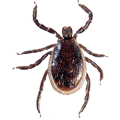


Two PestSwift quotes for the same JBR 1-BR last month: AED 850 for full chemical treatment with two follow-ups over six weeks, or AED 2,400 for heat treatment in a single afternoon. The tenant wanted to know which one was the right answer. The honest reply was: depends on whether your neighbours treated, depends on what you have made of vinyl in the apartment, depends on whether you can clear out for six hours.
We've seen both methods do exactly what they're supposed to. We've also seen both fail. The internet is mostly noise on this question because most pest control company blogs hedge to keep selling whichever one the customer prefers. This guide picks a side wherever there's a clear answer.
If you're choosing between heat and chemical for a UAE bed bug treatment, this is the framework we use internally to recommend one or the other.
What each method actually does
Chemical treatment
Liquid residual insecticides — most commonly deltamethrin, bifenthrin, or alpha-cypermethrin in the UAE, all on the Dubai Municipality approved list — sprayed onto baseboards, mattress and box-spring seams, headboard cracks, picture-frame backs, and any other harborage surface. The chemistry stays active on a dry surface for 60–90 days. Bed bugs walking over the treated surface contact the residual, absorb it, and die over 24–72 hours.
Mostly it doesn't kill eggs. So a chemical treatment relies on the residual still being active when the eggs hatch (6–10 days later) and the nymphs walk over treated surfaces. That's why chemical needs at least two visits and often three.
Common UAE protocol: visit 1 (full treatment), visit 2 at day 14 (follow-up + spot retreat), occasionally visit 3 at day 28 for heavy infestations.
Heat treatment
Industrial electric or propane-fired heaters raise the temperature of the entire treated room to 50°C or above and hold it for 90 minutes minimum. Bed bugs at every life stage — egg, nymph, adult — are killed by sustained exposure above 49°C. There's no chemical residue. There's also no residual; once the room cools, the protection is gone, and any bed bug walking back in (from a neighbour's wall void, a piece of luggage, etc.) will survive.
Common UAE protocol: a single 6–8 hour visit. Heaters set up around 9 AM, target temperature reached by 11 AM, hold until 2 PM, cool-down and equipment removal until 4 PM.
The decision matrix
Here is what I'd genuinely recommend, by apartment type:
| Situation | Recommended | Why |
|---|---|---|
| Stand-alone villa, single-family | Either | Pick on cost. Both work. |
| 1-BR or 2-BR apartment, neighbours treating | Either | Either works at unit level when re-introduction risk is low |
| 1-BR or 2-BR apartment, neighbours NOT treating | Heat | Chemical residual will be defeated by re-immigration through wall voids; heat plus encasement gives a better chance |
| Marina / JBR / Downtown high-rise tower | Heat | Pipe-chase and electrical-conduit migration between units; heat resets the unit fully |
| Karama / Bur Dubai partition shared flat | Chemical + encasement | Heat impractical: thermal escape through unsealed partition walls and into AC plenum |
| Holiday-home short-let with high turnover | Heat | Single-session, no chemistry-on-furniture concerns for next guest, faster turnaround |
| Furnished tower (rental furniture, vinyl, electronics) | Chemical | Heat-sensitive items have to be removed; cost of removal often exceeds heat-treatment savings |
| Severe infestation (visible day-time activity, dozens of live bugs) | Heat | Faster knockdown of the visible population. Follow with chemical residual at the perimeter for re-immigration |
| Mild infestation (a few bites, hard to find live bugs) | Chemical | Cost-effective; gives you 60–90 days of residual to catch the slow population |
If your situation falls into a heat row above and your tower or area would let you, get heat. If it's a chemical row, get chemical. Don't let a salesperson upsell you in either direction.
Real UAE cost band
From our 2026 jobs and competitor pricing visible at theshamil.ae, saniex, saniservice, and dubaiclean:
- Chemical, single bedroom: AED 380–620 per visit. Standard 2-visit cycle: AED 700–1,100 total.
- Chemical, 1-BR apartment: AED 600–950 per visit. Standard cycle: AED 1,000–1,600 total.
- Chemical, 2-BR apartment: AED 900–1,400 per visit. Standard cycle: AED 1,500–2,400 total.
- Chemical, villa: AED 1,800–4,000 per visit. Standard cycle: AED 2,800–5,500 total.
- Heat, single bedroom: AED 1,200–2,200 single session.
- Heat, 1-BR apartment: AED 2,000–3,200 single session.
- Heat, 2-BR apartment: AED 2,800–4,500 single session.
- Heat, villa: AED 4,500–9,000+ single session.
- Encasements (mattress + box spring): AED 80–200 per bed, fitted.
Heat is roughly 2.0–2.5× the cost of a chemical cycle for the same unit. The cost-effectiveness inverts when you'd otherwise need three chemical visits or when re-introduction risk is high.
For a Dubai-wide cost reference covering both methods more broadly, see the bed bug treatment cost in Dubai breakdown.
Prep work — the hidden cost
This is where most owners get surprised.
Chemical prep
- Strip all bedding and run on the hottest cycle the washer allows. Tumble dry on high for at least 30 minutes. (Heat in the dryer kills eggs the wash often misses.)
- Bag clean laundry in sealed plastic bags until treatment dry-time has passed (usually next day).
- Move furniture 30–50 cm away from walls so the technician can spray baseboards.
- Empty under-bed storage. Empty bedside drawers.
- Vacuum the entire bedroom thoroughly the night before.
- Plan for a 4–6 hour absence from the room during application + dry time.
- Pets out for the same window.
Call it a one-day prep effort if you do it yourself, or AED 200–400 if you hire help.
Heat prep
- Remove temperature-sensitive items: candles, vinyl records, soft plastics that deform under sustained heat (some toy figurines, certain modern picture-frame backings), aerosol cans, perfumes, makeup, oil paintings, certain musical instruments, electronics with lithium batteries (laptops, phones — you take these with you).
- Take all houseplants out (they cook).
- Take pets out — including fish (the room temperature reaches 50°C+).
- Move highly heat-sensitive medication out of the room.
- The technician will move furniture for you (it doesn't need to be moved away from walls — heat is volumetric, not surface).
- Plan for an 8 hour absence.
Heat prep is faster but the 'remove temperature-sensitive items' step catches first-time owners off guard. We arrive, see a wall of vinyl records and a Ducati helmet, and we have to wait while the owner finds storage somewhere else.
What heat actually damages (and doesn't)
Things heat does damage at 50–55°C sustained 90 min:
- Candles (melt)
- Vinyl records (warp)
- Some 3D-printed plastics (deform)
- Lithium battery-powered electronics (battery degradation)
- Crayons, lipstick, oil-based art supplies
- Perfumes, aerosols (pressure risk)
- Wax-sealed items
Things heat does NOT damage:
- Standard furniture (wood, MDF, fabric upholstery)
- Mattresses, box springs, pillows, bedding
- Laminate floors, tile floors, carpet
- Wall paint, plaster
- Ceramics, glass
- Most clothing (in fact heat treats it)
- Books (we leave shelves in)
- Paintings on standard canvas (oil paintings are the exception)
If a vendor tells you heat will damage your standard apartment furniture, they don't run heat regularly. The temperature is well below combustion or melt points for any normal material.
Effectiveness on eggs — the key chemistry difference
Bed bug eggs are the limiting factor for chemical-only treatments. Most residual insecticides used in the UAE have weak ovicidal activity — they kill the nymph that walks across treated baseboard after hatching, but not the egg in the seam of a mattress.
Heat at 50°C+ for 90 minutes kills eggs at essentially 100%. That's the structural advantage of heat. Chemical compensates with the second visit timed to the hatching window (day 14 catches the day-7-to-10 hatch).
The chemical cycle works in practice. Heat just removes the timing risk.
The encasement question
Bed bug-grade encasements (zip-around mattress and box-spring covers) belong in every bed bug protocol — heat or chemical. They trap any surviving bed bug inside the bedding and starve them out over 12–18 months, and they prevent re-infestation of the bedding from external sources.
AED 80–200 per bed and they last years. Don't let a vendor skip this. Most reputable UAE pest control companies include encasement in the quote — if yours doesn't, ask.
What to ask any technician before booking
- 'Are you DM-approved with a current pesticide handler licence?' Get the certificate number.
- 'For chemical: what active ingredient, what concentration, what's the residual claim?' Vague 'pesticide' answers mean don't book.
- 'For heat: what target temperature, what hold time, where will the temperature probes be placed?' Should be 50°C+ minimum, 90 min hold, probes at floor and ceiling level in three room locations.
- 'What's the warranty if I see live bugs after 21 days?' Should be a free re-treat.
- 'Are encasements included or extra?'
- 'Will you treat my neighbours for shared-wall units?' They probably won't but the answer tells you whether they understand the re-introduction risk.
FAQ
Is heat treatment really better than chemical for bed bugs?
For egg kill, yes. For overall single-treatment effectiveness, yes. For protecting against re-introduction afterwards, no — heat leaves no residual. The right answer is method-plus-encasement plus dealing with re-immigration risk, not method alone.
How much does bed bug heat treatment cost in Dubai?
AED 1,200–2,200 for a single bedroom; AED 2,000–3,200 for a 1-BR apartment; AED 2,800–4,500 for a 2-BR; AED 4,500–9,000+ for a villa. Roughly 2× to 2.5× the cost of a single chemical visit, but only one session vs two-to-three.
Does heat treatment damage furniture or electronics?
Furniture, no. Electronics with lithium batteries — yes, take phones, laptops, and tablets with you. Vinyl records, candles, perfumes, and certain plastics — yes, remove. Standard wood, fabric, paint, mattresses, books — no damage.
Why is chemical treatment cheaper if it doesn't work as well?
Chemical IS effective in the right conditions — mild infestation, isolated unit, owner committed to the 2-visit cycle. It's cheaper because the equipment is a sprayer and a couple of bottles of insecticide, not industrial heaters and a generator-trailer. For the right situation, chemical is honestly the right pick. For high-rise units with shared walls and unaware neighbours, the cost of a third visit and the lingering problem usually justifies heat.
Not sure which method fits your situation? Get a free PestSwift inspection. We'll quote both methods on the same job sheet so you can compare. We also do bed bug treatment in Dubai Marina high-rises, Karama partition flats, and across the rest of the UAE.
Tags
Written by
Rashid Al Mansoori, Operations Manager
PestSwift technicians and entomologists publish field-tested pest control guidance for UAE homes and businesses.