


A 4-bachelor flat on Al Wahda Street that wouldn't stay treated
A pharmacy technician called us last March from a 4-bedroom flat on Al Wahda Street, Al Qasimia. Six men sharing it. Two had bites, four didn't. They'd already had two sprays from two different companies. Both companies told them the flat was clear afterwards. Within nine days of each treatment, fresh bites returned on the same two roommates.
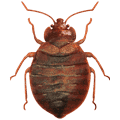
When our surveyor opened the wall socket plate next to the headboard, he counted 31 live nymphs and 4 adult Cimex lectularius inside the conduit cavity. The wall behind that socket backed onto the neighbour's bedroom. Same socket type, same conduit, no inter-unit seal.
That building was finished in 1994. Same structural pattern as most of Al Qasimia, Al Nud, and the Al Mahatta border streets. Same problem, treatment after treatment.
Why Al Qasimia flats reinfest within two weeks
The stock between roughly 1985 and the early 2000s in this part of Sharjah shares three quirks that make bed bug control different from a newer Aljada or Muwaileh tower.
Shared conduit runs. Electrical conduits and low-pressure plumbing risers were poured into the slab without between-unit seals. A bed bug egg laid in one unit's wall void can hatch and a first-instar nymph (1.5 mm) walks straight into the next flat through the socket back-box.
Party-wall cavities, not solid blockwork. Many of these buildings used hollow concrete block partition walls between bedrooms in adjacent units. The hollow core is a fully temperature-stable harborage. Surface sprays do nothing to it.
Balcony-stack ventilation. Bathroom extract ducts often run as a single vertical shaft serving 8–12 flats on one column. Bed bugs don't fly, but a fertilized female riding in a laundry basket from a fifth-floor flat can be picked up by the cleaner on the ground floor and walked into another unit two days later.
Thing is, none of this is a Sharjah-only problem. It's just that Al Qasimia has the highest concentration of this building generation in the emirate, and the lease structure tends toward 4–8 bachelors per flat with frequent turnover.
What we actually do on these jobs
For an Al Qasimia shared flat, the surface spray + leave-a-leaflet model fails predictably. Our protocol is layered.
Step 1: Map the unit before treatment, not after
The surveyor uses an interceptor-bowl inspection on every bed leg in every bedroom, opens at least 4 wall sockets and 2 light-switch plates, lifts headboards off the wall, and runs a CO₂-bait Cimex Scout monitor for 24 hours in the worst room. Then we know whether we're treating 2 rooms or 4, and whether the neighbour units need to be looped in.
Step 2: Whole-flat heat lift, not spot heat
For Al Qasimia flats with party-wall harborage, spot heat (steaming a mattress) is wasted money. We lift the whole flat to 50°C+ at the wall-cavity face for a sustained 90 minutes, measured by 6 wireless probes including one slid into the worst wall-socket void. The block-cavity temperature is what matters, not the room air. Sharjah Municipality's approved pest contractor list explicitly covers heat-treatment operators — verify your contractor is on it before they show up.
Step 3: Party-wall dust on the spots heat may not reach
For units sharing partition walls with a known-infested neighbour, we drill four 4 mm injection points per wall and dust amorphous silica + chlorfenapyr suspension into the cavity. The dust stays active for 12–14 months. Even if the neighbour does nothing, migration through the wall is dead-stopped.
Step 4: Conduit chase at every electrical penetration
Every wall socket and light switch in a treated bedroom gets the back-box dusted with diatomaceous earth and re-sealed with elastomeric putty before the cover plate goes back on. This is the step nobody else does and it's the one that holds the perimeter.
Step 5: 14-day re-treatment + Cimex Scout retest
Fifteen percent of an active bed bug population is in the egg stage. Eggs hatch in 7–10 days at Sharjah summer ambient. The 14-day re-treatment catches the hatchers before they breed. The CO₂ monitor stays in the worst room for another 7 days after the second visit.
What it costs in Al Qasimia
Real numbers from the last four months, all in AED, all Sharjah Municipality VAT-included:
- 1-BR studio, single bed, light infestation: 550–850
- 2-BR flat, family occupied: 900–1,400
- 3-BR shared flat (6 bachelors, all rooms): 1,400–2,200
- 4-BR shared flat (8+ bachelors, often 2 bunks per room): 2,000–3,200
- Party-wall dust add-on (neighbour unit risk): 400–700 per wall
- 14-day re-treatment: included in the quoted price for our jobs; some operators charge it separately
A building manager who knows their stock will sometimes ask us to treat a whole stack (8 flats on one riser) in a single mobilisation. That brings per-flat cost down to about 60% of the standalone price because we only move the heaters once.
If a quote for an Al Qasimia flat is under AED 500 and includes heat treatment, ask to see the equipment. Heat units cost AED 35,000–80,000 to acquire. Nobody runs them on a 400 AED ticket without cutting time at temperature.
Service-access reality in these buildings
Three access points cause delays we plan around.
Service-lift booking. Most Al Qasimia buildings have one passenger lift only. The watchman will block our heat trolley in the passenger lift if it's busy. We book a 60-minute window with the building manager the night before. Allow 30 minutes setup, 90 minutes at temperature, 30 minutes pack-up — three hours total at the door.
Power load. Older buildings on Al Wahda, King Faisal, and Al Estiqlal Street were not wired for 32 A pest-control heat loads on a residential circuit. We bring our own 25 kVA generator on the kerb for jobs above the fourth floor. That needs municipal authorisation from the building's watchman + a parking permit if it's daytime.
Bachelor schedule clash. Six men on six different shift rotations means somebody's always sleeping in a bedroom. The first job is to align with the head tenant or housing supervisor on a 4-hour clear-flat window. Without that, we don't start.
For a deeper dive on how we choose heat versus chemical, read our heat vs chemical bed bug treatment guide. For the Dubai-side equivalent in shared housing, see Bur Dubai shared flat treatment.
FAQ
Can bed bugs really spread between Al Qasimia flats through wall sockets?
Yes, and not as an edge case. Bed bug nymphs are 1.5–2 mm in the first instar. A standard back-box for a UK-spec 13A socket plate, common in this building generation, has a 25 mm gap between conduit and plaster reveal that's never been sealed since the building was poured. We've recovered live nymphs from socket cavities on the wall opposite a neighbour's bedhead more times than I can count.
How much does bed bug heat treatment cost in Sharjah versus Dubai?
For the same flat, Sharjah heat treatment is roughly 10–15% cheaper than the Dubai equivalent, mainly because building access is simpler and parking permits are unrestricted on most Al Qasimia kerbs. The exception is when a job needs after-hours work — Dubai Marina charges premium for evening service-lift bookings, Sharjah generally doesn't.
Does Sharjah Municipality force whole-floor treatment if one flat is infested?
Not automatically. Sharjah Municipality requires the building's pest contractor to inspect adjacent units and document findings. If two or more flats on the same stack test positive, the building manager has 14 days to mobilise treatment under the commercial buildings hygiene framework. In practice we recommend voluntary stack-treatment because the alternative — treating one flat now and the neighbours in six weeks — is more expensive once the migration cycle resets.
What if the landlord refuses to pay?
Under Sharjah's tenant regulations, the responsibility split for pest control depends on whether the cause is structural (building) or occupant (mattress brought in from a yard sale). For bed bugs in older Al Qasimia stock where the building hasn't had a documented inspection in 12+ months, the cause is presumed structural, which puts the bill on the landlord or owners' association. A pest contractor's written report citing wall-cavity harborage usually settles the dispute. We've written more of those reports than treatment invoices some months.
Book a survey
If you're in Al Qasimia, Al Nud, Al Mahatta, or the Al Nahda Sharjah border streets and you've had two sprays that didn't hold, the issue isn't the chemical — it's the harborage map. Book a free survey and we'll show you exactly where the population is sitting before we quote.
Tags
Written by
Rashid Al Mansoori, Operations Manager
PestSwift technicians and entomologists publish field-tested pest control guidance for UAE homes and businesses.