




A 7-bedspace flat in Naif and the welt count nobody believed
Last March a property manager in Naif called us about a building where six tenants in two adjacent flats had the same complaint: morning welts, blood specks on the bedsheet, two of them with secondary infection on the ankles. The flats had already been "treated" twice — once by the landlord's regular contractor and once by a one-man crew off a printed flyer. Both jobs sprayed the bedrooms and left.
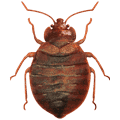
We started in the corridor. The pipe chase that ran behind the kitchen wall was the highway. Bed bugs were moving between the two flats through the gap where the cold-water riser entered each unit. The ceiling void above the bathrooms had eggs on the underside of the false ceiling tiles. The previous spray had killed maybe 30% of adults in the bedrooms and zero of the eggs, which then hatched on a 10–14 day cycle.
That's the Bur Dubai shared-apartment problem in one sentence: partial treatment of a shared flat is worse than no treatment, because it migrates the population into hiding while letting the egg cycle continue.
What makes Bur Dubai bachelor housing structurally different
Most of Bur Dubai's residential blocks were built between 1975 and the early 2000s. Compared to a new Marina tower:
- Walls are hollow brick or block with internal pipe chases, not solid poured concrete.
- Service risers are shared between adjacent flats — a single shaft serves four units per floor in many older buildings.
- Door-bottom gaps run 8–15 mm versus 2–3 mm in modern fire-rated doors.
- Bedspace density is high — a single 2-BR will often house 6–10 people on bunk beds, with personal belongings stored under each bed. Every fabric surface is potential harborage.
That last point matters more than the rest combined. Bed bugs don't need much. A duffel bag with a folded shirt against a wooden bed-frame leg, left undisturbed for two weeks, is a complete colony.
What "treating a shared flat" actually has to mean
For PestSwift to honour a treatment warranty in a bachelor flat, four things happen on the same day, in this order:
- Inspection of every bedspace, simultaneously. Not "the rooms with complaints." Every sleeping surface gets visually inspected — mattress seams, bunk-bed frame welds, headboard backs. We use a 25× monocular and a flat-blade card to lift fabric.
- Pull and bag soft goods. Pillows, sheets, blankets, plush items go into sealed bags for 60-minute dryer cycle at 60°C (the dryer is the cheapest and fastest part of the protocol). This kills all life stages including eggs.
- Steam treatment of all upholstered surfaces at 110–120°C nozzle temperature, sustained 10 seconds per linear foot of seam. Steam beats spray for two reasons — it kills eggs, and it leaves no residue on bedding.
- Crack-and-crevice residual with a DM-approved pyrethroid (we currently default to deltamethrin SC at 25 mg/m²) along skirting boards, bed-frame joints, and pipe-chase entry points. This is the only chemical step, and it's last.
Heat treatment of the whole flat is an option for severe infestations — sustained 50°C+ for 90 minutes throughout the unit. It costs more (AED 2,800–4,500 for a 2-BR vs AED 800–1,400 for the chemical+steam protocol) but eliminates the need for a follow-up.
Why your landlord matters more than the chemical
Here's the gotcha that surprises tenants. The contract chemical we use is roughly the same across UAE pest control companies. The DM-approved active ingredient list is finite, and the differences between deltamethrin and bifenthrin and lambda-cyhalothrin matter at the margins, not at the level of "did the bed bugs come back."
What actually decides outcome: did the adjacent units get inspected and, if necessary, treated.
In a single-occupancy Marina apartment, you control your own outcome. In a Bur Dubai shared flat, you don't. If unit 304 has bed bugs and unit 305 (yours) just got treated, the population walks back through the riser shaft within 7–10 days.
So before booking treatment in Bur Dubai, we ask:
- Who is the building's pest contractor on file with DM?
- Has the landlord ever had the riser shafts treated as common-area work?
- Are the adjacent two units willing to be inspected on the same visit?
If the answer to all three is "no," we'll still treat your flat, but we lower the warranty from 90 days to 30 days and tell you why.
Real prices for Bur Dubai shared accommodation (current PestSwift rates)
| Flat configuration | Initial chemical+steam | Heat-treatment alternative | Follow-up at day 14 |
|---|---|---|---|
| 1-BR / studio (1–2 occupants) | AED 600–800 | AED 1,800–2,400 | AED 250–350 |
| 2-BR / 4–6 bedspaces | AED 900–1,400 | AED 2,800–3,800 | AED 350–500 |
| 3-BR / 6–10 bedspaces | AED 1,300–1,900 | AED 3,800–5,000 | AED 500–700 |
These rates assume access to the whole flat in one visit. Phased treatment ("come back when room 3 is empty") doubles labour cost and we usually decline it — a phased treatment in a shared flat is the single most reliable way to fail.
What the tenants in Naif did
We treated both flats on the same Saturday morning. Six tenants washed everything they owned at the laundromat downstairs, the landlord paid for the riser-shaft access (we drilled and crack-injected the gap behind the cold-water riser at every floor — that was a separate AED 1,800 line item and the landlord billed it back across all four floors), and we did a 14-day follow-up inspection. Two adults found in the day-14 inspection, no nymphs, no eggs. One more spot treatment and the building has been clear for 11 months at the time of writing.
What you can do today, before booking anyone
- Stop sleeping in the affected bed. Sleeping in another room "starves" the population of a CO₂ cue and they'll search wider — but they won't follow you for more than 4–6 metres in a typical apartment, so a sofa in the living room is fine for one week.
- Don't store luggage under the bed. Move it to a tiled bathroom or balcony.
- Bag your sheets and run the dryer. Even before professional treatment, the dryer cycle alone reduces the egg load.
- Take photos of bites with date stamps. If the building dispute escalates, you'll want documentation.
What does not help: foggers (almost zero effect on bed bugs because the active ingredient never reaches harborage), DIY "natural" sprays containing tea tree or peppermint oil (they smell good and do nothing), throwing out the mattress without treating the bed frame (bed bugs were probably never in the mattress in the first place — they live in the frame).
If you're in Bur Dubai, Karama, Naif, or any of the older blocks west of Khalid Bin Al Waleed Road and you've got bites that come back after a "professional" spray, contact us for a free shared-flat assessment. We'll look at the building, the riser shafts, and the realistic outcome before we quote.
FAQ
Can my landlord refuse to treat the adjacent flat?
Legally the landlord owns the common areas including pipe chases and risers. RERA's Tenancy Law gives the landlord responsibility for structural pest issues that affect habitability. In practice, getting the landlord to act often requires a written notice (we provide one as part of the inspection report) and sometimes a parallel complaint to Dubai Municipality's Pest Control section via the DM complaint process.
How is bed bug treatment different in a 2-BR shared flat versus a single-family villa?
In a villa you control all the harborage and the building envelope is yours. In a shared 2-BR you control roughly 30% of the relevant surfaces. The treatment chemistry is the same; the diagnostic and access work is twice as much.
Does heat treatment work in Bur Dubai's older buildings?
Yes, but the ramp-up takes longer because old block walls bleed heat. We add 30 minutes to the typical 90-minute hold time, and we monitor with three thermocouples. If the building has aluminium-frame windows with gaps, we tape them temporarily; if there's a working window AC unit we shut it down at the breaker.
Will tenants need to move out during treatment?
For chemical+steam, four hours out of the flat is enough — long enough for the residual to dry and the steam to dissipate. For full heat treatment, the flat is unoccupied for 4–6 hours. Pets need to leave. Plants on balconies are fine.
Tags
Written by
Dr. Karim El-Sayed, Lead Entomologist
PestSwift technicians and entomologists publish field-tested pest control guidance for UAE homes and businesses.