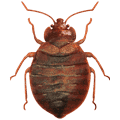





Last September a tenant in a partition flat off Kuwait Street called us at 1:42 AM. He'd flipped the mattress and counted 31 live bed bugs along the seam closest to the wall. He was sleeping on the bottom bunk in a 12-square-metre partition shared with two other men. Both flatmates said they had no problem. By the time we inspected the next morning, all three mattresses had infestations. The other two had just been ignoring the bites.
This is the Karama bed bug pattern. Dense shared accommodation, partitioned 2-BR apartments sleeping six to eight, mattress turnover from Dubizzle every few months, and one infested room becomes a building problem in roughly four weeks if nobody acts. The standard Marina or JBR playbook (single-tenant 1-BR, full prep window, predictable furniture) doesn't fit.
If you're in a Karama partition right now and you suspect bed bugs, this guide tells you what works, what doesn't, and what the building format means for your treatment options.
Why Karama is structurally high-risk
Karama's apartment stock is mostly 1970s–1990s low-rise walkups, four to six floors, no central FM team, building-management run by the landlord directly. Most 2-BR units in the area have been informally partitioned with thin gypsum walls into three or four sleeping cubicles, each going to a different tenant on a separate sub-tenancy.
Three things make this format brutal for bed bug control:
- Partition walls aren't sealed. They stop at the drop ceiling, often with a 5–10 cm gap above the partition for the AC ducting to pass through. Bed bugs cross via the wall void, the AC plenum, and the shared baseboard.
- Shared washing machines. Karama partition flats almost always run one common machine. Eggs survive a cold wash. One tenant's infested bedding seeds three others.
- Mattress turnover from Dubizzle. Second-hand mattresses sold through dubizzle.com are the single largest introduction vector we see in the area. We've inspected mattresses still wrapped in their previous-tenant bedsheet, complete with shed exoskeletons in the seam.
Layer on top: sub-tenants who pay AED 1,200–1,800 a month for a partition aren't going to stop sleeping there for a 5-day chemical prep cycle. They have nowhere else to go.
What treating one room actually achieves
Honestly? Almost nothing, if the partition wall isn't sealed and the other rooms aren't inspected.
We've gone back to Karama buildings six weeks after a one-room job to find the original partition reinfested from the next cubicle. The chemistry worked exactly as intended on the bugs we treated. The bugs we didn't treat just walked back over.
The minimum effective unit for a Karama partition flat isn't the room. It's the entire flat — every cubicle, the shared bathroom, the kitchen, the corridor. We've turned away same-day jobs where only one tenant would commit, because we don't want our service warranty associated with a treatment that's structurally going to fail.
If your flatmates won't cooperate, you have two options:
- Encase your mattress and treat just your bedding-and-luggage as a holding action while you escalate to the master tenant or landlord. This buys 2–4 weeks of bite reduction, not a fix.
- Move out. Hard advice, but the only true fix when the building owner won't act.
The actual treatment protocol for a Karama shared flat
When we get the whole flat to commit, the protocol looks like this:
Day 0 — Inspection and encasement
We walk every cubicle, every shared bathroom, kitchen, and corridor. We check mattress seams, headboard cracks, plug socket faceplates, picture frame backs, and the lower 30 cm of every wall. We score infestation by room (active live, recent fecal spotting, or clean).
Every active mattress and box spring gets a bed bug-grade encasement that day — a fitted zip cover that traps any surviving bugs inside the mattress and starves them out over 12–18 months. Costs around AED 80–140 per mattress depending on size. We supply or you can buy from Daiso/Carrefour and we'll fit them.
Day 1 — Chemical treatment, all cubicles in parallel
Residual liquid spray to baseboards, partition wall edges, and the void above the partition. We use deltamethrin or bifenthrin — both on the Dubai Municipality approved list, both with 60–90 day residual on dry surfaces. Not on the mattress (the encasement handles that). Not in the kitchen above counter level.
In the AC plenum gap above the partition, we apply a dust formulation — usually amorphous silica or a low-residual deltamethrin dust — because liquid runs off vertical metal and dust stays put for months.
This takes a 6–8 hour visit for a 4-cubicle flat with two technicians.
Day 14 — Follow-up
We re-inspect every cubicle. Bed bug eggs hatch on a 6–10 day cycle and the residual catches the nymphs as they walk over treated baseboards. Any active spots get a spot re-treatment. Encasements stay on.
Day 28 — Final clearance
If no live bugs and no fresh fecal spotting across all cubicles, we issue a clearance. Encasements stay on for the full year regardless.
For a heavily infested flat we add a third visit at Day 21 — included in the standard package, no extra fee.
Where heat treatment fits in a partition flat
Heat treatment is genuinely the most effective single-session method for bed bugs anywhere. It's also impractical for a Karama partition flat in most cases. Reasons:
- The thermal-insulation properties of partition gypsum and the AC duct gap above mean heat doesn't reach the void where bugs hide.
- Treating a single cubicle while the next cubicle is room-temperature creates a thermal escape corridor — bugs literally walk into the cool zone.
- The cost (AED 1,800–2,800 per cubicle) puts it out of reach for most partition tenants.
We use heat for whole-villa Karama jobs (rare) or when a full shared flat is being vacated and the landlord pays for a turnover treatment. For occupied partition flats, encasement plus chemical residual is the right combination.
If you're weighing the two methods more broadly, the bed bug heat vs chemical decision guide walks through cost, prep, and apartment-type fit.
What it actually costs in Karama
Real numbers from our last 60 Karama jobs:
- Single occupied room (encasement + chemical, no flatmate participation): AED 380–520. Holding action only.
- Two-cubicle partition flat, both cooperating: AED 850–1,100 including follow-up.
- Four-cubicle partition flat, all cooperating: AED 1,600–2,200 including two follow-ups.
- Whole 2-BR Karama walkup (single tenancy, no partitions): AED 950–1,400.
- Encasements alone (DIY chemical not advised, but you asked): AED 80–140 per mattress, fitted.
These are PestSwift numbers. ServiceMarket and the AED 149 introductory offers you'll see are inspection-only or single-spray, not a real treatment cycle. Read the small print.
Who pays — landlord or tenant?
This is the most common question we get from Karama. The honest answer:
Under Dubai Tenancy Law, the landlord is responsible for delivering the unit in habitable condition and for major maintenance. Bed bug infestation present at handover is the landlord's. Bed bug infestation introduced by tenant behaviour after handover (used mattress, returning from infested travel) is the tenant's.
In a partition flat, the master tenant (the person on the original Ejari) is treated as the landlord by Dubai Land Department for the purposes of disputes with sub-tenants. So if you're a sub-tenant and you can show the bugs were already there when you moved in (photos of bites in the first two weeks, a witness, an exterminator's note), you can usually push the master tenant to pay or split.
Our invoices are itemised and dated, which is what you need if it goes to the Rental Disputes Center. We've been called as evidence on three Karama partition disputes in the last year. In all three, the master tenant ended up paying because the sub-tenant had photographic documentation from move-in.
There's a longer write-up on the tenant vs landlord pest responsibility split in the UAE that covers Abu Dhabi and Sharjah versions of the same law.
What you should do tonight
If you've just spotted bites or live bugs:
- Don't move your mattress to another room. You'll seed the next cubicle.
- Don't bag your clothes and sleep at a friend's. You'll take bugs with you.
- Strip the bedding into sealed bin bags, run on the hottest cycle the washing machine allows (at least 60°C), then tumble dry on high for 30 minutes. Heat in the dryer kills eggs; the wash alone often doesn't.
- Check the room carefully before you do anything else — flip the mattress, look at seams, check headboard cracks, lift the box spring. Photograph everything.
- Call PestSwift for an inspection. We're usually in Karama within 4 hours during the day.
FAQ
Can I just spray the room with a Carrefour can and skip the exterminator?
For a single tenant in a 1-BR with a single bed and zero partition, you might get partial control with a pyrethrin aerosol — but you'll likely push the population deeper into wall voids without killing it. In a partition flat, almost certainly no. The retail aerosols don't reach the void above the partition where the population actually lives. Save the AED 60.
How fast can bed bugs spread to my flatmate's room?
Faster than you'd expect. We've documented spread between adjacent partition cubicles in 14–21 days when there's an unsealed wall void or shared bedding. If you've found bugs and your flatmate hasn't reported any, inspect their mattress this week. They almost certainly have them and haven't recognised the bites.
Will the building's facilities team treat the corridor?
Most Karama walkups don't have a dedicated FM team — the landlord or watchman handles cleaning, and pest control isn't on the schedule. The corridor isn't usually the source anyway; bed bugs travel between flats through plumbing risers and shared electrical conduits. The fix is at the flat level, not the corridor.
What's the chance of a recurrence after a full treatment?
With a complete two-visit cycle, encasements on for the full year, and full flat cooperation, recurrence rate in our Karama jobs is under 8%. Without flatmate cooperation, recurrence within 90 days is over 60%. The biggest variable is whether the whole flat treats together, not which chemistry we use.
Need an inspection or a quote for a Karama partition flat? Contact PestSwift — we'll dispatch a technician the same day.
Tags
Written by
Rashid Al Mansoori, Operations Manager
PestSwift technicians and entomologists publish field-tested pest control guidance for UAE homes and businesses.