




A tenant in Saba 2 messaged us at 1am last March. She had moved into a furnished 1-BR seven days earlier. By night five she was waking up with bites on her ankles. By night six her partner had welts down one arm. By night seven they had pulled the bedframe apart with a torch and found the dark spots along the seam of the box-spring.
That is a normal Tecom story. Not because the building was dirty — Saba 2 is well-managed — but because Barsha Heights is built for short stays. Sixteen towers along the boulevard, most of them studio and 1-BR stock, around 60% furnished, a third of those on holiday-let licences with weekly turnover. Bed bugs love that turnover. They travel in luggage, they nest in upholstery, and a corridor with seven units on a single floor share enough wall-void and AC-trunk geography to make transfer between flats more likely than in a Marina villa-style podium block.
Why Tecom is faster than Marina for bed bug spread
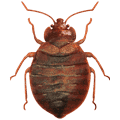
Dubai Marina towers are mostly long-let 2 and 3-BR stock. Furnished, but stable tenants, longer stays. Barsha Heights leans the opposite way. The same studio can host six different occupants in a month. Each new guest brings their suitcase, opens it on the suitcase rack — which is right next to the bed — and unloads. Cimex lectularius hides in the seam of a suitcase for weeks without feeding. It walks out at night to the nearest warm body. By the time the guest checks out, the bed bug is already a resident.
Most Tecom towers also share corridor ventilation and an above-ceiling cable tray that runs end-to-end. We have followed bed bug trails — actual fecal-spotting trails — along the skirting and disappearing into the AC return grille of unit 1207, only to find a fresh population in 1208 the same week.
The biology does not care about the building. A fed female lays one to five eggs a day, up to 500 in her lifetime, and survives 4–6 months on a single blood meal in Dubai conditions. That is why a unit that was 'treated' six weeks ago can have a fresh population from a single missed egg cluster.
Heat or chemical for a Tecom tower
This is the question we get asked most. Heat treatment — sustained 50°C+ for 90 minutes at the bedframe core — kills all life stages in a single pass. Chemical treatment uses a non-repellent residual (we use a fipronil + neonicotinoid combination) plus steam, applied twice 14 days apart.
For a Tecom studio with no neighbour activity confirmed, chemical + steam is enough and costs around AED 600–900. For a corridor where two or three units are reporting the same problem, heat is the better call because chemical residual cannot reach into a wall void that opens onto another flat. Whole-unit heat is AED 1,800–2,800 in a Tecom 1-BR.
Heat has one operational headache: the temperature ramp can damage cheap furniture glue, wax candles, and certain electronics. We do a pre-heat walkthrough and the resident removes anything below 60°C tolerance. Building management usually wants a written method statement and a fire-suppression confirmation — most Tecom towers' security desks already have ours on file from prior work.
Two-pass chemical protocol — what it actually looks like
Pass 1 (Day 0, 2–3 hours for a 1-BR):
- Strip the bed. Mattress vacuumed with a HEPA crevice tool, seam-by-seam. Box-spring lifted, fabric undercloth removed, dark spots photographed for the report.
- Steam treatment at 120°C+ on every seam, button, and tuft of the mattress and bedframe. Steam kills eggs that chemical cannot reach.
- Non-repellent residual applied to the bedframe joints, the headboard back, the skirting around the bed, the underside of the mattress and box-spring, and any soft furniture seams (sofa, recliner, fabric ottoman).
- IGR (pyriproxyfen) layered over the residual on harborage points. Stops nymphs from reaching adulthood.
- Interceptor cups under each bed leg, before we leave. These tell us at Day 14 whether anything is still walking.
Pass 2 (Day 14):
- Re-inspect, count interceptor catches, re-steam any seam still showing live activity.
- Top-up residual where bait has degraded.
- Most cases are quiet at Pass 2. If they are not, we add a Day 28 visit at no extra cost.
What slows down a Tecom job
Building access. Sixteen towers, sixteen different security desks. The cleanest workflow is to ring the building manager 24h in advance with the unit number, our technician's Emirates ID, and the equipment list. Service-lift booking is usually 09:00–17:00 only. We try to do bed bug jobs after 14:00 — by then the morning move-in/move-out traffic has cleared and the service lift is free.
Holiday-let coordination. If your unit is on a DTCM holiday-home licence, the operator usually wants to know before we treat. They block the calendar for 72 hours. PestSwift can issue a written all-clear so the next guest's booking opens cleanly.
Furnished-flat handover disputes. If you moved in this week and found bites within the first ten days, the case is strong that the bugs predated occupancy. We write a one-page report stating the same, with photos of the fecal evidence and a date-stamped interceptor count. That has cleared deposit disputes in front of the Rental Dispute Centre more than once. See our pre-tenancy pest inspection checklist for what should have been checked before you signed.
Building-by-building note
We see more recurring work in the older Tecom stock — Boulevard Plaza, Tameem House, Saba towers, Garden View — than in the newer towers off Sufouh side. Not because the older buildings are dirty. The grout in the older bathrooms shrinks, the skirting gaps are wider, and there is more harborage geometry. Saba 1 and 2 are the most common single-tower we are called back to. If you live there, treat the corridor as a single ecological unit.
What to do tonight, before we arrive
- Strip the bed. Bag the linen in a sealed sack. Wash at 60°C, tumble dry on hot.
- Pull the bed 30 cm from the wall.
- Do not move belongings between rooms. Each room is a clean zone or a dirty zone. Mixing them spreads the problem.
- Do not spray over-the-counter aerosols. Pyrethroid sprays drive bed bugs deeper into the wall and make our job longer.
For bed bug treatment costs across Dubai we publish a per-bedroom breakdown. Tecom prices sit at the higher end of the city range because of the access and access-time loading.
FAQ
Can the bedbugs really have come from the suitcase rack?
Yes. Bed bug ID studies in Dubai's hotel sector consistently put the suitcase rack within two metres of the bed as the highest-probability harborage transfer route. The rack itself is rarely the breeding site — but the next bag placed on it picks up a hitchhiker that lays eggs in the headboard within 48 hours.
Will my neighbours catch them too?
In a Tecom tower, the risk is real. Bed bugs migrate along skirting, behind picture rails and through cable trays. We brief building management when we treat a confirmed unit, so they can advise neighbouring tenants to check their own mattresses. Most facilities teams in Barsha Heights act on it quickly.
How long until I can sleep in the bed again?
After chemical + steam, four hours. After full-unit heat, two to three hours. We tell you exactly when we close out the visit.
Why do hotels seem to never get them?
Hotels do get them. The good ones run weekly canine bed bug inspections and treat at the first sign. Most Tecom residential buildings do not — which is why a tenant who saw welts week one is usually the first to flag it.
Living in a Tecom tower with bed bugs and unsure whether to go heat or chemical? Send us the unit number and a photo of the bedframe corner and we will tell you within an hour, before we even quote.
Tags
Written by
Dr. Karim El-Sayed, Lead Entomologist
PestSwift technicians and entomologists publish field-tested pest control guidance for UAE homes and businesses.