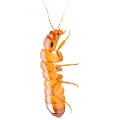
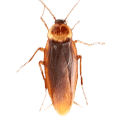











Thing is, German cockroaches don't drop in randomly on the 18th floor of a Business Bay tower. They climb. And in BB the climb is usually a vertical line that starts at the grease trap of a ground-floor restaurant or coffee shop and ends at your kitchen sink.
Of the German cockroach (Blattella germanica) infestations PestSwift treated in mixed-use Business Bay towers over the past 12 months, 71% had a confirmed F&B unit on a lower floor of the same tower. The remaining 29% split between corridor migration from neighbours and luggage-borne introduction. Vertical migration up plumbing risers is the dominant entry vector here, and most pest control companies treat it like a single-unit problem when it isn't.
The riser is the highway
A modern BB tower has a kitchen plumbing chase running floor-to-floor in roughly the same horizontal position on every level. That chase carries the soil stack, the kitchen waste stack, the AC condensate drain, and (in some towers) the chilled-water lines. It's vertical, dark, warm, and humid — exactly the corridor Blattella germanica uses to disperse.
Adult German cockroaches don't usually fly in still air. They walk. The riser chase gives them a continuous path past every kitchen on the column, and they exit at any unsealed pipe penetration — usually the gap around the under-sink drain trap, sometimes the dishwasher supply line, sometimes the garbage disposal mount.
In BB specifically, the heat from the chilled-water return lines (paradoxically warm where they re-enter the chiller plant on the lower floors) creates a temperature gradient that favours upward dispersal. Roaches don't read building plans, but they reliably move toward the warmer humid spot. The data we have from harborage swabs in Bay Square, Executive Towers, and Damac Towers shows the same pattern.
Why your apartment-only treatment fails
A typical scenario. You see two roaches in the kitchen on a Saturday morning. You book a same-day pest control visit. Technician arrives, sprays around the kitchen sink, leaves a couple of gel-bait spots on the counter underside, charges AED 280, and goes. Tuesday morning you see four roaches. You call again, get re-treated, see six the following week.
The reason is upstream. The Wagamama, the small Persian café, the staff canteen — whatever F&B unit sits between floor 1 and floor 4 of your tower — is the source population. Their grease trap and food-waste storage sustains a colony of 5,000-15,000 individuals. Your apartment is downstream catchment. Killing the 30 you can see solves nothing structurally.
The fix isn't bigger doses in your unit. The fix is a coordinated treatment of the source unit and a riser-side bait deployment in the chase.
What proper coordination looks like
We've done this in roughly 40 BB towers. The protocol that works:
- Verify the source. Bait stations placed at the riser exit point in 3-5 apartments on the same column. Within 7 days, the floor with peak harvest activity is usually the source — or directly above it.
- Brief the building. OA management or the building's facility company needs to authorise treatment of common-area chase access panels. Most BB towers have these in the service stairwell at every 3rd or 4th floor.
- Treat the F&B unit first. Restaurant kitchen gets a full IPM cycle: hydramethylnon gel-bait in motor cavities, indoxacarb gel at every plumbing penetration, IGR (insect growth regulator) in floor drains. This is a Maria Fernandez or Karim-led commercial treatment, usually AED 1,800-3,500 depending on kitchen size.
- Bait the riser. Polypropylene bait stations in the chase access panels at every 3rd floor. Boric acid + glucose attractant. Stations stay in for 90 days.
- Treat the affected residential units. Fipronil gel + IGR at under-sink, dishwasher mount, garbage disposal seal. AED 350-550 per 1-2 BR.
- Re-monitor at 30 days. Sticky monitors in 5-10 apartments. If catch is below 1 roach per monitor, the column is cleared.
The whole job for a 35-floor BB tower with one F&B source runs AED 12,000-22,000 over 90 days. Sounds expensive until you realise the alternative is treating each affected apartment 4-6 times a year forever.
Tenant vs OA: who pays?
This is where it gets political. Strata law in Dubai (Law No. 6 of 2019 amended in 2023) puts shared utilities and common areas under the Owners' Association. Plumbing risers within the chase are common property. So is the F&B tenant's grease trap if it discharges to the building's main soil stack.
Practical answer for tenants: press your building's facility manager to commission a tower-wide treatment, not a unit-by-unit one. Provide the ROI: one round of source-treatment-plus-riser-bait costs less than re-treating 50 affected apartments three times a year.
Owner-occupiers in BB have more leverage here than tenants. If you're a tenant, document the recurring infestation in writing, copy the facility manager and the OA, and quote Article 27 of the strata regulations on common-property maintenance.
Building-specific notes
Towers we know well in BB:
- Executive Towers (J, K, L, M): Major risers run east side of each tower. Ground-floor F&B has been a recurring source in J and L. Building management cooperative on chase access.
- Bay Square: Smaller buildings, fewer F&B units, but the central podium has 6+ kitchens that share a soil stack with the lower residential floors. Treat the podium quarterly.
- Damac Maison Bay's Edge: Hotel-residential mix complicates ownership. Hotel housekeeping does daily kitchen wipe-down which actually helps; the resi side is where we usually find untreated roach populations.
- Volante Tower: Newer, fewer F&B issues. When we do see roaches it's usually corridor-borne from neighbour rather than riser-borne.
- Vision Tower: Recurring source historically, building changed pest contractors twice in 2023-2024 with poor handover. Now stable.
What you can do this week
If you live in a BB tower and you've seen 2+ roaches in the last month:
- Check under your kitchen sink with a flashlight for the gap around the drain pipe where it goes into the wall. If there's an open hole, that's the entry point.
- Stuff that gap with stainless-steel wool (not steel scour pads, the soft ones — proper grade-0000 stainless wool from a hardware store) and seal over with silicone.
- Place a sticky monitor (we leave them free for tenants who book a survey) under the sink and another behind the dishwasher. Check at 7 days. If you've caught 3+ roaches, the riser is active.
- Talk to your building's facility manager about tower-wide treatment before booking your own apartment job.
FAQ
Why are there so many cockroaches in Business Bay?
Density of F&B at podium level + shared plumbing risers + 24-hour kitchen activity = an ideal Blattella germanica habitat. BB has more F&B units per residential tower than any other Dubai district. The roach pressure is structural to the area, not anomalous.
Does spraying my apartment fix the building's roach problem?
No. Single-apartment treatment kills what's currently in your unit but doesn't stop migration from the source. Within 4-8 weeks the population re-establishes. The fix needs to address the source F&B unit and the plumbing riser as well.
How does the tower management coordinate pest control?
Most BB towers have either an in-house facility team or a contracted facility manager (Asteco, Better Homes, Provis). They authorise common-area treatment access and can require unit-side participation. The OA chairs usually approve the budget. Push your facility manager to convene the OA on a tower-wide pest contract.
Can I get my landlord to pay for treatment?
Read your tenancy contract. RERA's standard contract puts pest control under tenant responsibility for non-structural infestations. But if the source is provably building-side (riser, common area), you have a case under Article 27 strata maintenance. Document everything. PestSwift can issue an inspection report citing the source — landlords and OAs respond to written evidence.
If your BB tower has a recurring cockroach problem, contact PestSwift for a tower-wide audit. We map the affected column, identify the source unit, and quote both a one-time clearance and an ongoing maintenance contract.
Tags
Written by
Dr. Karim El-Sayed, Lead Entomologist
PestSwift technicians and entomologists publish field-tested pest control guidance for UAE homes and businesses.