










A KHDA-rated private school in Al Barsha called us in October. The school's facilities manager had inherited the pest control AMC from the prior contractor — a generic commercial AMC, monthly visits, standard chemicals. Two weeks earlier the school had received a parent complaint about a strong chemical smell in a Year 4 classroom on a Sunday morning.
The parent was right to complain. The contractor had applied a residual pyrethroid in the classroom on Saturday evening, four hours before school opened. The chemical itself wasn't dangerous at the dilution applied, but the smell lingered, parents noticed, the principal got the call, and the AMC was up for review.
School pest control in the UAE is a different category of work. KHDA expects evidence of chemical safety planning. ADPHC's residential rules apply when school zones overlap with student residential areas (boarding facilities, kindergarten napping rooms). Parent expectation, even when not codified, is exacting.
Why school pest control isn't "commercial pest control done quietly"
Three things make schools a distinct category.
Term-time vs holiday windows. The KHDA academic calendar gives roughly 8 to 10 weeks of holiday across the academic year (winter, spring, summer breaks). Those holidays are the only windows for any treatment more aggressive than monitoring. Aggressive treatment during term carries either a chemical-exposure risk to students or — more commonly — a parent-perception risk that schools manage carefully.
Chemical-safety threshold. ADPHC and KHDA expect WHO Class III chemicals (the safest tier) for any application during occupancy. Class II products are acceptable in non-occupied service areas (kitchen back-of-house, mechanical rooms) with extended ventilation windows. Class I products generally have no place in a school environment in the UAE.
Documented chemical-safety plan. A KHDA inspection will ask to see the school's chemical safety register. The pest control contractor's chemical list is part of that register. Schools that can't produce the integrated document get findings.
The right protocol layers monitoring (weekly, term-time) over targeted treatment (during break weeks). Almost every school we audit is doing it the other way around — treatment during term, monitoring during break — which is structurally backwards.
The five high-risk zones in a UAE school
Zone 1 — Canteen and food service
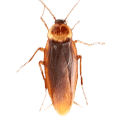
Full commercial-kitchen pest pressure. German cockroaches in the warming station, ants on the prep counter, rodents at the loading bay. Treated like a restaurant kitchen with monthly minimum visits, gel-bait protocols, EFK at the corridor.
Zone 2 — Kindergarten and Foundation Stage rooms
Tiny children, food and snacks throughout the day, art and craft material that attracts pests. Risks: ants, occasional cockroaches, drosophila around fruit-snack bins. Chemical applications restricted to school holidays only; monitoring with non-toxic glue boards inside cabinets during term.
Zone 3 — Library and resource rooms
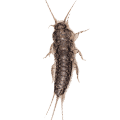
Silverfish are the perennial problem here. Older books, paper-based teaching materials, and humid storage create harborage. Boric acid dust in shelf voids during term break, sealed bait stations in service areas during term.
Zone 4 — Washroom blocks
Drain flies and occasional cockroaches in poorly ventilated washroom corridors. Bio-enzyme drain treatment monthly, ventilation-fan check, drain cover gap inspection. Rarely needs aggressive chemical work.
Zone 5 — Outdoor playground and perimeter
Wasps in spring (March–May), ants along walkways, occasional bee swarms. Outdoor work is fine during term as long as it's not happening during break and lunch playground use. Wasp nest removal is a same-day specialist job.
How KHDA, ADPHC, and DM expectations layer
A Dubai private school answers to KHDA for educational and operational standards. The pest control program intersects with KHDA at:
- Health and safety policy review (annual)
- Inspection findings related to facility cleanliness and pest evidence
- Chemical safety register and material safety data sheets
In parallel, the school's commercial pest control program needs DM Public Health Pest Control compliance — a current AMC with a DM-approved contractor, NOC certificate on file, technician licenses current. ADPHC plays the equivalent role for Abu Dhabi private schools and has slightly stricter chemical guidance for student-occupied spaces.
For schools with a boarding facility (rare in the UAE but present in some international schools), additional residential rules apply for the boarding wing.
Chemical-safety planning that satisfies KHDA inspectors
KHDA inspections rarely focus on pest control specifically — they're more concerned with educational outcomes and broader health and safety. But when pest control comes up, the questions are predictable:
- What's the contractor's DM/ADPHC license number?
- Show me the chemical list for products used in the last 12 months.
- Show me the application log — which classroom, which date, which chemical, what was the re-entry interval?
- What's the corrective action if a student or parent reports a chemical smell?
A school that has all four answers ready in a single binder passes the spot-check. Most schools don't. Building the binder is a one-time exercise that takes us about 4 to 6 hours of liaison with the school's facilities team. It's a fixed-fee deliverable, AED 2,000 to AED 3,500 depending on school size.
What proper school AMC pricing looks like
For a KHDA-rated private school of 800 to 1,500 students:
- Monthly AMC, term-time monitoring focus: AED 2,800 to AED 4,500 per month
- School holiday deep-treatment (3 windows: winter break, spring break, summer break): add AED 6,000 to AED 12,000 across the year for full-deep cycles
- Chemical safety register build: AED 2,000 to AED 3,500 one-off
- Same-day wasp nest or bee swarm response: AED 600 to AED 1,200 per call
Lower-tier school AMCs at AED 1,500/month exist. They cover canteen and washroom only with quarterly classroom monitoring. They will not satisfy a focused KHDA chemical-safety review.
The Sunday-morning chemical smell — what went wrong
Returning to the opening anecdote: a Saturday-evening pyrethroid application didn't have enough ventilation time before students arrived Sunday at 07:30. The chemical itself was within the approved list, the technician was licensed, the AMC was active. Three failure modes converged:
- The contractor applied during a window with insufficient ventilation buffer (8-hour minimum is the rule of thumb; the gap was 11 hours but with HVAC off for the weekend, no air exchange occurred).
- The chemical chosen had a pyrethroid solvent component with a noticeable odour. A water-based formulation in the same class would have been odourless.
- The treatment scope shouldn't have included an occupied classroom mid-term in the first place. The complaint that triggered the call was a single ant trail along a skirting; a glue-board solution and a holiday-window deep treatment would have been the right answer.
When we audit a school's existing AMC, those three checkpoints (timing, formulation, scope-vs-window) are where we find most issues.
Frequently asked questions
Can pest control be done while students are in the school?
Monitoring activities (inspecting glue boards, replacing bait stations in non-classroom service areas, exterior treatment at perimeters) are fine during school hours. Chemical applications inside classrooms require either a school holiday window or, for emergency response, a clear post-hours treatment with HVAC running and at least 12 hours before the next student access.
What happens if there's an active pest problem during term that can't wait for the next break?
We do targeted monitoring escalation (more glue boards, more frequent visits) and use exclusion-only methods (sealing a door, replacing a drain cover) during the term. If chemical treatment is genuinely required, we book it for the immediate next weekend with a Friday-evening application and a 36-hour ventilation window. Parents are usually notified.
Are the chemicals used in school pest control different from a commercial office?
The approved-list overlap is large but the practical selection narrows. We use water-based formulations preferentially, avoid solvent-carried pyrethroids in occupied zones, and prefer gel-bait and IGR over residual sprays wherever possible. The chemistries that are in 80% of office AMCs are in 30% of our school AMCs.
What about boarding schools and overnight student presence?
Any boarding facility is treated as a residential ADPHC-class environment for chemical safety. Overnight student presence eliminates almost all chemical application windows; treatment moves to weekend exeats and termly windows. Monitoring infrastructure carries the load.
Building the right school AMC
If you're a school facilities manager reviewing a current AMC, two questions to ask the contractor:
- Show me the application log for the last 12 months by classroom — does it match the school's KHDA chemical-safety register?
- Walk me through your protocol for an active pest sighting reported during term time.
If either answer is vague, the AMC needs review. We do school AMC audits as a fixed-fee deliverable, including a written report with KHDA-aligned recommendations.
Get in touch and tell us the school's KHDA rating and student headcount. The nursery and preschool chemical-safety post covers the same logic for a smaller-scale environment; the JCI hospital post covers the highest-stakes occupancy compliance pattern for comparison. The commercial pest control service overview is where school AMCs sit in our service tree.
Tags
Written by
Maria Fernandez, Commercial Accounts Lead
PestSwift technicians and entomologists publish field-tested pest control guidance for UAE homes and businesses.