

Pest control in a UAE nursery or preschool is a specialised category that several mainstream pest companies handle as a routine job. It isn't routine. The chemical formulations, the timing protocols, the documentation, and the parental and regulatory scrutiny all sit on different rails from a typical office or apartment job.
When a parent emails the school manager asking what was sprayed in their three-year-old's classroom last Tuesday, the right answer is a written response with active ingredient names, MOCCAE registrations, application volumes, and re-entry interval data. The wrong answer — "the usual residual" or "the same stuff we use everywhere" — is what triggers parent complaints to KHDA, MOE, or the relevant emirate's regulator. We've helped institutions clean up after that scenario; it's expensive in time, attention, and reputation.
Here's what nursery and preschool pest control actually involves in the UAE and why programme structure matters more than spot treatment.
The regulatory frame
UAE early-childhood education is regulated emirate-by-emirate:
- Dubai: KHDA (Knowledge and Human Development Authority) regulates schools and most early-childhood centres.
- Abu Dhabi: ADEK (Department of Education and Knowledge) regulates schools and licensed nurseries.
- Federal: MOE (Ministry of Education) provides federal-level frameworks.
- Sharjah, Ajman, RAK: Sharjah Private Education Authority and equivalents.
- Health overlay: Dubai Health Authority, ADPHC, and emirate-level health authorities oversee health-and-safety in childcare environments.
None of these publish pest-control-specific protocols at the level of, say, JCI for hospitals. What they do require is an overall safe-environment standard, with pest control being one component, and they audit it during regular institution inspections.
In practice, this means inspectors arrive at your nursery, ask to see the pest control programme documentation, and assess whether the chemicals used and the application protocols are appropriate for a children's environment. "Yes we have pest control" without the documentation rarely passes scrutiny.
Chemicals you can use, chemicals you shouldn't
The UAE-approved pesticide list (managed by MOCCAE) is the floor. Above the floor are two narrower categories of chemicals appropriate for childcare:
Category 1 — Reduced-risk active ingredients. Chemicals with low mammalian toxicity, rapid breakdown in the environment, and limited residual exposure pathways. Examples used in legitimate UAE childcare programmes:
- Hydramethylnon-based gel baits (cockroaches, ants). Bait is contained in tubes; placement is in cracks and crevices inaccessible to children. Children would have to actively open and consume the bait to be exposed.
- Indoxacarb gel baits (cockroaches). Similar profile.
- Insect Growth Regulators (IGRs) like methoprene. Affect insect development cycles, low mammalian toxicity.
- Boric acid dust in wall voids and behind sealed kick plates. Only effective in inaccessible zones; not appropriate for any open-area application in a nursery.
- Diatomaceous earth for crawling-insect control in storage areas. Mechanical, not chemical action.
Category 2 — Conditionally appropriate residuals. Chemical residual sprays that can be used but with strict timing and re-entry intervals.
- Pyrethroid sprays (deltamethrin, lambda-cyhalothrin) at the lowest effective concentrations, applied during full closure periods (school holidays, weekend overnights), with documented re-entry intervals of 24+ hours and full ventilation before children return.
Category 3 — Should not be used. Some chemicals used in routine commercial pest control should not be used in nursery space:
- Aerosol fogging in classroom areas. Aerosolised pesticides distribute on surfaces children touch and toys they handle. Not appropriate.
- Residual sprays at full concentration in active classroom areas. The exposure risk to children mouthing surfaces is real and avoidable.
- Rodenticides accessible to children. Bait stations must be tamper-resistant and locked, ideally placed only in service rooms accessible by staff with keys.
- Pre-emergence herbicides in playground areas during active terms.
A pest control vendor that brings the same chemical loadout to a nursery as to a warehouse isn't doing nursery work appropriately. The right answer is a child-specific protocol designed for the institution.
Timing protocols that actually matter
Nursery pest control timing matters as much as chemical choice:
Application during full closures. Most residual treatments should happen during school holiday periods or weekend overnights when no children are present. Standard UAE term breaks (Eid holidays, summer break, mid-year break) are the optimal windows.
Re-entry intervals. After residual application, surfaces should be dry and the space ventilated for at least 24 hours before children return. Many chemicals are technically "safe to re-enter when dry" but the appropriate standard for nurseries is more conservative.
Targeted intra-term work. Spot treatments during term time are limited to gel baits in concealed zones, monitor station checks, and external perimeter work. No spray application in active classrooms during the school day.
Quarterly intensive. A full programmatic treatment once per term during a closure period, covering kitchen, dining, bathrooms, classrooms, outdoor play areas, storage, and refuse zones.
Monthly monitoring. A lighter monthly visit during term time covering monitoring stations, kitchen and bathroom hot zones, and on-call response to any reported sightings.
What a typical UAE nursery actually has problems with
From our nursery and preschool client base across UAE:
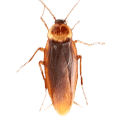
Cockroaches in kitchen prep areas. German cockroaches in dishwasher cavities, behind walk-in fridges, in kitchen plumbing chases. The classic. Gel bait is the answer.
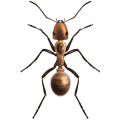
Ants on snack counters. Pharaoh ants and ghost ants finding their way to areas where children eat. Often migrating from external compound walls or from adjacent units in shared buildings.
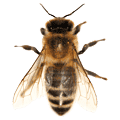
Outdoor wasp and hornet nests near play areas. Paper wasps under pergolas, oriental hornets in wall cavities adjacent to playgrounds. These are urgent — child sting risk is real.
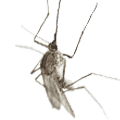
Mosquitoes in outdoor play zones. UAE nurseries increasingly have outdoor learning spaces. Mosquito source-removal audit and Bti larvicide treatment of any standing water.
Rodents in storage and refuse zones. Particularly in nurseries with food storage and frequent kitchen waste turnover. Tamper-resistant bait stations in service-only areas.
Lice in classrooms (parasitic, child-transmitted). Outside the standard pest control scope but often raised — head lice are a head-louse-treatment issue (parental/medical), not a building treatment issue. We educate clients on this distinction routinely.
Programme structure for a typical UAE nursery
Mid-size nursery (60-120 children, full kitchen and outdoor play area):
Quarterly intensive (4 visits/year, during closures). Full programmatic treatment. 4-6 hours on site per visit, two technicians. Coverage: kitchen, dining, classrooms (gel bait crack-and-crevice only during term, full residual during closures), bathrooms, storage, outdoor perimeter, playground equipment inspection, refuse zones.
Monthly term-time visits (8-9 visits/year). Lighter monitoring visit. 90 minutes on site, single technician. Coverage: gel bait check, monitor station inspection, kitchen and bathroom check, any reported sighting follow-up.
On-call response. Same-day for any urgent pest sighting reported by staff.
Documentation. Visit-by-visit reports, chemical use log, MOCCAE registrations, SDS packet maintained on site, annual programme review for KHDA/ADEK/equivalent regulatory inspection support.
Cost: AED 18,000-32,000 annual for a typical mid-size UAE nursery. Larger institutions (full schools with primary or secondary scope) run AED 45,000-95,000 annual.
The price premium over standard commercial pest control reflects the chemical choice (reduced-risk products are more expensive than commodity residuals), the timing constraints (out-of-hours and closure-period work costs more), and the documentation overhead.
Parent communication template
Nursery owners we work with usually adopt a template for parent communication on pest control:
"Dear parents, [Nursery Name] follows a quarterly Integrated Pest Management programme contracted to [Vendor], a Dubai Municipality-approved pest control company. All chemicals used are registered with the UAE Ministry of Climate Change and Environment (MOCCAE) and selected for low mammalian toxicity. Treatment is performed during [closure period]. Re-entry intervals exceed manufacturer minimums. Documentation including chemical names, application volumes, and Safety Data Sheets is available on request. Should you have any specific concerns regarding a child's exposure or sensitivity, please contact [contact] in advance and we will adjust accordingly."
This communication preempts most of the parent inquiries that catch nurseries off-guard. Pre-empting is much easier than responding.
Specific situations we see
A new nursery starting up. Typical mistake: hiring the cheapest pest control bid without specifying child-safe chemical requirements. Result: routine commercial pest control happens, parents notice the smell, complaints surface. The fix: require child-safe chemicals in the RFP from day one.
A nursery with sudden cockroach sightings during term. The right move: gel bait in concealed zones, accelerated next-closure intensive, documentation of the response. Wrong move: emergency residual spray in the affected classroom during term-time. Wait for the next closure window if at all possible.
A nursery with playground wasp activity. Same-day wasp removal is appropriate even during term time — child sting risk outweighs other considerations. Schedule for after-hours if possible (early morning or late afternoon when children aren't outside), use targeted nest-only treatment, document.
A school with food-service component (canteen). Add HACCP-aligned pest control protocol on top of the child-safe protocol. The kitchen and food-service zones get heavier treatment than classrooms; the classrooms get the child-safe protocol.
FAQ
Are the chemicals used in nursery pest control safe for children?
With proper protocol, yes. The chemicals used in qualified child-safe programmes have low mammalian toxicity profiles and are applied in zones inaccessible to children, with full re-entry intervals and ventilation. The risk profile is well-characterised; the issue arises when standard commercial chemicals are used inappropriately in nursery space.
How often should a UAE nursery have pest control?
Quarterly intensive treatments during closures, plus monthly monitoring during term time. Treatment-only-when-pest-is-seen is reactive, not preventive, and almost always more expensive over a year than a quarterly programme.
Will my KHDA / ADEK inspector ask about pest control?
During routine inspections, yes — usually as part of the broader health-and-safety review. Inspectors ask to see programme documentation; vendors that produce structured documentation pass these reviews routinely.
Can I use the same pest control company at my nursery and at home?
If the company has child-safe protocol capability, yes. Many UAE pest control vendors do residential work fine but don't have the chemical loadout or the documentation systems for institutional childcare. Verify the institutional capability separately from any home services.
Related guides: Wasp and hornet nest removal across the UAE · Dubai Municipality-approved pesticides explained
If you operate a UAE nursery, preschool, or school and need a child-safe, KHDA/ADEK-aligned pest control programme, contact PestSwift. We service Dubai, Abu Dhabi, Sharjah, and Ajman with school pest control programmes including full child-safe chemical protocols and parent-communication templates.
Tags
Written by
Maria Fernandez, Commercial Accounts Lead
PestSwift technicians and entomologists publish field-tested pest control guidance for UAE homes and businesses.