
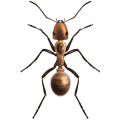
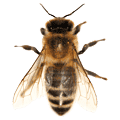
Two species drive almost all the wasp and hornet pest calls we get in the UAE. The first is the Paper Wasp (Polistes species), which builds the open umbrella-shaped nest you see hanging under pergolas and porch eaves. The second is the Oriental Hornet (Vespa orientalis), which is the larger, faster, more aggressive insect that builds enclosed nests inside wall cavities, roof spaces, and underground burrows. Both can sting; both can kill someone with a severe allergy; both will defend a nest with sustained group attacks if disturbed.
Residents reach for hardware-store wasp spray. We get the call after the first sting. Here's what's actually safe, what isn't, and what professional removal involves.
Identifying which one you have
Paper wasp. Slender body, 1.5-2.5 cm long, brown or rust-coloured with yellow or red markings depending on species. Distinctive long legs that dangle when flying. The nest is the giveaway: open-celled grey paper combs in an umbrella shape, attached by a single stalk to the underside of an eave, pergola, satellite dish bracket, or outdoor light fixture. Cells are visible from below. Adult population on a mature nest in UAE residential conditions: 15-200 individuals.
Oriental hornet. Larger and stockier, 2.5-3.5 cm body, distinctive dark reddish-brown body with a prominent yellow band on the abdomen. Heavier flight, more direct, less hovering than paper wasps. Builds enclosed papery nests inside wall cavities (entry through 8-15 mm gaps), in roof spaces, in disused chimneys, and underground in burrows under decking or in compound walls. The nest itself is rarely visible — what you see is the entry hole and the constant traffic of hornets going in and out. Mature population in UAE: 200-800 individuals.
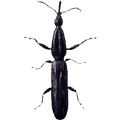
Mud daubers. Less common but worth identifying because they're the easy ones. Solitary, slim, black or metallic blue, with a distinctive thin waist. They build small (5-10 cm) mud tube nests on walls. Mostly harmless — they don't defend the nest aggressively and a single sting is the typical worst case. Removal is usually optional; we recommend it only if the nest is in a high-traffic area.
Carpenter bees. Large, fat, often mistaken for bumble bees. They drill 12-15 mm holes into untreated wood (pergola beams, outdoor furniture, old window frames). Don't form colonies. Damage is structural rather than safety. Different removal — you treat the wood with bee-specific dust into the entry holes, not the bee directly.
Why DIY spray fails
Hardware-store aerosol wasp killers are designed for the case where you can stand 4-5 metres from a small open-celled paper wasp nest in good light, with no wind, in the morning when the wasps are sluggish, with a clear retreat path behind you. That's a small fraction of UAE wasp situations.
What goes wrong:
With paper wasps. The aerosol drives down the nest and kills the visible adults but doesn't reach the wasps inside the comb cells. Surviving wasps re-form the nest at the same location within 10-14 days, often more aggressively. About 30% of DIY paper wasp jobs we get called to are second-attempt situations; the resident sprayed once, thought the job was done, and returned three weeks later to find a bigger nest.
With Oriental hornets. The aerosol can't reach the nest inside the wall cavity. You spray the entry hole and a few hornets die — usually about 10% of the population — and the rest stay inside, agitated. The next time someone walks past, the colony attacks at scale. Of all the wasp/hornet emergencies we treat in the UAE, hornet attacks following an attempted DIY spray are the highest-risk subset.
With anything that's actually a honey bee swarm. Killing honey bees with aerosol leaves a wax-and-honey deposit inside the wall cavity that attracts ants, beetles, and wax moths within weeks. The dead colony rots; the cavity becomes a secondary pest source. Honey bees should be relocated by a beekeeper, not killed in place.
Professional removal — paper wasp
For a typical paper wasp nest under a pergola or eave:
Timing. Late evening or early morning when wasps are inside the nest and air activity is low. Mid-day removal is possible but meaningfully more dangerous.
PPE. Full bee-suit with veil, leather gloves, sealed boots. The technician approaches with this on regardless of nest size — small nests can defend just as aggressively as large ones, and the difference between 10 stings and 0 stings is the suit.
Treatment. Long-reach pyrethrin foam injector applied directly into the centre of the nest from below. The foam expands through the cells and kills both adults and developing larvae. Hold position for 60-90 seconds while wasps emerge and die. Once activity stops, the nest is bagged and removed.
Residual. Insecticidal residual sprayed at the attachment point and 30 cm radius. This prevents re-establishment by surviving foragers or new colony founders.
Cost. AED 250-450 for a single nest. Multiple nests on the same property: AED 350-700 for the visit, treating 2-5 nests. Same-day service is standard.
Professional removal — Oriental hornet
Hornet nests in cavities are a different operation:
Identification of nest extent. We use thermal imaging or simple visual observation across multiple times of day to map the nest size, entry points (often more than one), and any secondary entries. A mature hornet colony in a wall cavity may span 1-3 cubic metres of internal volume.
Dust application, not spray. Insecticidal dust (deltamethrin or fipronil-based) injected through the entry hole using a long-reach duster. Dust coats the nest surfaces; returning hornets pick it up on their bodies and carry it deeper into the colony. Population kill is achieved over 3-7 days.
Sealed perimeter. During the kill window, the entry hole is partially sealed (allowing hornets to exit but not re-enter, or in some cases left fully open) and the surrounding area is monitored for escape attempts.
Cavity opening and nest removal. Once activity has fully stopped (typically 7-10 days), the wall cavity is opened, the nest material is removed, the cavity cleaned, and re-sealed with appropriate sealant and screen. This is the step most companies skip — leaving the nest material in place attracts secondary pests (carpet beetles, mites) for months afterward.
Cost. AED 750-1,800 for a wall-cavity hornet nest, depending on access difficulty and whether structural opening is needed. Underground hornet nests run AED 600-1,200 (excavation is easier than wall opening). Same-day stabilisation is possible (sealing the entry, dusting); full removal typically takes 2 visits over 7-10 days.
Honey bee swarms — different protocol
If you find a honey bee swarm — a tight cluster of bees on a tree branch, fence post, or under a roof eave, looking like a hanging mass — do not call a pest control company that doesn't work with beekeepers. The right move is bee relocation, not extermination.
A proper UAE bee removal involves:
- Site assessment to confirm honey bees (vs Africanised hybrids, which require different handling) and locate the queen.
- Coordination with a licensed beekeeper to provide a transport hive.
- Smoking and brushing the swarm into the transport hive at low light.
- Removal of the hive to a bee-keeping apiary.
Cost runs AED 350-700 for a relocated swarm. Honey bee swarms are not aggressive in transit (they're between hives, not defending one) but appearance matters — they look terrifying, residents panic, and the wrong response is to spray.
We coordinate with multiple UAE beekeepers for relocations. If you've got a bee swarm, mention "swarm" specifically when calling — the dispatch and chemical loadout differ from a wasp/hornet job.
Same-day stabilisation vs full removal
A reasonable question: "There's a wasp nest 2 metres from where my kid plays. Can you make it safe today?"
For paper wasps: yes, fully. Same-day knockdown plus residual is usually a complete solve.
For hornets: same-day stabilisation, full removal in 7-10 days. We can dust the entry, partially seal it, and reduce attack risk to near-zero on the first visit. The full nest removal needs the population kill to complete first.
For honey bee swarms: usually next-day, because beekeeper coordination doesn't always permit same-day relocation. Same-day is possible if we have a beekeeper available; not guaranteed.
FAQ
Are Oriental hornets dangerous to humans?
Yes. A single sting is painful and triggers swelling. Multiple stings (which is what happens when you disturb a defended nest) can cause severe systemic reactions — anaphylaxis in allergic individuals, kidney stress in non-allergic individuals. UAE has documented hospital admissions from Oriental hornet swarm attacks every summer.
Why are there so many wasps in my UAE garden in summer?
UAE summer pushes wasp colony growth peaks in May-July and again in September-November. Paper wasp queens establish in March-April; populations peak around July. Oriental hornet activity correlates with date palm fruiting (they're significant date pests) and rises sharply in late summer.
Can I get same-day wasp removal in Sharjah and Ajman, not just Dubai?
Yes. PestSwift dispatches to all four major emirates. Same-day target arrival window: 90-180 minutes during business hours, 2-4 hours evenings.
What if the nest is on the building's external wall, not inside my unit?
For apartment residents: the nest is typically the building's responsibility, not the tenant's. We treat directly when contracted by the building or OA. For tenants who want to act anyway, we can do the work and provide a documented invoice for the resident to claim back from building management — many succeed in claiming when the safety issue is documented properly.
Related guides: Snake removal across the UAE · Spider myths vs real risk in UAE villas · Same-day pest control in Dubai
If you've spotted a paper wasp nest, an Oriental hornet entry, or a honey bee swarm at your UAE property, contact PestSwift for same-day stabilisation. We service Dubai, Abu Dhabi, Sharjah, and Ajman with full safety PPE and beekeeper coordination for honey bee relocations.
Tags
Written by
Dr. Karim El-Sayed, Lead Entomologist
PestSwift technicians and entomologists publish field-tested pest control guidance for UAE homes and businesses.