

A 240-bed M-block we walked into last winter
The operator booked us for what he called "a roach problem in the kitchens." The kitchens were the symptom. The actual issue was the M-block's shared service riser, where a 30-year-old gypsum patch had cracked over the previous summer's high-temperature stress and opened a vertical highway between three kitchen levels. German cockroaches were nesting inside the riser at floor 2 and foraging into kitchens on floors 1, 2, and 3 every night.
Fumigating the kitchen surfaces would have done nothing. We treated the riser with a combination IGR injection and chased the population back to the source over six weeks. ADPHC's next quarterly inspection came back clean.
This is what real Mussafah cockroach work looks like. Surface spraying is the cheap visible part. Riser, drain stack, and shared-kitchen cabinetry interior is where the actual job happens.
Mussafah is its own regulatory environment
If you operate a labour accommodation in Mussafah, your pest program answers to Abu Dhabi Public Health Center (ADPHC), not Dubai Municipality. The two systems look similar from the outside but the inspection criteria differ.
ADPHC inspections at Mussafah accommodations check three things ahead of others:
- Live cockroach activity in food-prep zones (Major NC, immediate corrective action)
- Pest log book with technician sign-off and chemical batch records (Critical NC if missing or back-dated)
- Bait station integrity and replacement schedule along external building perimeter
Most operators we onboard come to us after a Major NC has already been issued and a 30-day re-inspection clock is running. We can stabilise that clock but the gap between issuance and re-inspection is tight. Don't wait for the warning letter.
ADPHC's biocide register draws from the federal MOCCAE list — see our explainer on MOCCAE biocide registration — but ADPHC publishes its own approved-applicator list separately. Your contractor needs to be on both. Ours is.
Why German cockroach is the dominant species in Mussafah blocks
Blattella germanica prefers warm (24-33C), humid, food-adjacent harbourage with vertical shelter. A typical Mussafah M-block kitchen is 30-32C ambient even with AC running, has a 12-occupant cooking schedule that runs from 04:30 fajr-time prep through 23:00 night-shift returnees, and has gypsum-board interior partitions full of conduit voids.
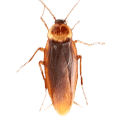
That is exactly the German cockroach niche. American cockroach (the bigger reddish-brown one residents see at night) actually prefers external drains and the manhole network outside the block. Two species, two treatment paths, sometimes two technicians on the same job.
We describe the residential version of this in German cockroaches JLT kitchen. The biology is the same. The scale and economics in Mussafah are very different.
What a Mussafah program actually looks like
For a typical 200-240 bed M-block (8-10 rooms per floor, 4-6 floors, 2 shared kitchens per floor), here is the program we run:
Initial assessment visit (1 day):
- Full block walk-down: every kitchen, every shared bathroom, every external drain, every visible riser access
- Sticky monitor placement: 2 per kitchen, 1 per bathroom, 1 per riser opening — minimum 60 monitors per block
- Photographic harbourage survey: pre-treatment evidence for ADPHC log
- Drain smoke test (American cockroach diagnostic): 2 hours
Initial knockdown visit (1-2 days, 5 days after assessment):
- Hydramethylnon gel-bait applied at 0.6 g per kitchen cabinet hinge — typical block uses 80-120 g
- Indoxacarb gel-bait rotated in (resistance management) at fridge motor cavities and dishwasher base
- IGR (pyriproxyfen 0.5%) wall-void injection at every riser opening and conduit penetration
- Boric acid dust at exterior wall plinth
- External perimeter rodent + crawling-insect bait stations refreshed (these double for Periplaneta americana coming up from drains)
Monthly maintenance visit (every 28-32 days):
- Sticky monitor count and replacement
- Gel-bait re-application at 30-40% of original quantity (target the still-active hot spots, not the whole block)
- Log book sign-off, photographs, ADPHC-format report uploaded to operator portal
- Drain treatment as needed (typically every 60 days)
We rotate active ingredients quarterly. German cockroach populations in dense Abu Dhabi accommodations have shown documented resistance to pyrethroids since 2018; gel-bait and IGR are the only things that work consistently.
Per-bed program economics
Most operators want this in AED-per-bed-per-year terms. Our standard pricing for an ADPHC-compliant continuous program:
- Compliance-only basic (monthly visit, kitchens + bathrooms only): AED 12-15 per bed annually for blocks 200+ beds, AED 18-22 per bed for blocks under 200
- Full block program (above + risers + drains + log book + ADPHC report): AED 22-32 per bed annually
- Recovery program (after Major NC, 14-day intensive then transition to maintenance): AED 38-48 per bed for the first 90 days, then standard rate
A 240-bed block on the full program is roughly AED 5,300-7,700 annually. That sounds like a lot until you compare it to the cost of an ADPHC closure order, which we have seen issued twice in our client base in the past five years. Both reopened within 21 days, but the lost revenue and reputational hit ran into the AED 200,000-plus range each.
For operators running multiple blocks, we discount the third block onwards by 12% on the same management contract. See our commercial pest control service page for the program structure.
The shared-kitchen scheduling problem
Kitchen treatment requires the kitchen to be empty for at least 90 minutes after gel-bait application. In a 200-bed block with 12 occupants per kitchen running shifts that span 04:30 to 23:00, finding 90 quiet minutes is its own logistics puzzle.
Our Mussafah operations runs treatments in this slot pattern:
- Friday 13:30-15:30 is the easiest single window across most M-blocks. Friday lunch is community-cooked or skipped, and most occupants are at congregational prayer
- Tuesday 10:00-12:00 works for blocks where the construction-site shift majority leaves at 06:00 and returns at 18:00
- Avoid 16:00-21:00 universally; that is when dinner-prep and laundry collide
We coordinate with your block supervisor 72 hours ahead. Don't try to do it day-of. Half the occupants will not have got the message and will start cooking through the gel-bait window.
Documentation that survives an ADPHC re-inspection
When ADPHC comes back for a Major NC re-check, they look for three pieces of evidence:
- Continuous monthly log entries dated and signed by a registered applicator (not back-filled)
- Chemical batch numbers traceable to current MOCCAE registration on each entry
- Photographic before/after evidence at the originally-cited harbourage points
We provide all three as a single PDF per visit, uploaded to a shared operator portal. Block supervisors can download the file 60 seconds before an inspector walks in. We have done this at three different M-blocks during live re-inspections; it works.
For the regulation-side context, our ADPHC pest control audit Abu Dhabi restaurant post covers the audit format in more depth. Same inspectorate, similar log formatting expectations.
What you can do between technician visits
Three operator-side actions noticeably reduce cockroach pressure:
- Enforce a no-stored-food-in-rooms rule. Provide locked communal storage in the kitchen. This is hard to enforce in practice but moves the needle when it sticks.
- Run dishwashers nightly on hot cycle in shared kitchens. The motor cavity is the single biggest German cockroach harbourage in Mussafah block kitchens. A nightly hot cycle disrupts the population significantly.
- Repair drywall cracks within 14 days. Every unsealed crack is a riser-population recruitment site.
FAQ
How quickly can a Mussafah block get its first treatment?
For an existing ADPHC NC, we can be on site within 48 hours and have the assessment + initial knockdown done within seven days. Operators on retainer get same-week scheduling as standard. Walk-up emergency requests during summer (May-September peak) sometimes wait 3-5 days because demand spikes.
Do we need to vacate the block during treatment?
No. Gel-bait and IGR injection are low-volume, low-vapour applications classified safe for occupied premises by MOCCAE. Occupants stay out of the kitchen for 90 minutes post-application. Sleeping rooms are not treated unless we have evidence of harbourage there.
Will this work if the adjacent block does not treat?
Partially. Cockroaches do migrate between adjacent blocks via shared external drainage and walkway gutters. We can keep your block compliant indefinitely with a continuous program even if neighbours don't treat, but the per-bed cost will run 15-20% higher because of recurring re-introduction pressure. The cleanest economics is when 3+ adjacent operators treat together. We can broker that conversation if helpful.
Can you handle multi-camp portfolios across Mussafah and ICAD?
Yes. Our largest portfolio client runs 11 blocks across Mussafah ICAD-1 through ICAD-3. Single management contract, monthly consolidated reporting, single ADPHC liaison contact.
Get a Mussafah block assessment
If your accommodation is in Mussafah, ICAD, or the surrounding Abu Dhabi industrial zones and you are running into ADPHC pressure or a Major NC, contact our commercial team. We will run a no-charge assessment visit and quote against your actual block conditions, not a generic per-bed number from a website. See also our labour accommodation pest control Dubai post for the cross-emirate perspective.
Tags
Written by
Maria Fernandez, Commercial Accounts Lead
PestSwift technicians and entomologists publish field-tested pest control guidance for UAE homes and businesses.