




Two species, one lagoon, and what Sharjah Municipality does (and doesn't) fog
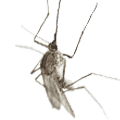
The first thing to know about mosquitoes around Al Khan and the Sharjah lagoon: there are two distinct species in play and they are not the same problem. Treat them as one and you'll waste money on a fogging schedule that doesn't fit either.
Aedes aegypti is the daytime biter — the one with the white-banded legs. It's a domestic, container-breeding mosquito. It rarely flies more than 100 metres from where it bred. If you have Aedes in an Al Khan apartment, the larvae are within 100 metres — usually within your own balcony or your immediate neighbour's. Aedes aegypti is the dengue and chikungunya vector. UAE has had documented dengue cases in recent years, almost always tied to imported strains entering local Aedes populations.
Culex pipiens is the dusk-and-night biter, the one most people actually notice. It breeds in larger water bodies — drainage channels, irrigation canals, the brackish edges of lagoons, even green swimming pools. It can fly 1–3 km. The Sharjah lagoon and its connected channels are Culex breeding habitat at scale. Culex is generally a nuisance vector in UAE rather than a major disease vector, though it can carry West Nile virus.
So when an Al Khan resident says "the mosquitoes are bad" — which one? The answer changes the treatment.
What Sharjah Municipality actually fogs
Sharjah Municipality runs a mosquito control programme through its public health department, and the lagoon edges are part of the routine. What the programme covers:
- Outdoor fogging of public roads, parks, and waterway edges, typically dawn or dusk during peak mosquito season (April–October).
- Larviciding of public water bodies including the Khalid Lagoon and adjacent channels using bacterial larvicide (Bacillus thuringiensis israelensis — BTI) or methoprene.
- Storm drain treatment where channels collect standing water.
What the programme does not cover:
- Private balconies and individual building roof tanks.
- Building irrigation systems — drip-line emitters, automatic watering controllers, and the moist soil around them.
- AC condensate puddles under split-AC outdoor units.
- Landscaping containers on individual property — bromeliad cups, plant saucers, half-buried pots that catch runoff.
That last list is where 80% of Aedes aegypti in a typical Al Khan apartment cluster actually breeds. Municipal fogging knocks down adult Culex but does almost nothing for the Aedes in your building.
The Al Khan-specific factors
Al Khan sits between the lagoon and the corniche road. The factors that push mosquito pressure higher than other Sharjah neighbourhoods:
- Lagoon-edge tide pools. The lagoon is brackish and tidal. As tides recede, isolated pools form along the edges and in the boulder armouring. These pools can persist for 4–8 days — long enough for a complete Culex larva-to-adult cycle.
- Building setbacks closer to water. Lagoon-facing apartments are typically 30–80 metres from a Culex breeding source. Culex night-flight covers that easily.
- Mature landscaping. The newer compounds along Corniche Al Buhaira have dense planting and irrigation. Drip-line micro-pools are a quieter but consistent breeding source.
- Humidity gradient. Coastal humidity stays 65–80% through summer night-hours. Aedes survives indoor air-conditioning surprisingly well in this humidity range.
What we do for an Al Khan apartment or building
For a single apartment our protocol is small and surgical. For a building or compound it expands, but the principles are the same.
Step 1 — Source survey, not spray. Walk the balcony, the AC outdoor unit, the laundry area drain, the entrance lobby planters, and the parking-level drain grates. Tip out any standing water. Photograph the obvious sources for the homeowner.
Step 2 — Larvicide, not adulticide. For any standing water that can't be eliminated (decorative water features, AC condensate trays that refill daily) we apply BTI tablets or briquettes. BTI is a bacterial larvicide that targets only mosquito larvae — completely safe for fish, birds, pets. One BTI dunk in a large planter base controls larvae for 30 days.
Step 3 — Adult knockdown only where needed. If the apartment has an active adult population, we apply a low-residue pyrethrin spray to dark resting surfaces (under furniture, behind curtains, inside wardrobes that are usually closed). We do not fog. Fogging an apartment leaves chemical droplets on every food-contact surface and accomplishes about 10 minutes of suppression.
Step 4 — Building-level escalation if needed. If the building has a roof tank with a poorly-sealed inlet, or an underground sump pump pit with standing water, we work with the building owner or facility manager. These are common-area issues and a single resident's apartment treatment can't fix them.
What it costs
| Service | What's included | Cost (PestSwift current rates) |
|---|---|---|
| Single apartment source survey + treatment | Inspection, BTI for any standing water, targeted adult knockdown if needed | AED 250–400 |
| Quarterly maintenance | Recurring source check + BTI top-up | AED 200/visit |
| Whole building common-area treatment | Roof tank inlet seal check, sump pit larvicide, perimeter survey | AED 1,200–2,800 depending on building size |
| Annual contract (apartment) | 4 visits + emergency response for breeding event | AED 700–1,000 |
For comparison, a fogging-only service from a generic contractor typically costs AED 200–300 per visit and accomplishes very little against Aedes. The reason: fogging hits flying adults at the moment of fog, and Aedes is mostly resting on shaded surfaces during typical daytime fogging windows.
What a homeowner can do this weekend
Twenty minutes on a Saturday morning kills more mosquito potential than most professional visits:
- Tip every container on your balcony and walk-around. Plant saucers, decorative pots, the bucket left after washing the car, the AC drip-tray under the outdoor split unit.
- Check your roof tank inlet seal. If you can see daylight through the inlet, it's a Culex nursery.
- Bag the BTI in your nearest hardware store — yes, BTI dunks are sold over the counter in UAE. Drop one in any decorative water feature you can't drain.
- Run a fan on your balcony in the evening if you sit outside. Aedes and Culex are both poor flyers in any breeze above 5 km/h.
What does not work well: ultrasonic mosquito repellers (zero published evidence), citronella candles in open balconies (range of effective protection ~1 metre), most mosquito-trap appliances under AED 500 (the CO₂-bait ones above AED 1,500 do work but only as area suppression, not personal protection).
If you're in Al Khan, Al Majaz, Al Khalidiya, or any of the lagoon-adjacent Sharjah communities and the mosquito pressure has spiked, book a free assessment. We can usually identify the breeding source within 30 minutes on site.
For other coastal Sharjah communities the same principles apply — see our Al Majaz mosquito control post for a slightly different angle on a similar problem.
FAQ
Are mosquitoes worse near the Al Khan lagoon than further inland?
Yes, measurably. Lagoon-adjacent properties have 2–4× the trap counts of properties 1.5 km inland in our routine surveys. The species mix shifts as well — more Culex near the lagoon, more Aedes in dense apartment clusters slightly inland.
Does Sharjah Municipality treat the lagoon?
The lagoon edges and the connected drainage channels are part of the municipal larviciding programme. The schedule is approximately fortnightly during peak season. The treatment is BTI or methoprene — not chemical adulticide. The municipal programme works for Culex in the lagoon water itself; it does not address Aedes in private buildings.
When is mosquito pressure worst?
For Culex: April–October peak, with the highest activity 30–60 minutes after sunset. For Aedes: similar seasonal pattern but bites peak mid-morning and again mid-afternoon. Both species are diminished but still present December–February.
Should I worry about dengue in Al Khan?
The base risk is low but non-zero. UAE health authorities track Aedes density and respond quickly to imported dengue cases. The realistic personal protection: eliminate breeding sources within 100 metres of where you sleep, use insect repellent containing DEET or icaridin during morning and afternoon, and keep window screens intact. Spraying chemical fog around your building does not meaningfully change dengue risk.
Tags
Written by
Dr. Karim El-Sayed, Lead Entomologist
PestSwift technicians and entomologists publish field-tested pest control guidance for UAE homes and businesses.