







Arabian Ranches sits in an unusual demographic position among Dubai master-planned communities. Built starting 2004 with completions through about 2011, the original villa stock is now 14-22 years old. Most original termite barriers are well past warranty. The community landscaping (mature trees, established hedge lines, continuous shrubbery) has grown into a connected ecosystem rather than the disconnected planting beds of younger communities. The owner population is largely settled and long-tenured, with many original buyers still in residence — which is good for community cohesion but means many villas haven't had a thorough pest assessment since handover.
The combination — old barriers, mature landscape, settled owners with no recent pest baseline — creates specific patterns we see across Arabian Ranches that don't appear in newer Dubai communities. Here's the operator's view.
Why aged termite barriers matter so much in Arabian Ranches specifically
The original Arabian Ranches villas were built with pre-construction anti-termite barriers using imidacloprid at concentrations standard for that period. Standard practice at the time: 0.05% imidacloprid, applied in soil at construction, expected to provide 5-8 years of meaningful protection.
Math: a barrier installed in 2008 is now 18 years old. Even under best-case soil conditions (dry, undisturbed) the chemical efficacy is well below original concentration. Under typical Arabian Ranches conditions (drip-irrigated landscaping, occasional flooding during heavy rain events, soil disturbance from pool installations and garden modifications), the barrier is essentially gone.
What we see in Arabian Ranches inspections:
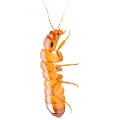
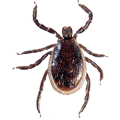
Active subterranean termite activity in approximately 35-45% of villas inspected. This is much higher than newer communities (JVC at ~12%, Dubai Hills at ~5%) but consistent with what age, soil conditions, and landscape maturity predict.
Visible mud tubes on external walls or compound walls in roughly 1 in 5 villas. Often hidden behind shrubs or ornamental plantings; residents who walk the perimeter find them, residents who don't, don't.
Soft skirting board damage at the kitchen-external-wall junction in many villas with longer occupancy. The kitchen is the typical first damage zone because of the proximity to external walls and the presence of cellulose-rich materials (cabinets, food packaging, paper).
Prior "spot treatment" history without full barrier renewal. Many villas have had localised termite spot treatments over the years ("there were mud tubes by the pergola, we got them sprayed") without ever renewing the full perimeter barrier. These spot treatments are stop-gaps; the colony rebuilds at a different access point within months.
The right scope for a typical Arabian Ranches villa is full anti-termite barrier renewal, not spot treatment. We routinely deliver this; budget AED 4,500-9,500 for a typical 4-5 BR villa depending on perimeter and slab penetration count.
The mature landscape problem
Arabian Ranches' planting was designed to provide privacy and shade as the community matured. It has succeeded — the canopy is genuinely beautiful — but the same biomass that provides shade also provides:
Continuous compound-wall vegetation. Trees and large shrubs along compound boundaries create connected pest corridors between adjacent villas. Pharaoh ants, white-footed ants, and ghost ants travel along the planted boundary from villa to villa. Treatment in your garden is undermined if your neighbours have continuous vegetation.
Date palms. The community has substantial date palm planting along main roads and in some private gardens. Date palms attract Oriental hornets (the date crop is hornet food), red palm weevils (a major palm pest, requiring its own protocols), and provide nesting opportunities for several bird species.
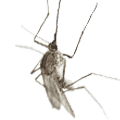
Standing-water microhabitats in mature soils. As mulch layers build up over years, micro-pockets of standing water develop after irrigation cycles. These are mosquito breeding sites that can persist for weeks before drying. Aedes aegypti (the dengue vector) breeds preferentially in these tannin-rich micro-pools.
Established rodent populations in compost areas. Many Arabian Ranches villas have garden composting setups (some intentional, some accidental — leaf piles, fruit fall under date palms). Rodents establish populations in these zones. Roof rats are the typical species.
What pests Arabian Ranches sees most
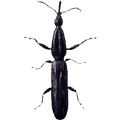
Subterranean termites (high pressure). As discussed. Microtermes is the dominant species; Coptotermes shows up occasionally in villas closer to irrigation-saturated zones.
Pharaoh ants and ghost ants. From compound-wall vegetation, into kitchens. Highly responsive to gel bait protocol; spray treatment is counter-productive (causes budding).
Red palm weevil in date palms. A different protocol from general pest control — specialist palm-tree treatment with stem injection and monitoring. Palm health, not building pest control. We coordinate this with palm care specialists when needed.
Mosquitoes from irrigation-saturated soil. Aedes more than Culex; source-removal audit is the right scope.
Roof rats in garden vegetation. Typically Rattus rattus, less commonly Rattus norvegicus. Bait stations in vegetation transitions, sealing of building entry vectors.
Bee swarms in garden structures. Particularly in spring when new colonies establish. Honey bees should be relocated by a beekeeper; we coordinate this.
Geckos and lizards. Largely beneficial (eat mosquitoes and small insects). We generally advise against eliminating; targeted exclusion at building entry points if specific intrusion is the issue.
Snakes (occasional). Saw-scaled vipers have been documented in Arabian Ranches in recent years, attracted by irrigated gardens. Free public-service removal via 800-900 (Dubai Municipality); private-sector for habitat audit.
What a programme contract looks like for Arabian Ranches
Year 1 — Reset and stabilise.
- Comprehensive inspection (4-6 hours, two technicians).
- Anti-termite barrier renewal (AED 4,500-9,500 one-time).
- Pharaoh ant baiting programme (gel bait, IGR).
- Mosquito source-removal audit and Bti larvicide deployment.
- Rodent station deployment in compound vegetation.
- Wasp and hornet inspection of garden structures and roof voids.
- Quarterly visit programme initiated.
Year 1 cost (one-time + first-year quarterly): AED 8,500-16,500 for a typical 4-5 BR Arabian Ranches villa.
Year 2+ — Maintenance.
- Quarterly visits (4 per year): full property walk-around, ant treatment, mosquito audit, monitoring station inspection, on-call response.
- Termite barrier inspection annually (visual + spot probe).
- Wasp/hornet inspection seasonally.
- Garden pest monitoring.
Year 2+ annual cost: AED 1,800-3,200 for the maintenance programme. Termite barrier renewal cycle thereafter every 5-7 years (AED 4,500-9,500 each cycle).
Community-level considerations
Arabian Ranches is large enough and old enough that some pest issues are properly community-level rather than villa-level:
Date palm health and red palm weevil management. The community-managed palm trees (along main roads, in central greens) are the responsibility of community management's landscape contractor. Individual residents see the consequences (weevil pressure on private palms in adjacent villas) but can't drive the upstream solution. Worth raising with community management.
Mosquito vector control in central park areas. Same — community management territory. Individual villa mosquito treatment is necessary baseline but the community baseline matters.
Roof rat populations migrating between villas. Some residents have negotiated coordinated quarterly bait-station programmes covering 4-8 adjacent villas. The cost-share is straightforward and the population control is much better than individual villa-only work.
For a community as established as Arabian Ranches, raising pest concerns through the community management channel and proposing community-level interventions is often more effective than individual-villa escalation.
Specific Arabian Ranches situations
Villa with a recently-discovered active termite colony. Anti-termite barrier renewal plus targeted sub-slab injection at the colony's known entry points. Often combined with structural inspection by a separate trade if damage is suspected behind drywall. Time-sensitive — termite damage compounds rapidly.
Villa with chronic ant pressure for 18+ months. Almost always a compound-wall vegetation issue. Coordinate with neighbours on either side, treat the boundary together, and the issue typically resolves within one full ant generation cycle (about 12 weeks).
Villa with seasonal mosquito surge in autumn. Likely a localised standing-water issue in irrigation drainage. Walk the property after irrigation cycles and identify pooling zones. Either modify the drainage or treat with Bti larvicide in those zones.
Villa with snake sighting. Free removal via 800-900 first. Then habitat audit — typically the AC condensate drain plus garden irrigation creates the moist microhabitat that attracted the snake. Modify these and the area becomes much less attractive.
Villa with wasp nest near pool area. Same-day treatment is appropriate. Pool-area wasps are often paper wasps under pergola eaves; standard knockdown plus residual handles it.
FAQ
Is Arabian Ranches more pest-prone than newer Dubai villa communities?
More pest-pressure-vulnerable due to age (termite barriers expired) and mature landscape (continuous pest corridors). Not necessarily more pests in absolute terms — newer communities have construction-phase pest issues that mature communities have moved past. Net result: Arabian Ranches needs a more proactive maintenance approach than a 5-year-old community.
Should every Arabian Ranches villa renew its termite barrier?
If the original barrier is 12+ years old, yes — at minimum, an inspection to confirm whether renewal is needed. Pre-renewal inspection is AED 350-550 and tells you definitively whether the existing barrier is still functional. Many Arabian Ranches villas need renewal; some don't.
Can I do pest control at Arabian Ranches with the community's recommended vendor?
Most Arabian Ranches villa owners are free to choose their own pest control vendor. A few enclaves have OA-managed common-area programmes; verify with your sub-community management whether common areas are already covered.
Are there pest issues specific to certain Arabian Ranches phases?
The earliest phases (Mirador, Saheel, Hattan, Alvorada — 2004-2008 builds) have the most aged termite barriers. Mid-phases (Reem, La Avenida — 2009-2011) somewhat newer. The Polo Homes and Mira sub-developments are different stock with different age profiles. Specific phase recommendations come out of an individual inspection.
Related guides: Termite renewal for Mirdif villas · Pest control in JVC villas and townhouses
If your Arabian Ranches villa is past its developer warranty or showing signs of pest activity, contact PestSwift for a property-specific assessment. We service Arabian Ranches and broader Dubai with villa pest control and pre-construction termite treatment including full barrier renewal.
Tags
Written by
Dr. Karim El-Sayed, Lead Entomologist
PestSwift technicians and entomologists publish field-tested pest control guidance for UAE homes and businesses.