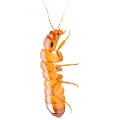

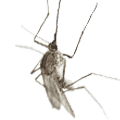
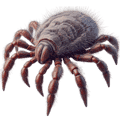
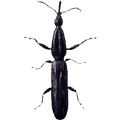
The first PestSwift technician to walk a Jumeirah Park villa last September pulled a fistful of pharaoh ant trails out of the kitchen island plumbing chase, ten metres of subterranean termite mud-tube off the side garden wall, and a half-litre of standing larvae out of the irrigation manifold cover. One villa. Three pests. Three completely different protocols.
That's the thing about Jumeirah Park. The community is large, low-density, and deceptively quiet. People assume villa life means fewer pests than tower life. The opposite is true: more shared boundary walls, more landscaping, more soil contact, more places for the things you don't see to live.
Why these four pests, in this order, on these villas
Jumeirah Park sits on sandy backfill over a fairly shallow water table, with shared boundary walls along almost every villa, and irrigation lines threaded through the green strips and palm wells. Each of those facts maps to a pest.
Subterranean termites travel through soil, not air. The shared boundary wall between your villa and the neighbour's is not a barrier — it's a highway. Once a colony gets established under one villa, the whole adjacent run is at risk within 18 to 24 months. Mud tubes show up first on the AC compressor pad outside the kitchen, on the back of the boundary wall behind the maid's-room window, and inside the meter cabinet door.
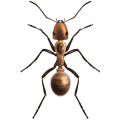
Pharaoh ants are tiny, yellow, and almost invisible until you have a thousand of them. They nest in wall voids and travel through plumbing chases — the routing that links your kitchen island sink to the riser. Spray them and the colony "buds" into multiple satellite nests, making the problem worse. Bait them properly and the entire colony dies in three weeks.
Mosquitoes in Jumeirah Park breed almost entirely on-property, not from outside the community. Pool overflow gulleys, AC condensate trays, the sealed dome on top of the irrigation manifold, plant saucers under the porch potted ficus — every one of those is a breeding container. Killing flying adults is whack-a-mole. Eliminating standing water is the actual fix.
Rodents are the rarer of the four, but Jumeirah Park villas backing onto the community park or the cycle path get occasional black rat (Rattus rattus) intrusions through the satellite-dish cable entry on the upper roof. Not every villa, but if you're on the back row facing the park, you're at risk.
Termites: what we look for on the first inspection
The single most useful diagnostic tool is a Phillips screwdriver. We push the tip into the bottom 30 cm of every wooden door frame, every skirting board on a ground-floor wall that touches earth, and the architraves around the maid's-room door. Healthy wood resists. Termite-damaged wood gives like soft cheese.
Second is the visual sweep along boundary walls. Subterranean termites build mud tubes — pencil-thick, beige, brittle, often running from the soil line straight up the wall to the first horizontal break. Tubes mean an active colony with a confirmed feeding path. Crack one open with a fingernail; if you see live workers, the colony is currently feeding.
Treatment for an active infestation in a 4-bedroom Jumeirah Park villa runs AED 1,800 to 2,800 for a full chemical barrier — that's drilling 30 cm holes every 30 cm around the entire villa perimeter, injecting Termidor SC (fipronil-based, Dubai Municipality-approved) at 0.06%, sealing each hole with a colour-matched plug, and re-applying interior wall voids where mud tubes were found. The barrier holds for five years on the standard warranty, ten years if you opt into the annual inspection-and-touch-up plan.
Pre-construction soil treatment doesn't apply here — every Jumeirah Park villa was handed over more than a decade ago, and Nakheel's original anti-termite application has long degraded.
Pharaoh ants: why the kitchen-counter trail isn't where the colony is
If you see pharaoh ants trailing along the granite next to the toaster, the colony is not in the toaster. It's almost certainly inside the wall void behind the kitchen island, where the chilled-water line and the dishwasher feed enter from the riser. The trail you see is foragers — typically 5% of the colony.
Spray that trail and you accomplish two bad things. First, you kill foragers but not the queen. Second, the surviving workers detect the chemical disruption and trigger a "budding" response — the queen splits her brood and sends groups of workers and brood to start satellite nests in other voids. Within a month you have three colonies instead of one, in three different rooms.
The fix is hydramethylnon gel-bait, placed in pinhead-sized droplets along the suspected access points, never on the visible trail. The foragers carry the bait back to the queen and brood. Hydramethylnon is slow-acting on purpose: it allows social transfer through the colony before the workers themselves die. Two visits, three weeks apart. AED 380 to 520 for a 4-bedroom villa, including the second-visit recheck.
If you've had pharaoh ants for more than three months and you can see trails in two different rooms, assume budding has already happened. We'll need three visits, not two, and the price climbs to AED 600 to 750.
Mosquitoes: where they actually breed in your villa
Walk your villa with a torch on a Friday morning before the gardener arrives. Look for any container holding water for more than five days.
The most common we find:
- Pool overflow gulley — the slim channel around the pool that catches splash. If the drain is partially blocked with hair and skin oil, water sits.
- AC condensate tray on the chiller unit — older Trane units have a tray that doesn't drain fully unless the condensate line is cleared every 6 months.
- Irrigation manifold dome — the green plastic cover over the irrigation valves. Water collects under the dome from the daily controller test cycle.
- Plant saucers under porch potted plants — especially the ficus pots that double as rain catchers during the four annual rain events.
- Children's play table on the lawn — the kind with the recessed water trough.
Source-removal beats spraying every time. We come once, identify every container, treat each with biological larvicide (Bti — Bacillus thuringiensis israelensis, completely safe for pets and birds), and write you a one-page checklist of what to drain weekly. AED 350 for the inspection-and-Bti visit. AED 1,200 for an annual contract that covers four quarterly visits plus emergency bookings during the August Aedes peak.
When to bundle: the Jumeirah Park annual contract
Most Jumeirah Park villas need at least three of these four pests addressed every year. Booking each separately costs more and creates scheduling friction. Our annual residential contract for a 4-bedroom Jumeirah Park villa, covering termite inspection (with 5-year warranty top-up), pharaoh ant baiting, mosquito source-removal quarterly, and on-call rodent response, runs AED 2,400 to 3,200 depending on garden size and pool presence.
Compare that to the AED 4,500 to 5,800 you'd pay calling a different company for each pest as it appears, plus the "we missed one" repeat visits. The annual plan also gives you the documentation that some Nakheel community circulars now ask for during boundary-wall maintenance approvals.
Read more about annual pest control contract economics for the broader UAE comparison.
How long the work takes, what to do during the visit
Termite chemical barrier on a 4-BR villa: one full day, 8 to 9 hours. Drilling is loud — block out the day, send pets to a friend's, and ask the maid to focus on the upstairs.
Pharaoh ant baiting: 90 minutes for the placement, no household disruption, no need to vacate. The bait is non-volatile. You can cook in the kitchen the same night.
Mosquito source-removal: 60 to 90 minutes, mostly outdoor. Bti is safe to apply with kids and pets present.
FAQ
Are Jumeirah Park villas more prone to termites than other Dubai villa communities?
Mid-range exposure. Jumeirah Park has higher termite pressure than newer communities like Tilal Al Ghaf because the soil-treatment barrier from original construction has fully degraded. It's lower pressure than Mirdif and Al Khawaneej villas, where mature trees and decades of mulch loading attract larger colonies. Practically, around 35% of Jumeirah Park villas we inspect annually show some termite activity — usually mud tubes on the back boundary, no structural damage yet.
Can I just get the ant gel from a hardware store and DIY?
You can buy hydramethylnon gel at a couple of UAE hardware chains, and on a small infestation it sometimes works. The reason we still get called in is placement. The colony is rarely where the trail is, and using off-the-shelf spray "to be sure" alongside the gel triggers the budding response. If you've seen pharaoh ants for less than two weeks and they're trailing in only one location, DIY gel is reasonable. After that, get a professional inspection before you spread the colony.
How often should a Jumeirah Park villa get a mosquito treatment?
Quarterly, with the August visit doubled. The Aedes peak in Dubai runs late July through mid-September; one visit in early August and a second in mid-September catches the population before the dengue surveillance window from Dubai Health Authority kicks in. Outside that window, quarterly source-removal is enough.
Is the boundary-wall mud tube really an emergency?
Yes. A mud tube is not the start of a termite problem — it's the visible part of one that's been active for at least three months. By the time tubes appear, foraging workers are already inside the wall cavity searching for cellulose. Get an inspection booked the same week. We can usually get a Jumeirah Park villa onto the inspection schedule within 48 hours.
Ready to walk your villa with a technician? Book your free Jumeirah Park inspection. We'll arrive with the screwdriver, the torch, and the irrigation manifold key — and you'll have a written multi-pest report in your hand the same day.
Tags
Written by
Rashid Al Mansoori, Operations Manager
PestSwift technicians and entomologists publish field-tested pest control guidance for UAE homes and businesses.