






A coworking space is a small restaurant pretending to be an office
When a community manager at a 200-seat coworking space in DIFC called us last March, the brief was "we have ants and I've never had ants in an office before." An office building usually doesn't get ants. A coworking space does, because it's not really an office. It's a hot-desk hotel with a coffee bar, a shared fridge full of forgotten lunches, a permanent supply of free snacks at reception, and 200 different bags arriving every day.
We walked the space and found:
- Three trails of pavement ants entering through the kitchen door track
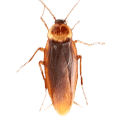
- A small German cockroach population in the dishwasher motor cavity
- Drain flies in the floor drain under the coffee station
- Rodent droppings in a storage cupboard that nobody had opened in eight weeks
This is the standard coworking pest profile. None of it is dramatic individually. Together, it's the picture of a building that operates like a small F&B venue and is treated like an office.
Why coworking is different from a single-tenant office
If you're managing a coworking operation, you already know the operational rhythm is closer to hospitality than to a traditional commercial office. The pest implications:
Constant food turnover, low ownership
A single-tenant office has a kitchen used by the same 30 people every day. Lunches go in the fridge in the morning, come out at lunch, leftovers go home in the evening. Stable.
A coworking kitchen sees 50–200 different lunches every day. People forget their food in the fridge. They eat at their desks and dispose of containers in the nearest bin. They open snacks from the reception jar and leave half-empty packets on shared sofas. There's no clear ownership of any specific food item, so cleanup is sporadic.
The pest implication: cockroaches and ants get continuous food access in conditions where nobody's specifically cleaning up after themselves.
24/7 access and after-hours work
A traditional office is empty from 8 p.m. to 7 a.m. and over weekends. Pest contractors can use that window for treatment, fogging, or thermal work without affecting tenants.
A coworking space, especially in DIFC and Business Bay, has members working through the night, on weekends, in early mornings before sunrise. There is no "empty" window unless you build one. Treatments need to be scheduled around member access patterns, often at 4–6 a.m. or during the lowest-occupancy hour
Member bag transit
This is the part most coworking operators don't think about until it bites them. Members bring their bags, gym kits, and laptop sleeves into the space every day. Some come straight from a hotel. Some are visiting from another country. Some have been working from a flat that has bed bugs they don't know about.
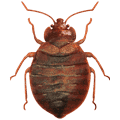
We've identified bed bug introductions in three Dubai coworking spaces in the last 18 months. Each one traced to a member's bag. Bed bugs ride from the bag to the soft seating, from the soft seating to the next member's bag, and the cycle continues. Coworking soft furnishings (lounge sofas, armchairs in phone booths) become the harborage.
Storage that nobody opens
Every coworking space has cupboards full of stuff nobody uses — old branded merch, conference giveaways, broken cables, abandoned member belongings. Those cupboards are rodent attractant points. We've found mouse nests in cardboard boxes that hadn't been opened since the space opened two years earlier.
Mailrooms and parcel storage
Members receive parcels at reception. Cardboard accumulates. Cardboard is German cockroach harborage and stored-product moth attractant. The tidier the mailroom, the lower the pest pressure.
What an actual coworking pest programme covers
Monthly cadence works for most spaces. The structure I recommend:
Member-friendly treatment options
- Gel-bait, never broad spray in member-facing zones. Gel dots placed in cabinet hinges, behind appliances, in voids. Members never see treatment evidence and there's no chemical odour
- IGR injection in cracks and chases — odourless, invisible, and effective for 90 days
- Drain biological enzyme for the kitchen and bathroom drains. Biologic competitors crowd out drain fly breeding
- Fly light traps mounted high in the kitchen and reception. Replace UV tubes every 6 months, glue boards monthly. Choose models with discreet styling — modern coworking spaces won't accept ugly white plastic UV traps in member view
- Rodent stations in storage areas, ducts, and back-of-house only. Never in member-visible spaces
After-hours treatment windows
We schedule monthly visits for the lowest-occupancy time the space allows — typically 5–7 a.m. weekday or Saturday morning. Members occasionally show up; the technician explains what's happening and continues. Most members appreciate visible pest control, as long as it's clean and unobtrusive.
For any treatment that requires the space to be empty (rare — perhaps an annual deep-treatment using a residual that needs 6h dwell), we book quarterly Saturday-evening windows in advance with the community team.
Member-facing communication
The community team gets a monthly summary email after each visit. Findings, actions, recommendations. They share the relevant pieces with members — typically a kitchen-hygiene reminder rather than a full pest report. Members feel informed without being alarmed.
For incidents (a member reports a sighting), the community team has a same-day response protocol. We'll have a technician on-site within 4 hours during business hours, and the response is documented in writing for member peace of mind.
Pricing for Dubai coworking
Coworking spaces typically pay by member capacity rather than square footage:
- 50–100 seats: AED 600–1,000/month
- 100–250 seats: AED 800–1,600/month
- 250–500 seats: AED 1,400–2,800/month
- 500–1,000+ seats (large WeWork-scale): AED 2,500–5,000/month with multi-floor cover
Included in the monthly fee: routine treatment, light-trap servicing, drain enzyme dosing, rodent station checks, written report, and unlimited callbacks during business hours within 24h response. Bed bug treatment, if needed, is an additional one-off cost — typically AED 600–1,400 per affected zone for chemical, AED 1,800–3,500 for heat treatment of soft furnishing zones.
Annual contracts get a 10–15% discount on monthly rates and include emergency after-hours response within 4 hours.
What community managers can do between visits
- Empty the kitchen fridge weekly. Send a Slack/email reminder Friday afternoon, do a clean-out Sunday morning. The single most effective pest preventive in a coworking space
- Audit storage cupboards quarterly. Anything not used in 90 days goes. Cardboard goes
- Check phone booth and meeting room sofas weekly. Look for any black specks (bed bug evidence) along seam edges of soft furniture. Early detection is everything
- Keep the bin room outside the space tight. No propped doors. Bin schedule that matches your peak food-disposal time
- Brief reception on signs. Train the front desk to recognise droppings, shed cockroach skins, mud tubes, and bed bug evidence. They're your early-warning system
What about WeWork, Astrolabs, Letswork, Nasab and the larger operators?
The national operators usually have framework contracts with one or two providers across all their UAE locations. They tend to standardise — same treatment cadence at every location regardless of footprint. That's efficient but it sometimes misses location-specific pressure.
A DIFC location with restaurant-row neighbours has more roach pressure than a JLT location away from F&B. The standard frequency may be inadequate for one and excessive for the other. Where we cover larger operators, we tier the cadence by location risk profile and let the operator standardise on outcomes (pest pressure metrics) rather than frequency. We covered the parallel logic for single-tenant DIFC offices — coworking is the next layer of complexity above that.
A note on bed bugs in coworking
This is the failure mode I'm most concerned about for any coworking operator. A single member who unknowingly brings bed bugs into the space can affect the soft furnishings within 2–3 weeks. By the time anyone reports a bite, the spread can already be at 4–6 zones.
The protocol we use:
- Quarterly soft-furnishing inspection by a technician trained in bed bug identification. Lounge sofas, phone booth chairs, meeting room couches
- Member education — a discreet "please notify reception immediately if you see any signs" line in the member handbook. This is the early-warning line
- Rapid response on any reported sighting — heat treatment of the affected zone within 24–48 hours. Cost typically AED 1,800–4,500 depending on zone size
For a fuller treatment comparison see our bed bug treatment cost post — the same logic applies in commercial coworking, just at larger zones.
FAQ
Will pest treatment disrupt our members?
Not if scheduled correctly. We use low-odour, member-friendly products and treat in the lowest-occupancy hour. Members rarely notice.
How quickly can you respond to a sighting?
During business hours, within 4 hours. After-hours emergency response (rare for coworking) within 6–8 hours. Annual contract members get priority.
Do you cover the whole UAE network if we operate multiple locations?
Yes — PestSwift covers Dubai, Abu Dhabi, Sharjah and Ajman with the same operational and reporting standards. Centralised reporting for multi-location operators on request.
Are your treatments compatible with our sustainability/ESG commitments?
The DM-approved chemicals we use are low-toxicity and applied in minimal effective doses. We document chemical use per visit. Biological enzyme drain treatment, IGR (insect-only effect), and gel-bait protocols all reduce broad-spectrum chemical exposure significantly. See our commercial pest control overview for the full approach.
Managing a Dubai coworking space? Get a monthly contract quote — we'll match the cadence to your member access pattern.
Tags
Written by
Maria Fernandez, Commercial Accounts Lead
PestSwift technicians and entomologists publish field-tested pest control guidance for UAE homes and businesses.