
A Jumeirah vet clinic, three sleeping rabbits, no obvious place to spray
The practice manager at a Jumeirah small-animal vet clinic walked me through her facility on a Wednesday morning. Reception had a parakeet in a display cage. The boarding suite had three sedated rabbits recovering from dental procedures. The exotics ward had a tank of marine reef fish belonging to a regular client. The kitchen had a half-eaten lunch on the staff fridge. And the back-of-house had a fly problem that had been getting steadily worse since April.
"Where can you actually treat?" she asked. "Because I can't move any of these animals out for four hours."
That's the central question for vet clinic pest work in the UAE. Almost every conventional treatment protocol assumes you can evacuate the space. A vet clinic almost never can. Solving this requires a different set of tools, a different schedule, and a very specific understanding of what MoCCAE permits.
The dual-regulation reality
The Ministry of Climate Change and Environment (MoCCAE) regulates two things that overlap in a vet clinic: the practice itself (under the Federal Law on Practising the Veterinary Medicine Profession), and the pesticides used in pest control (under the Unified Municipal Work Guide for Technical Requirements for Public Health Pest Control Firms, issued in 2021).
This means the same federal body that issues your clinic's licence also defines which chemicals can be used inside it. There's no contradiction in principle, but in practice it creates two enforcement angles:
- Your clinic's MoCCAE inspector will check that you have a documented pest control programme as part of facility hygiene.
- The pest control contractor's compliance is itself audited by MoCCAE through the same general framework.
The practical implication for clinic owners: your contractor's documentation needs to be MoCCAE-grade, not just "pest control records." That means active ingredient with registration number, dose, location, technician name and certification, and a clear record of any animal-occupancy considerations at the time of treatment.
What you can and can't use in an animal-occupied space
This is where most cookie-cutter pest control plans break. Vet clinics need a tightened protocol:
Off-limits in any animal-occupied area
- Pyrethrin and pyrethroid fogging. Highly toxic to cats and to virtually all fish and reptiles. Banned from animal-occupied spaces in our protocol regardless of evacuation.
- Anticoagulant rodenticide bait blocks in the open. Secondary-poisoning risk if a clinic cat or boarder dog finds the bait. Bait stations only, locked, in back-of-house corridors with a written placement log.
- Aerosol residual sprays inside reptile or aquarium rooms. Even "low-toxicity" aerosols carry over via HVAC and contaminate water surfaces.
Acceptable with animal evacuation from the immediate room
- Targeted residual spray on baseboards (deltamethrin or bifenthrin), with full re-aeration and surface wipe-down before animals return. Re-entry interval typically 4 hours.
- Flushing aerosol used briefly in voids to drive cockroaches out for vacuum collection.
Acceptable in occupied animal areas
- Gel bait (hydramethylnon, indoxacarb) inside cavities and behind kick-plates where animals cannot reach. Dose is so low and placement so confined that mammalian and avian risk is effectively zero.
- IGR (insect growth regulator, typically pyriproxyfen) applied to wall voids. Mammalian-safe at use concentrations.
- Bti and methoprene larvicide on standing water (drains, AC condensate trays). Specifically safe for fish at the water-treatment doses; broadly used in mosquito control programmes worldwide.
- Mechanical: snap traps and sticky monitors in areas inaccessible to clinic animals.
The upshot: a properly designed vet-clinic protocol uses gel + IGR + mechanical for the routine work, and reserves residual spray for the brief windows where rooms can be cleared.
The aquarium and reptile problem specifically
Fish and reptiles are the most pest-control-sensitive animals in any clinic. Three principles guide our work in those rooms:
- Cover every aquarium and terrarium with sealed lids during any treatment in the same room or in adjacent rooms sharing HVAC.
- Switch off the aquarium air pump for the treatment window — the air pump pulls in ambient room air, which is the main contamination route for any airborne residual.
- Never apply anything inside the room itself except mechanical traps and gel bait inside enclosed cavities.
The boarding kennel side has its own constraints. Boarder cats can be relocated to a quiet recovery suite during treatment of the kennel zone. Dog boarders are usually walked outside. Small-animal exotics (rabbits, guinea pigs, ferrets) are unusually sensitive to residual surface chemicals — we use heat-disinfection or steam where possible in their enclosures rather than chemical work.
The five rooms in a vet clinic that get the most pest pressure
From our case load across Dubai and Abu Dhabi vet clinics:
- Kitchen / staff break room. Cockroaches and ants. The single highest source of recurrence in most clinics.
- Garbage / clinical waste storage. Flies and rodents. Especially in summer when the soft-tissue clinical waste collection cycle is the binding constraint.
- Surgery prep and post-op recovery. Less pest-prone but most consequence-sensitive — even one fly sighting here is a clinical compliance issue.
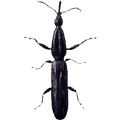
- Boarding kennel. Fleas brought in on boarders, cockroaches around shared food bowls, occasional silverfish in bedding storage.
- Loading dock / bin yard. Roof rats, especially in clinics on ground-floor commercial strips with shared waste areas.
A coverage plan that doesn't differentiate between these zones — because each has a different acceptable protocol — is a plan that's going to over-treat or under-treat somewhere.
Real schedule and cost bands for UAE vet clinics
For a small-to-mid vet clinic (300–600 m², single floor, no major boarding suite):
- Bi-weekly bait + IGR maintenance, weekly during summer: AED 1,200–1,800/month
- Monthly comprehensive with on-call: AED 800–1,200/month
- Larger clinics with boarding (600–1,200 m²): AED 1,800–3,200/month
- One-off remediation after a sighting incident: AED 1,800–3,500
The cost difference between bi-weekly and monthly is small relative to the regulatory and reputational cost of a fly sighting in a surgical area. Most of our vet clinic clients run bi-weekly during the May–September peak and monthly during the cooler months.
Documentation a MoCCAE inspector will actually want to see
- A written pest management plan signed by the contractor and the practice manager.
- Treatment certificates for every visit, with active ingredient, registration number, dose, location, technician name, and animal-occupancy notes.
- A bait station placement log with photos.
- A monthly summary report showing trend data on activity sightings.
- Evidence the contractor's company is MoCCAE-registered and the technicians are individually certified.
We provide all of this as part of the contract for vet clinics, with hard-copy and digital versions filed in a single audit folder. Most inspectors ask to see the audit folder within the first ten minutes of a visit.
For parallel commercial vertical detail, see JCI hospital pest control in the UAE (which has a related but stricter chemical posture) and nursery and preschool pest control (children, similar low-toxicity constraints). The commercial pest control service page covers the full clinical-facility offering. To book a clinic audit and a quote, contact us.
Frequently asked questions
Can you do pest control without removing the animals?
Yes, for most of the work, with the right protocol. Gel baits, IGR in voids, mechanical traps, and larvicide on standing water are all compatible with animals in adjacent or same rooms. Spray treatment requires evacuation from the immediate room only and a brief re-aeration window. Aquarium and reptile rooms get a more conservative protocol with no aerosol work at all.
Is there a MoCCAE-registered pest control approval list?
MoCCAE registers individual pesticides and the firms permitted to apply them. The federal database is the source of truth; in practice, ask any prospective contractor for their MoCCAE registration number and cross-check against the Unified Municipal Work Guide framework. Approved companies will provide this immediately.
How often should a vet clinic do pest control?
Monthly is the floor for any clinic with food handling, garbage on premises, and animal boarding. Bi-weekly during the May–September period is what most of our vet clinic clients run. Weekly is overkill except after a remediation incident. Quarterly is too sparse and doesn't survive a MoCCAE audit.
What happens if a pest control treatment harms a clinic animal?
It's a major liability and clinical-incident issue. The contractor carries professional liability insurance for this scenario, and the protocol design exists to make the probability vanishingly small — which is why we don't compromise on the no-aerosol-near-aquariums rule or the bait-station-not-loose-bait rule. If you're considering a contractor whose protocol doesn't address these explicitly, that's the conversation to have before signing.
Tags
Written by
Maria Fernandez, Commercial Accounts Lead
PestSwift technicians and entomologists publish field-tested pest control guidance for UAE homes and businesses.