
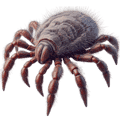
Al Rashidiya Ajman is one of the densest residential zones in the northern emirates. The block stock dates mostly from the 1990s and early 2000s — small footprint apartment buildings, 4-8 storeys, often with 12-20 units per floor. The walls between units are thin by current standards. The plumbing penetrations are large and unsealed. And the tenant turnover is high, with a lot of bachelor housing and shared accommodation.
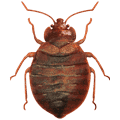
In that combination, bed bugs spread laterally between units along baseboards and through wall cavities in a way they don't in newer Ajman or Dubai builds. Treating only your unit when the source is the unit next door is something we do all the time and it works for 6-10 weeks. Then the bugs are back. Here's the mechanics, and what an Ajman-context treatment actually looks like.
The shared-wall problem in Al Rashidiya specifically
In typical Al Rashidiya 1990s-2000s construction:
- Wall thickness between adjacent apartments: often 12-15 cm of hollow block, sometimes less. (Current Ajman code requires 18-23 cm with appropriate void treatment.)
- Electrical conduit runs penetrate the shared wall in many places, with the cable holes never properly sealed.
- Skirting board runs continuous through wall penetrations — bed bugs travel along the gap behind skirting from your unit to the unit next door without ever leaving the building envelope.
- Plumbing chases (especially the kitchen wall and the bathroom wall) have continuous voids running floor to floor, providing vertical migration paths.
A bed bug colony established in unit 304 has clear physical paths to units 303 and 305 (lateral), and to units 204 and 404 (vertical). Within 8-12 weeks of a heavy infestation, multiple neighbouring units are typically affected even if the original residents kept the issue secret.
This isn't unique to Al Rashidiya — Al Nuaimiya, Al Hamidiyah, and the older blocks of Al Bustan show the same pattern — but Al Rashidiya is where we see the most concentrated examples because the building age and density combine.
What a unit-only treatment buys you
A conscientious unit-only treatment in an Al Rashidiya apartment looks like this: full chemical residual along all skirting boards, around bed frames, behind headboards and night stands; all bedding stripped and washed at 60°C+; mattress encasement deployed; secondary chemical knockdown at 14 days.
This kills every bed bug in your unit at the time of treatment. The day after, foragers from the unit next door start migrating in. Within 6-10 weeks, full re-infestation.
We can do this work for AED 350-650 per room and it's genuinely well-executed. It just doesn't solve the building problem. We're upfront about this when residents call: "If your neighbour is the source — and in Al Rashidiya at this size of block, they probably are — your unit treatment will work for 6-10 weeks and then the bugs will return."
Residents react in three ways: (1) accept the recurring cost as a maintenance bill, (2) try to coordinate with neighbours and landlord/building management, or (3) move out. Option 2 is by far the cheapest in the medium term but requires social co-ordination.
The building-wide protocol that works
A proper Al Rashidiya bed-bug-elimination programme has four stages:
Stage 1 — Building-wide canine inspection (or visual sweep). A trained bed-bug detection dog walks every unit. Where dogs aren't available (most Ajman jobs), a systematic visual inspection of every unit by trained technicians covers the same ground at higher cost. The output is a heat map: which units have active populations, which have been recently treated, which are clean.
Stage 2 — Coordinated treatment of all positive units within a 3-day window. This is the critical step. If unit 304, 305, and 404 all have bugs, treating them on the same day prevents the population from migrating between units mid-treatment. The window matters; spreading treatment across 2 weeks gives the bugs a clear escape path.
Stage 3 — Wall-cavity treatment at all known migration points. Insecticidal dust (silica + diatomaceous earth blend) injected into electrical conduit penetrations, behind skirting at wall junctions, into the void behind kitchen and bathroom plumbing chases. This kills bugs in transit and creates barriers against re-migration.
Stage 4 — 21-day follow-up across all treated units. Re-inspection and spot re-treatment where any activity is found. Bed bug eggs hatch in 7-14 days; the follow-up catches any survivors before they breed.
This programme runs AED 4,500-9,500 for a typical 6-12 unit affected zone in an Al Rashidiya block, depending on unit size and infestation depth. Per affected unit it's AED 700-1,200, which is more than a single unit-only treatment but eliminates the population permanently rather than buying 6-10 weeks of relief.
The landlord-co-ordination piece
The block-level approach requires either Owners' Association consent (rare in Al Rashidiya, where many blocks lack functioning OAs) or landlord consent (more practical, since many Al Rashidiya buildings are owned wholesale by single owners who lease individual units).
If you have a single-owner building, the conversation is straightforward: present the building-level cost vs the per-unit-recurring cost over 18 months. The owner's economic incentive lines up — building-level treatment, even at AED 9,500 once, beats six rounds of unit-level work at AED 600 each. Owners almost always agree once they see the maths.
If you have a multi-owner block, the politics are harder. The unit owners affected need to be willing to coordinate on a single contractor and a single date window, and the unaffected units need to allow access for the canine sweep. We've successfully run this in Al Rashidiya and Al Bustan five times in the past year. Every time it required one resident to drive the coordination, plus a sympathetic facilities manager who could rally the unit owners.
Heat treatment in Ajman context
Whole-room heat treatment (raising the ambient temperature to 50-55°C for 90+ minutes) kills bed bugs at all life stages including eggs and is the gold standard for clean kills. In Ajman:
- A typical 1-BR Al Rashidiya unit costs AED 1,400-2,200 for heat treatment.
- Setup time is 60-90 minutes; ramp to temperature is another 60-90 minutes; hold time is 90-120 minutes; cooldown is 60-90 minutes. Total floor time: 5-7 hours.
- Older Al Rashidiya buildings sometimes have wiring not rated for heat-treatment electrical loads. We do a building check before quoting; about 1 in 5 Al Rashidiya blocks needs us to use propane heaters instead of electric due to capacity constraints.
- Heat doesn't migrate through walls effectively. So heat-treating one unit in a shared-wall block has the same multi-unit migration problem as chemical treatment.
For a building-wide heat programme, you'd schedule sequential heat treatments across affected units in a 1-3 day window. Logistically intensive but doable. We've run two of these in Al Rashidiya; both worked.
What residents can do unilaterally
While coordination is being negotiated, you can buy yourself time:
Mattress and box-spring encasement. Bug-proof zip-lock encasements on every bed in the unit. Bugs inside die without a host; bugs outside can't get in. This is the single highest-value DIY action.
Pull beds 15 cm away from walls. Bed bugs prefer the wall-bed harborage. Detaching the bed from the wall slows migration into bedding by 60-70%.
Climb-up monitors at all bed legs. Inexpensive AED 35-60 plastic dishes that prevent bed bugs from climbing up the legs of the bed. Combined with mattress encasement, you've created an isolated sleep platform.
Diatomaceous earth dust at all wall-floor junctions. Food-grade DE dust applied along skirting boards. Kills bugs that crawl through over 5-10 days. Reapply after vacuuming.
None of these eliminate the building source. They reduce bites and slow your unit's re-population while the bigger conversation happens.
FAQ
How long does bed bug treatment take to fully work in an Ajman apartment?
For a properly treated, isolated unit (no source from neighbouring units): 21-30 days from first treatment to confirmed elimination. For a unit in a shared-wall block where the source isn't fully addressed: weeks of relief, then re-infestation cycle.
Will Ajman Municipality help with bed bug treatment?
No. The free public-health pest service in Ajman covers public-area pests only. Private-property bed bugs are private-sector responsibility at the resident's or landlord's cost.
Can I refuse to pay rent because of bed bugs?
Depends on your tenancy contract and the local rental laws. Generally, tenants in Ajman cannot withhold rent unilaterally; the appropriate route is written notice to the landlord giving them a reasonable window to remediate, then escalation to the Rent Disputes Committee if they don't act. Document everything from the start.
Are bed bug treatments cheaper in Ajman than Dubai?
Yes, typically 15-30% lower for equivalent work. PestSwift Ajman pricing reflects this; the chemical and heat-treatment quality is identical to our Dubai work.
Related guides: Ajman Municipality and MOCCAE pest rules · Bed bug treatment cost in Dubai · Holiday-home bed bug turnover playbook for Downtown Dubai
If you live in Al Rashidiya, Al Nuaimiya, Al Hamidiyah, or any older Ajman block and bed bugs keep returning despite treatment, contact PestSwift for a building-context inspection. We service Ajman and apartments pest control with full Ajman Municipality and MOCCAE compliance.
Tags
Written by
Rashid Al Mansoori, Operations Manager
PestSwift technicians and entomologists publish field-tested pest control guidance for UAE homes and businesses.